Jeffrey Archer, the bestselling novelist and Conservative politician whose scandal-ridden career culminated in a prison sentence for perjury, has died aged 86. His death came unexpectedly, on the day before the publication of his final novel, Adam and Eve. He is survived by his wife, Mary, and his sons, William and James.
A life of scandal and reinvention
Archer was irrepressible, though not necessarily in a good way. Ordinary humans would be sunk by the allegations of lies, thefts, frauds, gussied-up CVs, expenses fiddles, charity swindles, plagiarisms, insider trading deals, funding illicit coups and – perhaps most unforgivable of all – unpleasantness to underlings that dogged his life. But Lord Archer of Weston-super-Mare – bestselling novelist, disgraced politician, one-time athlete and convicted liar – was not ordinary: he was what the Titanic was designed to be, unsinkable.
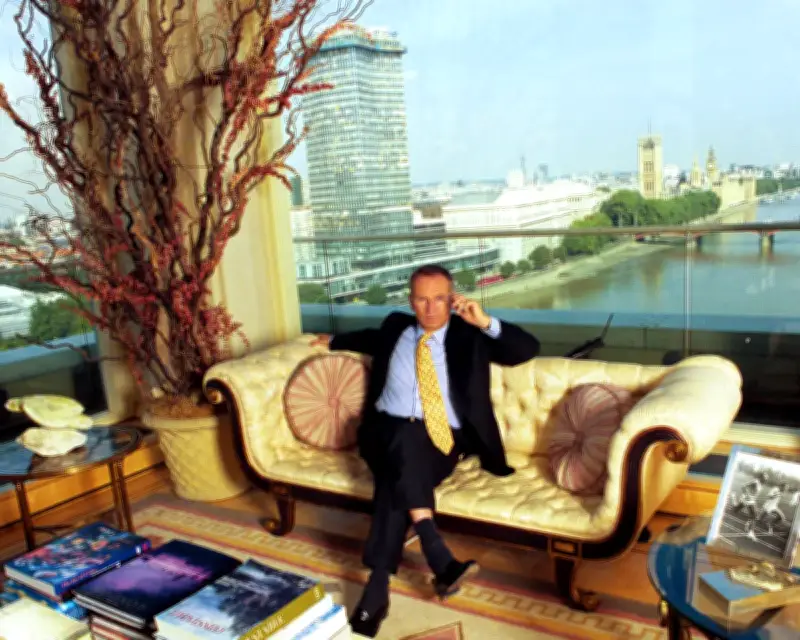
One morning in September 2000, for instance, Archer emerged from Wimbledon police station. He had just been charged with perjury for persuading a friend to lie for him during his 1987 libel action against the Daily Star newspaper, which had claimed he had paid a sex worker to buy her silence. That morning, his life had started to unravel: the following July he would be jailed at the Old Bailey for this crime. But instead of returning to his sumptuous Thameside apartment overlooking parliament to consult with lawyers or have a good cry, he smiled for the media, climbed into a chauffeur-driven BMW and went on to his next appointment. The Archer show had to go on. That evening he made his senior stage debut in a production of his own play at the Theatre Royal, Windsor.
Early life and rise to prominence
Born in London, two weeks later Jeffrey moved with his family to Weston-super-Mare, in Somerset. He was the third child of Lola (nee Cook) and William Archer. The first two of Lola's children, including another Jeffrey, were born outside marriage and given up for adoption. His father, a convicted fraudster and bigamist who was 64 when Archer was born, left the family home not long after and died in 1956, when his son was 15. His doting mother spoiled him in compensation for that loss. She wrote a column for the local paper called Over the Teacups, about her scamp of a son who featured as “Tuppence”.
He attended Wellington school, in Somerset – though he later implied he had attended the grander Wellington college, in Berkshire – where weedy Jeffrey was nicknamed The Pune, for his puny skin-and-bones physique, and bullied. He took up bodybuilding and athletics in response and was so successful at the latter that he became a blue at Oxford and later ran for Britain. He left school with three O-levels (English literature, art and history), trained for the army and the police, and then found a niche at private schools as that rare thing, a popular PE teacher.
Then he went to Oxford, where he studied for three years at Brasenose College, though he was never registered there as an undergraduate. Rather, he studied for a teaching qualification on a course based at the college. At Oxford, Archer also raised money for Oxfam, and succeeded in inviting the Beatles to visit Brasenose to sign a cheque and mingle with the dons in the senior common room. During that February 1963 soiree, undergraduate Sheridan Morley and Beatles drummer Ringo Starr found themselves at adjacent urinals. “[Ringo] asked if I knew this Jeffrey Archer bloke,” theatre critic Morley later told the Guardian. “I said everyone in Oxford was trying to work out who he was. Ringo said: ‘He strikes me as a nice enough fella, but he's the kind of bloke who would bottle your piss and sell it.’”
While at Oxford, Archer wooed the student Mary Weeden, who in 1966 became his wife and later a chemistry lecturer at Cambridge University. Despite her husband's shaming bankruptcies and his reported infidelities, Mary Archer justified standing by her man with more imaginative verve than, say, Tammy Wynette. She said much later: “I think I would find it a little monochrome, a little grey, to have a sort of a more conventional life with a more conventional husband.”
Political career and downfall
After leaving Oxford, he continued as a charity fundraiser, working for a medical charity and for the United Nations Association, whose chairman, the former Conservative MP Humphry Berkeley, alleged that Archer fiddled his expenses. He also served as a Conservative councillor on the Greater London council from 1967 to 1970, during which time he was accused of fiddling other councillors' expenses. Despite these allegations, and despite Berkeley striving to convince Conservative central office that Archer was an unsuitable parliamentary candidate, he beat the future Tory minister Ian Gow to become Conservative candidate for Louth in Lincolnshire. He took the seat in a byelection on 4 December 1969, becoming – or so his book blurbs repeatedly claimed – the youngest MP in the House of Commons, aged 29. In fact, as Michael Crick points out in his biography, there were four younger MPs already in the Commons.
In 1974, he became one of the youngest MPs to relinquish his seat. That year, as a result of a complicated speculation he was involved in, Archer lost £500,000 in a fraudulent Canadian company called Aquablast. At the edge of bankruptcy, he resigned from parliament. In terms of fulfilling his ambitions, he may have been prudent: “I realised there would never be a career for me there,” he said of the Commons later.
Facing bankruptcy, he told his wife, then pregnant with their second child: “The only way I can get out of this is to write my way out of it.” Friends were sceptical that Archer could make capital from novel writing, having failed to do so from property deals. “Jeffrey, you can barely spell,” his friend Adrian Metcalfe told him, “let alone write.” “No, but I can tell stories,” Archer is said to have replied.
He was right. His first novel, Not a Penny More, Not a Penny Less, published in 1976, became a bestseller, as did many of the more than 50 novels, prison journals, children's books and short story collections that followed. That fictional debut was something of a roman a clef, since it told the story of four men swindled out of $1m – roughly what Archer lost in business deals. The novel's denouement though, in which the men revenge themselves on their swindlers, was part wish fulfilment and partly cribbed from the then popular movie, The Sting. His wife reportedly helped him edit it, correcting his spelling and grammar.
Later, teams of editors worked on making his novels publishable. They were impressed by his capacity for work: he would address the task in blocks of two hours at a time, then wrote as many as 17 further drafts at their behest. Jonathan Coleman, one of four editors who worked on Archer's international bestseller Kane and Abel (1979), said that, though the book was heavily edited, “he did the rewriting ... I mean, he wasn't trying to write a literary masterpiece.” He was, rather, trying to make money – and he did. Much came from TV adaptations, but he was a publishing phenomenon whose books were bought at the rate of 25,000 a month at the peak of his literary bankability, resulting in overall sales of around 300m copies.
By the mid-70s, then, the disgraced ex-MP was back. Yes, there was a report that he had stolen some suits from a Toronto store when he was giving evidence at the Aquablast trial in Canada in 1977, but that was never proved. And yes, some did complain that he trod on the little people as he rose again (“The sales people at HarperCollins loathed him – absolutely loathed him – because he was so awful to booksellers,” one company manager told Crick, referring to the sales rep as a “waste of space, being very abusive and unpleasant”), but none of this would stop him becoming rich and famous.
Return to politics and final scandals
In 1979, Archer bought the Old Vicarage, Grantchester, a house associated with the poet Rupert Brooke. He also began to hold shepherd's pie and Krug parties for politicians, business people and even journalists at his Thames-side apartment. He loved to give directions to the toilet: “Past the Picasso and left at the Matisse.” He even returned to politics. Margaret Thatcher made him Conservative deputy chairman in 1985 – despite the misgivings of the senior Tories Norman Tebbit, Edward Heath and Willie Whitelaw – partly in gratitude for the sums he had funnelled into Tory party coffers.
The political return was shortlived. The following year he resigned because of newspaper allegations that he had paid Monica Coghlan, a sex worker, £2,000 through an intermediary at Victoria station to go abroad. In 1987, he sued the Daily Star for claiming he had slept with her. In one of the case's more memorable moments, Mr Justice Caulfield spoke to the jury: “Remember Mary Archer in the witness box. Your vision of her probably will never disappear. Has she elegance? Has she fragrance? Would she have, without the strain of this trial, radiance? How would she appeal? Has she had a happy married life? Has she been able to enjoy, rather than endure, her husband Jeffrey?” He said of Jeffrey Archer, “Is he in need of cold, unloving, rubber-insulated sex in a seedy hotel round about quarter to one on a Tuesday morning after an evening at the Caprice?” The judge's questions, counterintuitively, were rhetorical. Archer won and was awarded £500,000 damages.
In 1992, thanks to the prime minister, John Major, Archer was politically rehabilitated again. Major made him a life peer, Lord Archer of Weston-super-Mare, chiefly because of his role in the previous year's fundraising concert for Kurds. Archer, with the Red Cross, set up the charity Simple Truth. But once more his philanthropy was questioned. Archer had claimed to have raised more than £57m for Kurdish refugees. Kurdish disaster relief groups claimed only £250,000 had been received by groups in Iraq. Years later, Scotland Yard investigated these discrepancies, but Archer was never prosecuted.
In 1994, Archer was back in trouble over alleged insider dealing involving shares in Anglian Television, of which his wife was a director. An inquiry by the Department of Trade and Industry concluded that Archer would not be prosecuted. In 1999, aged 59, Archer was poised to fulfil one of his ambitions – to hold high political office – when he was selected as Conservative candidate for the London mayoral election of 2000. But that ambition was thwarted when the News of the World reported that he had perjured himself in the 1987 libel case. His former friend, the TV producer Ted Francis, and his former personal assistant, Angela Peppiatt, decided to reveal that he fabricated an alibi at the trial because they thought he was an unsuitable mayoral candidate. He withdrew his candidacy the next day and was, in February 2000, expelled from the Conservative party for five years. The then party leader William Hague, who had hailed Archer's “probity and integrity”, said: “This is the end of politics for Jeffrey Archer. I will not tolerate such behaviour in my party.”
Archer's trial for perjury began in May 2001. Once more, his wife Mary gave evidence. Archer did not, though he had to hear his former secretary, Peppiatt, detail alleged marital infidelities with a former employee. During the judge's summing up, his mother died. As a result, she missed seeing her son sentenced to four years' imprisonment by Mr Justice Potts. He served only two years in jail and retained his life peerage.
Archer's scandals were not over yet. A year after his release, he was accused by Equatorial Guinea's government of co-financing the failed 2004 coup d'etat attempt. He continued writing after his release. In 2007, he collaborated with the Catholic scholar Francis J Moloney in a book entitled The Gospel According to Judas. In this version of the story, Judas did not betray Jesus. The treatment of the story must have appealed to the disgraced peer, since in it he rehabilitated Judas. Perhaps in his mind, Archer – similarly maligned though more fairly – hoped for a similar rehabilitation.
Legacy and final years
Archer's life was lived, if not told, in heroic denial of what he was. “He will dive over a cliff and then be amazed that he's falling,” said his college friend Morley who, like many politicians in the party that Archer disgraced, remained supportive. “He thinks he's Peter Pan, that he'll never die. Everything he does he thinks is going to be all right in the end.”
In fiction, if not reality, Archer was rehabilitated. The maligned Judas became a national hero when in 2002 the writer Guy Jenkin wrote a TV comedy called Jeffrey Archer: The Truth. It told the version of the Archer story that never gets told (least of all in the newspapers) – about a misunderstood man who took the blame selflessly, suffered abuse, disgrace and imprisonment for the nation's good. “My Jeffrey Archer is the man who has frequently saved Britain over the last 30 years,” said Jenkin. “He's beloved of all women he comes across, all men, all dogs – he's a superhero.” If only the real Jeffrey Archer had been like that. But his life did not imitate art because it could not: it was rather, in the title of Crick's biography, Stranger Than Fiction.
Archer retired from the Lords in 2024, and said that his final novel would be Adam and Eve. His death came unexpectedly, on the day before its publication. He is survived by Mary, and his sons, William and James. Jeffrey Howard Archer, Lord Archer of Weston-super-Mare, author and politician, was born on 15 April 1940 and died on 5 October 2026.