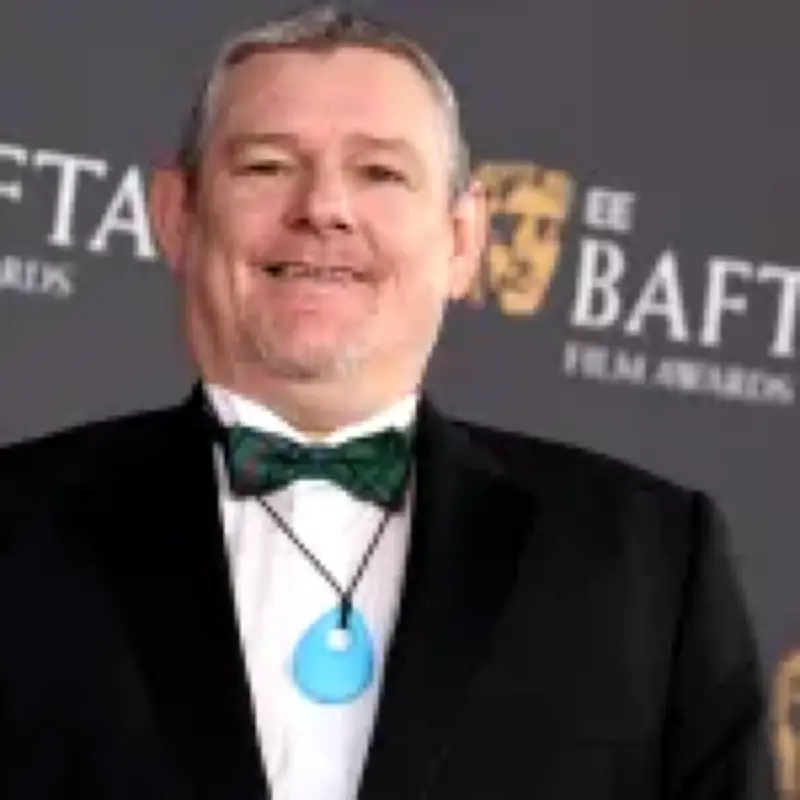
Tourette’s campaigner John Davidson will watch the upcoming Bafta Scotland Awards from a separate room after his involuntary use of the N-word sparked controversy at the main ceremony earlier this year.
Davidson, whose life inspired the acclaimed biopic I Swear, is set to attend the Glasgow event on November 15 after the film landed a record seven nominations. However, Bafta has confirmed the 54-year-old will not sit inside the main auditorium, instead watching proceedings via video link from a ‘separate relaxed space’ at the venue alongside his family and friends.
Arrangement suggested by Davidson
The arrangement was suggested by Davidson himself following discussions with the organisation, Tourette Scotland and Tourettes Action. It comes just over seven months after Davidson’s tics became one of the biggest talking points of the 2026 Bafta Film Awards.
During February’s ceremony, Davidson shouted the N-word while Sinners stars Michael B. Jordan and Delroy Lindo were on stage presenting. Davidson experiences coprolalia, a symptom of Tourette syndrome which causes involuntary socially inappropriate words or phrases.
The incident prompted widespread criticism, with the BBC also facing questions over why the slur remained in its broadcast despite the ceremony having been recorded around two hours earlier.
Bafta’s response and adjustments
In a letter sent to members following the Bafta Scotland nominations, chair Sara Putt and CEO Jane Millichip said extensive work had been undertaken ahead of Davidson’s return.
‘Following those conversations and our wider risk assessment, we have made adjustments to enable John to attend in the way he has suggested to us, which is to watch the ceremony via video link from a separate relaxed space within the venue together with his family and friends,’ they said.
Bafta stressed that Davidson’s vocal tics ‘occur outside of the individual’s control’ and ‘do not reflect a person’s views, beliefs, character or intentions’. However, the organisation acknowledged that involuntary tics involving race, sexuality, religion or other protected characteristics could still cause ‘distress and harm to others’.
‘It is Bafta’s responsibility to plan for and mitigate any such impact on our guests,’ the letter added.
Review and Davidson’s response
An independent review commissioned after February’s ceremony subsequently identified ‘structural weaknesses’ in Bafta’s planning, escalation procedures and crisis coordination, although it found no evidence of malicious intent or institutional racism.
Davidson previously said he was left with a ‘wave of shame’ after the incident and insisted the language produced by his tics was the opposite of his own beliefs. He also questioned why he had been seated close to a microphone and said he had expected offensive language to be removed from the delayed BBC broadcast.
‘I want people to know and understand that my tics have absolutely nothing to do with what I think, feel or believe,’ he said at the time. ‘It’s an involuntary neurological misfire. My tics are not an intention, not a choice and not a reflection of my values.’
Davidson, who was diagnosed with Tourette syndrome aged 12 and became widely known through the 1989 documentary John’s Not Mad, later reached out to apologise to Jordan and Lindo. Bafta also issued an ‘unreserved apology’ following the ceremony, saying it took ‘full responsibility’ for putting guests in a difficult situation.
The organisation says it has since overhauled elements of its safeguarding and live-event planning, including simplifying escalation routes and strengthening briefings for presenters and others working at its ceremonies. This time, Davidson will still get to be part of I Swear’s big night, just away from the main auditorium.