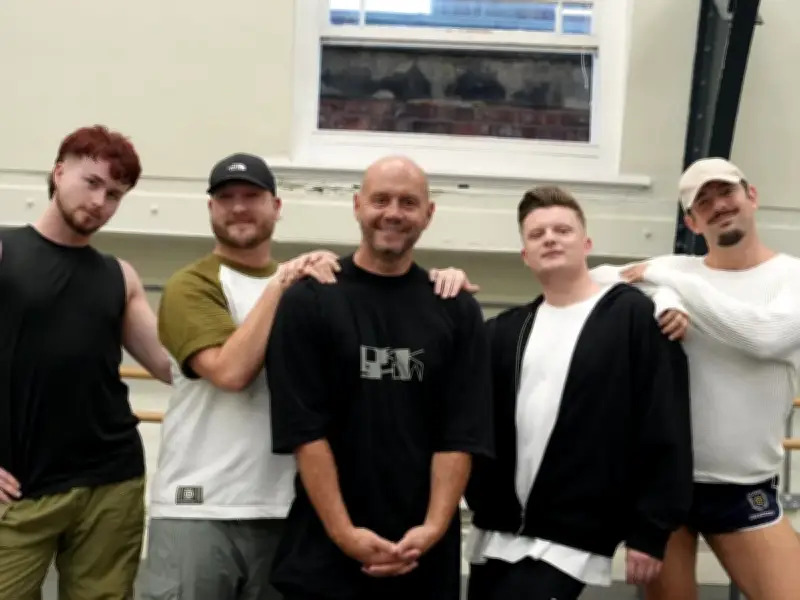
House of Suarez is marking two decades of Liverpool's vogue and ballroom scene with the "biggest evolution" of its iconic Vogue Ball. The event, titled RUNWAY, will return to Liverpool's Invisible Wind Factory on Saturday, October 17, as a special edition celebrating 20 years of queer joy and artistry.
Darren Suarez, the 52-year-old founder of House of Suarez, described voguing as "a way of life." He told the ECHO: "It gives you so much confidence and the power to move into so many other realms of dance and performance. It's introduced me to so many amazing people, from the community who I would've never met before."
A legacy rooted in Liverpool's vogue history
The story of voguing in Liverpool stretches back further than House of Suarez. Darren was part of the generation that helped establish the city's vogue scene, alongside his 'house mother', Dean Murphy. Dean, a hairdresser from Kirkby, died in 2023, but he previously spoke to the ECHO about how he discovered the dance.
The then 52-year-old said he first discovered voguing in 1989. After living in London for more than a year, he decided to move back to the area, with his friend Paul Lovell following suit a few weeks later. During the short time Paul remained in London, he learned about a new dance craze which would soon be performed by Madonna.
It wasn't until the two friends spent a night at the Curzon Club that Dean noticed Paul moving his arms in a way he had never seen before. The former DJ said: "Paul had watched a video on MTV when he was in London, but in those days, no one had MTV, everyone was skint at that stage and on the dole because of Margaret Thatcher. So when someone did have MTV, you would go back to theirs and sit for hours watching it."
From New York ballrooms to Liverpool clubs
The video in question was Malcolm McLaren's Deep in Vogue, which featured dancers moving to the music while imitating the characteristic poses of models on a catwalk. Dean added: "Before the dance, it was all about hip-hop, so when this dance came along it was just fabulous and allowed gay people to have their moment.
"Initially, it was boys who were doing, but when girls did see it they were made up and wanted to learn. Whenever we went to the likes of Garlands, they were just blown away by it because we took it dead seriously. It was something new for the community and when it was discovered it was latched onto.
"When we danced, everyone was watching us, learning from us, and we used to go around to people's houses to teach each other. It was just like a family with everyone who loved doing it."
Most accounts place the origins of voguing in the ballrooms of 1980s New York, created within Black and Latinx queer communities in Harlem. Over four decades later, the performance art continues to flourish, helped by mainstream shows such as Pose and documentaries including Paris Is Burning.
Ballroom as a space for expression and safety
In New York, Houses competed in balls for the chance to win prizes and earn recognition. Whether through voguing, drag, body categories or other forms of performance, competitors went head-to-head to make their mark. For many, ballroom became a place to celebrate themselves and each other when mainstream society often rejected them. Judged on their sexuality, race and gender identity in the outside world, the ballroom offered a space where people could showcase their creativity, individuality and identity.
Voguing was – and continues to be – a tool for ball-goers to tell their stories, including as a response to the AIDS crisis of the 1980s. For Dean, dance was also a way of releasing emotions. He said: "Years ago, dance used to be a way for me to express myself and let my anger out. Instead of fighting, we would've just danced with each other, it was brilliant to forget about your worries for a night.
"As soon as a tune came on, you just went to the floor and vogued. It was a way to shock. Waltzing into clubs and pubs, no matter if they were gay or straight venues, 20 of us would storm in like a flash dance, vogue, not say a word, then waltz out again."
RUNWAY: A tribute to legacy and community
Dean was honoured at the 2024 Vogue Ball following his death, with his contribution to Liverpool's scene continuing to be remembered. Over the years, the House of Suarez balls have taken audiences through themes including Blockbusters, Heroes and Villains, Disco, Gods and Monsters and Conspiracy Theories.
This year, the theme is Legacy – an overarching tribute to the themes and performers that have shaped the event over the years. For Darren, the milestone anniversary is also a chance to reflect on just how much the scene has changed. The anniversary also reunites House of Suarez with Homotopia, the UK's longest running LGBTQIA+ arts and culture festival, where the story began.
The very first ball, Liverpool is Burning: The Grand Vogue Ball, was staged with Homotopia at the Adelphi Hotel in 2008. The judging team this year is made up of longstanding judge David Watson, Strictly Come Dancing star Dr Ranj Singh, and Naya Thorn, currently competing on RuPaul's Drag Race UK.
Darren said: "We've been doing this for 20 years and we've survived the whole time somehow. But we always need freedom and a platform to be who we want to be. With the divide that is happening at the moment on the planet, these spaces are not as fruitful as they once were – especially in Liverpool. We need more spaces for our community to thrive and be safe.
"Every category this year belongs to a ball from our past, so the night itself becomes a celebration of where we have come from and who we have become. And opening the runway to the wider dance world means more artists, more stories and more fierceness than ever. This one is for everyone who ever found themselves on our runway."