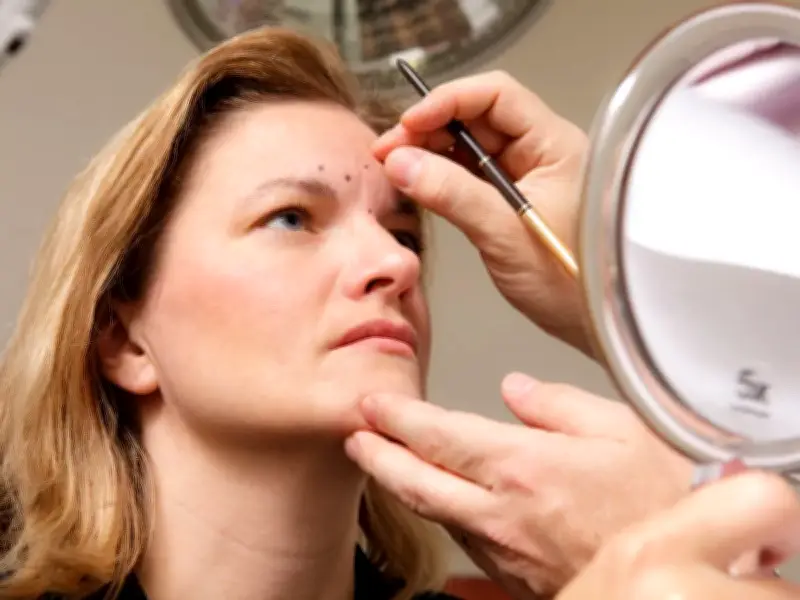
Facelifts are no longer mainly for women in their 60s and 70s. Increasingly, women in their 40s and even 30s are considering surgery at a much earlier stage, raising questions about why the procedure has become more appealing to a generation that grew up with Botox, fillers and increasingly sophisticated non-surgical treatments.
The trend was recently explored by TV star Olivia Attwood in her ITV series The Price of Perfection, which examined why people in their late 30s and 40s are increasingly turning to surgical facelifts rather than relying solely on temporary treatments.
Changing techniques and expectations
Dr Dirk Kremer, a plastic surgeon specialising in facial rejuvenation, spoke to the Manchester Evening News. Based on Harley Street for over 15 years, he is a German board certified plastic surgeon who specialises exclusively in facial rejuvenation surgery, including deep plane facelifts, deep neck lifts and blepharoplasty (eyelid surgery).

Unlike many cosmetic surgeons who perform a broad range of procedures, Dr Kremer has dedicated his career solely to facial surgery, performing more than 100 facelift procedures annually for patients from the UK, Europe, the Middle East and beyond.
He believes that part of the shift comes down to the fact that the facelift itself has changed. “For a long time, people associated facelift surgery with that obvious, tight, ‘operated’ appearance,” he says. Modern techniques such as deep-plane surgery focus on repositioning deeper facial tissues rather than simply pulling the skin, which can create a more natural result.
That has helped change what women expect from the procedure. Rather than wanting to look dramatically different, many patients are looking for something much subtler. “Today’s facelift patient is rarely asking to become somebody else,” Kremer says. “She wants to look like herself.”
Younger patients and changing attitudes
The age of the typical patient has changed, too. Kremer says he increasingly sees women in their 40s and early 50s who do not want to wait until the signs of ageing become more pronounced before intervening. For that group, a facelift can feel less like a last resort and more like a way of maintaining the features they already recognise as their own.
Dr Kremer continued: "The facelift patient today is generally younger, much better informed and has very different expectations. Twenty years ago, many women waited until the signs of ageing were quite advanced before considering surgery. Today, I increasingly see women in their 40s and early 50s who want to intervene when those changes are only beginning."
There is also, he believes, a growing weariness with the idea that every change associated with ageing can be treated with injectables. “Botox and fillers have their place, but they cannot truly correct tissue descent,” he says. Repeatedly adding volume to a face that is ageing through laxity can eventually alter its proportions rather than making it look younger.
Motivations and social pressures
The decision to have surgery is rarely just about technology. Kremer says some patients are motivated by what they describe as the “trauma of ageing”, particularly when they have watched their parents or grandparents go through a similar transformation.
For some women, seeing a familiar pattern emerge in their own face can make ageing feel less abstract. A softer jawline, changes to the neck or loss of definition can become a reminder of what they believe is still to come. “They have watched their mothers, fathers or grandparents age and they know very well how ageing tends to run in their family,” Kremer says.
Social media adds another layer. Women today encounter their own faces constantly through selfies, videos, Zoom calls and social media, often alongside heavily filtered and edited images. Kremer says editing apps allow women to compare their real appearance not simply with other people, but “with an idealised version of ourselves that never actually existed.”
Yet he does not believe social media alone creates the desire for surgery. Instead, it can heighten an awareness of ageing that may already exist, while celebrity openness about cosmetic procedures has helped make facelifts seem less mysterious.

For decades, facelift surgery was something celebrities rarely admitted to having. That secrecy also meant the public tended to recognise the worst examples. “The really good facelifts went unnoticed because nobody knew they had happened,” Kremer says. When a public figure now openly acknowledges having surgery while still looking recognisably like herself, it can demonstrate that a facelift does not necessarily mean looking “done”.
The pressure on women to remain youthful, however, is difficult to separate from the wider double standard around ageing. Men are often allowed to grow older with their wrinkles, grey hair and changing features framed as signs of character or distinction. Women are still more likely to feel that visible ageing carries a social penalty.
“Society still tends to allow a man to look his age far more comfortably than it allows a woman to look hers,” Kremer says.
A personal choice with mixed feelings
That raises the question of whether the rise in cosmetic surgery represents genuine empowerment, or simply another way women are being encouraged to conform to increasingly narrow ideas of beauty. Kremer sees it as both more complicated and more personal than that.
“The empowerment lies in having the choice,” he says. A woman can embrace every line, use Botox, have fillers or opt for a facelift. None of those choices is inherently more graceful than another. The important thing, he argues, is that the decision belongs to the individual.
But one young woman who has undergone a facelift offers a more conflicted perspective. Speaking to the Manchester Evening News, the 28-year-old, who wishes to remain anonymous, said she did not have surgery because she hated her appearance.
“I didn't do it because I hated the way I looked, I did it because I hoped to preserve the way I looked for longer,” she said. “Getting older scared me in the sense that I didn't want to see myself age.”
She also believes her upbringing may have played a role. “My mother was very image-obsessed, and I do think that has an impact,” she said. Although she researched the procedure thoroughly and said her surgeon did not pressure her into having it, she now admits to feeling regret.
“I didn't think I would regret it, gosh, I felt so good for ages after getting it done,” she said. “But it's been a year almost and I do sometimes wonder if I got carried away with myself.”
She does not blame social media entirely, but believes the wider expectations placed on women influenced her. “I don't want to blame social media entirely, I do think that's a cop out, but the way us as women are told how to look definitely got into my head on some level.”
Her advice to other young women now, is: “Look, I can't tell you what to do but we still have years ahead of us to make these decisions. I don't know, maybe that makes me a hypocrite but we haven't really lived yet at this age and now I worry I'll need two more facelifts by the time I'm 60."
Her experience highlights the tension at the heart of the facelift trend. For some women, surgery represents control over a process they have long feared. For others, the desire to intervene early can itself become a source of pressure, particularly when ageing is presented as something that should be prevented rather than experienced.
Kremer describes this tension as a conflict between the “inner and the outer mirror”. The inner mirror is how a woman experiences herself: her energy, confidence, personality and sense of who she is. The outer mirror is what other people see. As the two begin to diverge with age, some women want to bring them back into alignment.
He said: "For some women, cosmetic surgery is about bringing those two mirrors a little closer together. It isn't necessarily about trying to be 25 again or competing with younger women. It can simply be about wanting the face the world sees to better reflect the vitality and sense of self they still feel inside."
While results are often described as lasting around 10 to 15 years, it is not a permanent answer to ageing. In the UK, prices can range widely, from around £5,000 at the cheaper end to £15,000 to £45,000 or more depending on the surgeon, clinic and extent of the procedure.
For younger women, then, the facelift may increasingly be presented as a way of getting ahead of ageing. But the growing trend also raises a more uncomfortable question: if women are choosing surgery earlier because they feel more in control of how they age, how much of that choice is truly their own, and how much has been shaped by a culture that has become increasingly uncomfortable with women simply looking their age?