Esther Rantzen, who has died aged 86, revolutionised three areas of TV: consumer journalism, the visibility of presenters and viewer participation. Her remarkable career was full of landmarks, from vegetable innuendo to life-changing campaigns and her own medals for brilliant people. Here are some of the highlights.
Early Career and That's Life!
Rantzen's TV persona was created on Braden's Week (BBC One, 1968-72), an early customer advice programme fronted by Canadian émigré Bernard Braden. She was hired as a researcher but had a sliding office doors moment after a decision was made to put the off-screen team in the studio to make scams and complaints more dramatic. As a very rare frontline female presenter at the time, she made some male colleagues resentful. In acknowledgment of her break, Rantzen made backroom staff a feature of the show that soon made her career.
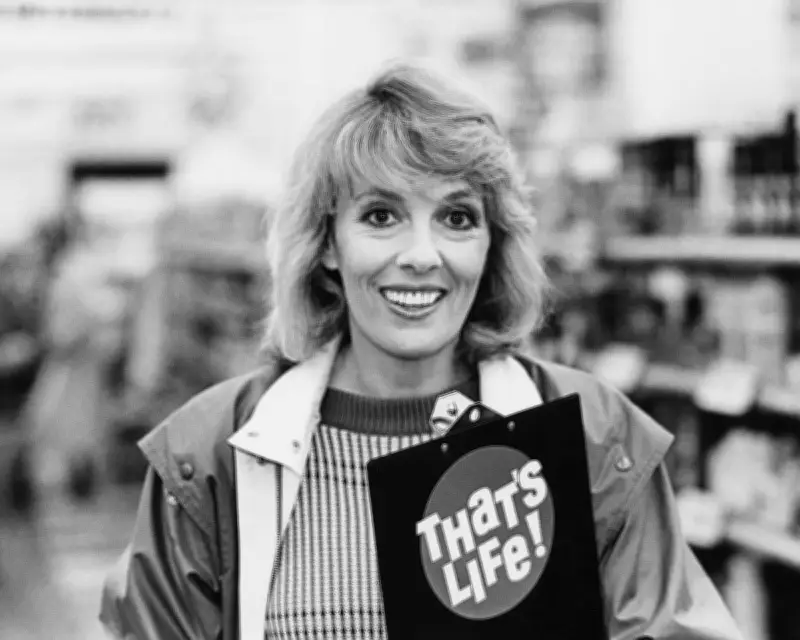
When Braden returned to Canada, Rantzen, in her early 30s, took the helm of the BBC's prime-time replacement, That's Life! (BBC One, 1973-94). As de facto editor, she became one of the most powerful women on British television then or since. Braden's Week had made shopper support into light entertainment, and Rantzen made it both lighter – with puns, poems, ditties and vegetable-based innuendo – and heavier: exposing institutional and domestic child abuse, campaigning successfully for rear seatbelts and safer playgrounds and, after taking on the case of one viewer's child, improving the NHS organ transplant system. The lurches in tone were controversial but, with the show reaching more than 20 million viewers at its peak, among the thousands of lives changed by the programme was Rantzen's own.
Pioneering Reality TV and Honours
Rantzen has been given insufficient credit (or, for some, blame) as a pioneer of the now engulfing genre of reality TV. Her consumer work was viewer-driven, and in The Big Time (BBC One, 1976-80), she enabled citizens to live out their dreams: a keen home cook cheffing at the Dorchester, a gymnast performing as a circus trapeze artist or, most prophetically, becoming a TV star for a day.
The queen of TV went on to set up her own honours system in Hearts of Gold (BBC One, 1988-96), bestowing medals on members of the public secretly commended for feats of kindness, courage and caring. The show's prank and ambush element – recipients were lured to the presentation by a ruse and surprised by Rantzen and team, often in disguise – confirmed Rantzen's theory that viewers preferred their TV with a cheesy garnish.
Talkshows and Documentaries
Claudia Winkleman's recent doomed attempt at the format illustrated the extent to which the celebrity chatshow is a male-dominated field. Some early coverage had even suggested that Winkleman may be breaking the glass ceiling. Characteristically, though, Rantzen had smashed it long ago with 532 episodes over eight years of her biggest show after That's Life!, Esther (BBC Two, 1994-2002). For some, its standing as the UK's most successful solo female-fronted talkshow was reduced by it not airing at prime time, but Rantzen also flourished as one of the most able substitutes for fellow chatshow host Terry Wogan.
She started her career at the BBC and met her husband and mentor, Desmond Wilcox, at the corporation, so Rantzen was something of a Beeb loyalist. However, she participated in two ITV documentaries about Nicholas Winton, a British stockbroker who organised rescues of mainly Jewish refugee children from Nazi Germany. His story was first told by Rantzen on That's Life! in 1988, and Rantzen's six-decade connection with him culminated in the 2023 movie One Life, in which she is played by Samantha Spiro.
Reality TV Appearances and Final Broadcast
Having pioneered, in The Big Time, the type of reality TV that makes celebrities of ordinary citizens, Rantzen got in early on the genre that forces already famous faces out of their comfort zones when she took part in the second series of Strictly Come Dancing (BBC One, 2004). She was paired with Anton Du Beke and was the third contestant to be eliminated.
Whether doing a waltz or chewing marsupial genitalia, reality TV is a circular industry: participation in one show makes you more likely to be offered another. Rantzen completed the big two with the eighth series of I'm a Celebrity … Get Me Out of Here! (ITV, 2008). The audience's relatively benevolent attitude to her was evidenced by her always ranking low in the public vote-off and being fifth to be eliminated, before Joe Swash eventually won.
Widowed young, Rantzen, in the last phase of her campaigning TV career, focused on bereavement and the potential loneliness of older age in Esther Rantzen: Living With Grief (Channel 5, 2021), issues she also tried to tackle through numerous charities and trusteeships.
A commendable and courageous recent tradition on Good Morning Britain has been inviting terminally ill TV personalities – such as Bill Turnbull and Dermot Murnaghan – on as guests to promote research and encourage at-risk viewers to attend medical screenings and seek early diagnosis. In her final broadcast, Rantzen advocated for assisted dying, a topic that she had discussed in numerous TV appearances even as her health precipitously declined. Unusually for her, in what had been a career marked by successful campaigning, her aim was thwarted by parliament last month.