Two debut authors have won the 2026 Women’s Prize for fiction and non-fiction. The awards were presented at a ceremony held in central London on Thursday.
Fiction Prize Winner: Virginia Evans
American writer Virginia Evans took home the fiction prize for her epistolary novel The Correspondent. The book follows 73-year-old retired lawyer Sybil Van Antwerp, who writes weekly letters to friends and relatives. Eventually, she receives correspondence from someone in her past, forcing her to confront a painful period of her life.
The judging panel for the fiction prize was chaired by former Australian Prime Minister Julia Gillard, alongside author and DJ Annie Macmanus, comedian Cariad Lloyd, poet and novelist Mona Arshi, and author and presenter Salma El-Wardany.

Gillard said: “The Correspondent by Virginia Evans is a remarkable novel, with an exemplary combination of originality, excellence and accessibility. It is no mean feat to write a life in letters, but Evans makes this feel effortless, asking the reader to consider the choices we make, whilst elevating an ordinary life in the most heartfelt of ways. The sheer skill required to render an emotionally resonant and engaging work in this format is spectacular. This is a novel that captured our hearts, and should be read and savoured by all.”
Previous winners of the fiction award include Yael van der Wouden, Maggie O’Farrell, and Zadie Smith.
Non-Fiction Prize Winner: Lyse Doucet
The non-fiction category was won by journalist and BBC Chief International Correspondent Lyse Doucet for her book The Finest Hotel in Kabul: A People’s History of Afghanistan. The book draws on Doucet’s 40 years of experience staying at the Kabul Inter-Continental hotel, documenting modern Afghan history through the stories of those who worked or stayed there during decades of conflict. It was also shortlisted for the Nero Non-Fiction Book Award.
The non-fiction award was chaired by Baroness Thangam Debbonaire, joined by engineer Roma Agrawal, Neom Wellbeing founder Nicola Elliott, novelist Nina Stibbe, and crown court judge and thriller author Nicola Williams.
Baroness Debbonaire described the book as a “perfect work of narrative non-fiction.” She added: “It is not only cleverly constructed and brilliantly researched, but each and every element is handled with extraordinary sensitivity and warmth – it will move you to tears or make you laugh, or perhaps both. Informed by decades of excellent reporting, Doucet centres the real-life experiences of people – the staff and guests, alongside the hotel itself – and with the future of Afghanistan still being written, this book’s importance will only get stronger as the years go by.”
Doucet becomes the third winner of the non-fiction award, which launched in 2024. Previous winners include Naomi Klein for Doppelganger: A Trip Into the Mirror World and Dr. Rachel Clarke for The Story Of A Heart.
Women’s Prize Trust
The awards were announced by the Women’s Prize Trust, a UK charity aiming to “create equitable opportunities for women in the world of books and beyond.” Claire Shanahan, executive director, expressed “heartfelt congratulations” to the winners and gratitude to the judges for their “thoughtful deliberations.” She said: “The work we do at the Women’s Prize Trust is inspired by our mission to build a better future for everyone by championing women’s writing. We are living through challenging times: amplifying women’s voices and their power to inspire change is as important now as it ever has been, perhaps even more so. The 32 extraordinary books recognised over this year’s prizes are a compelling affirmation of what women’s words can achieve, and I urge readers to buy, borrow and share these exceptional books.”
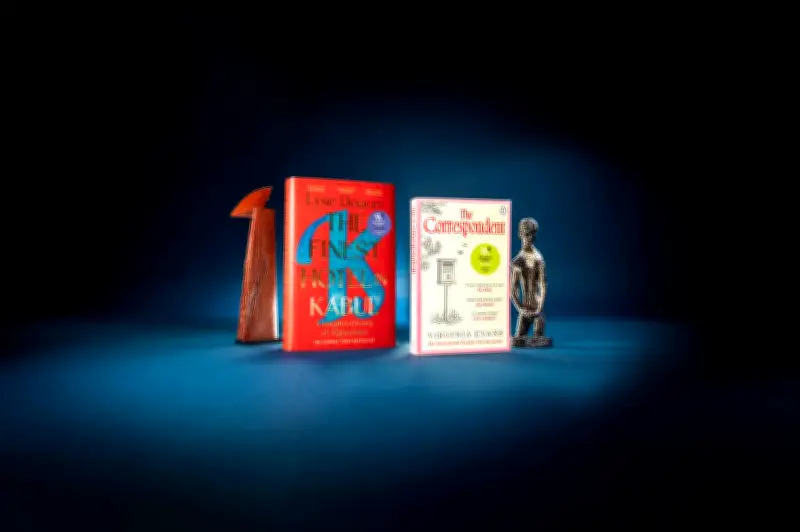
Both winners received a £30,000 cheque and a sculpture. Evans took home the Bessie statuette, created by the late artist Grizel Niven, while Doucet received the Charlotte sculpture, gifted by the Charlotte Aitken Trust.