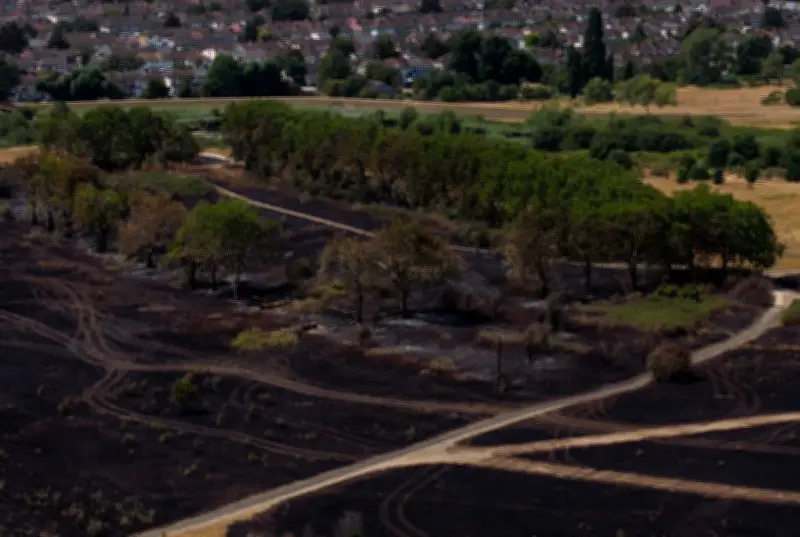
London Fire Brigade (LFB) battled ten grass fires on Wednesday as the capital continues to suffer during a historic drought.
With no meaningful rainfall for weeks, the brigade took more than 1,000 emergency calls on August 5, including more than 200 calls to grass fires. Firefighters were mobilised to 493 incidents, including 10 grass fires across the capital.
Major Incidents
Ten fire engines and around 70 firefighters tackled one fire near Sandy Lane in Orpington which affected around two hectares of woodland. Crews from Orpington, Sidcup, Bexley and surrounding fire stations were mobilised to the scene at around 7.10pm, extinguishing the blaze by around 8.40pm and preventing the spread of the fire to a nearby business.
Around two hectares of grassland was damaged by another fire near Oak Street in Romford on Wednesday afternoon. Eight fire engines and around 60 firefighters from Walthamstow, East Ham, Stratford and surrounding fire stations attended, using wildfire beaters to douse the blaze.
Other Fires
Four fire engines and around 25 firefighters tackled a grass fire near Ambleside Drive in Feltham on Wednesday evening, with around two hectares of shrubland damaged by the blaze. Crews from Feltham, Heston, Twickenham and Heathrow fire stations were called to the scene around 8.40pm, and extinguished the fire by 9.40pm.
Three further hectares of grassland was damaged by a separate fire in Romford, as was around a hectare of grassland and shrubbery in Woolwich, and around two hectares of park and shrubland near Lambs Lane North in Rainham. Smaller grass fires were also attended in Chessington, Ham, Whitechapel and Feltham.
Context and Warning
It comes a week after LFB had its busiest 24 hours of 2026 last Wednesday, when they tackled 63 grass fires across the capital amid sweltering temperatures. Control Officers took nearly 3,000 emergency calls over the weekend, as the Brigade urged Londoners to play their part in protecting green spaces from fire and to take extra care during the hot weather.
Assistant Commissioner for Operational Resilience and Control Patrick Goulbourne said: “In these dry conditions, it only takes a spark to start a grass fire and they can spread rapidly, quickly threatening homes, workplaces, infrastructure and the environment.”
England has faced its driest July in more than 100 years, according to the Met Office. Rainfall across the country was at 4.4mm, one of the lowest levels on record, behind only February 1891 (3.3mm) and tied with June 1925.