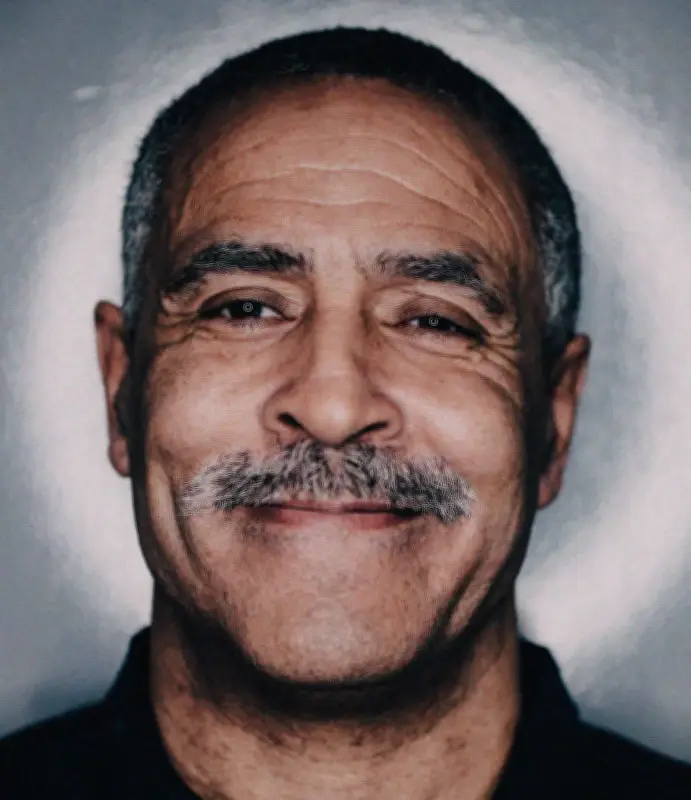
Daley Thompson, the double Olympic decathlon champion, says a knighthood would not change his life, as he reflects on a career that has seen him hold a British national record for 50 years. Speaking to the Guardian, Thompson, now 68, also explained why he got a video game and his great friend Sebastian Coe did not.
Early life and record-breaking start
Thompson's Scottish mother raised him while working two or sometimes three jobs, with help from food banks. His father, from Nigeria, was shot and killed when Thompson was 13. Despite this, he never let adversity knock him off his stride.
Last month, Thompson became the first British athlete to have held a national record for 50 years. The record was set in September 1976 in Talence, France, when he eclipsed Peter Gabbett's old record by four points. Asked if that was the moment he knew he would be great, Thompson said no. "It was before that, when I did my first decathlon in Cwmbran in 1975," he said. "I was 17 years old. I did my first five events and I literally remember waking up on the second day thinking: 'Oh man, you're going to be really good at this.'"
There was little financial help for talented youngsters then. Thompson recalled a man called Tom McNab, who asked Adidas to send him shoes because he could not afford them. "That was one of the things that made me think I'm going to be really good," he said. "Because nobody I knew ever got shoes."
Olympic glory and the knighthood question
During the 1980s, Thompson powered to two Olympic decathlon gold medals, broke the world record four times and remained unbeaten for nine years. He trained 20 times a week and, famously, when he heard that his great German rival Jürgen Hingsen trained on Christmas Day, he made sure he did two sessions.
Unlike Britain's only other three multi-event Olympic track and field champions, Dame Mary Peters, Dame Denise Lewis and Dame Jessica Ennis-Hill, Thompson's achievements were not rewarded with a knighthood. Asked if he ever wishes he was Sir Daley, he said: "Not really. I mean, it would be lovely, and great for all the people that have helped me. But it's not going to change my life, honestly."
The long-standing suspicion is that the controversy following his second Olympic gold in 1984 is to blame. Having whistled to the national anthem, he wore a T-shirt to the press conference asking "Is the world's second greatest athlete gay?" – an apparent reference to Carl Lewis – before joking that he would like to have Princess Anne's babies. Writing for the Guardian from Los Angeles, Charlie Burgess began his report: "Bang goes Daley Thompson's chance of a knighthood." The backlash was such that the Royal Family released an official statement saying it was "absurd" to think Princess Anne had been upset.
Thompson said he would not do it now. "No, of course I wouldn't," he said. "But you're right, absolutely different times." He reiterated that Princess Anne did not mind his joke. "The thing was she wasn't offended," he said. "She was fine with it. It's a faux outrage."
The video game and earning his way
For years Thompson made very little money, with decathletes seen as far down the pecking order. The cash really only started to come in after Daley Thompson's Decathlon, the computer game that sold more than a million copies, was released. "You're the first to mention today," he said, laughing. "Literally there hasn't been a day since 1984 when somebody hasn't come up and said: 'You owe me a keyboard.'"
He also smiled when reminded that there was never a video game about Sebastian Coe, who he believes has done a superb job reviving his sport since being elected president of World Athletics in 2015. "Absolutely, very true," he laughed. "That's because they knew how boring he was. And there's something else I'd like you to put in there, that he never had a statue in Madame Tussauds – I did!"
Thompson reckons he made about £20,000 from the game, which spawned two sequels. "Don't forget, the first six or seven years I was doing it, you weren't allowed anything," he said, referring to how athletes were officially permitted to get money from sponsors and meeting organisers only in 1982. "We were earning literally nothing."
"But I was happy to sleep on floors to do what I was doing," he added. "Even at the beginning of the 1980s, when I was already Olympic champion, I would go on warm weather training to California and I would sleep on people's floors or sofas. But honestly, it forges you, it makes you. Because you don't expect anything, you know you have to earn it."
Moving forward and lasting rivalries
Thompson says he would never hang Steve Powell's iconic Last Man Standing photograph from the 1982 European Championships on his wall. "I'm not like that," he said. "Once I've done it, it's over. I'm looking for the next thing." His gold medals and trophies have all gone to friends and training partners. "I've got two families, and my younger kids, who are 24 and 19, they've never seen any of my stuff."
He still sees Hingsen, his great rival from the 80s, a couple of times a year. When they meet, Thompson likes to wind his German friend up, but there is clearly a deep mutual respect. As he points out, when you tally up their personal best scores over the 10 decathlon events they come to exactly the same. Yet Hingsen, who broke the world record twice himself, was never able to beat Thompson when it mattered.
"Physically, we are kind of the same, but I think I competed better," he said. "I enjoyed the test more." Thompson also used mind games to persuade Hingsen into thinking he was unbeatable. "If I knew he was going to the track at 11am, at 10.45am I would put the high jump bar really high and I would just sit on the bed and wait for him to come," he said. "And so then he thinks I've been jumping. Or you throw the shot put into the ground 10 feet further than you've ever thrown before."
Sometimes Coe would do his bit too. During the 1984 Olympics, when Thompson had gained the upper hand in another epic decathlon battle, the 1500m champion approached Hingsen, who was sitting on a wooden bench with a towel around his neck. "He's an animal, isn't he?" Coe told him. Hingsen responded by pulling the towel up, nodding and pulling the towel back down.
"I do feel a bit bad for him," admits Thompson. "Because, if it wasn't for me, he would be one of Germany's best ever athletes. Instead, they give him a hard time, which they shouldn't."
Thompson, who still works out four or five times a week and trains a group of 40-, 50- and 60-somethings in Battersea Park on Saturday mornings, says his enduring friendships with Coe and Hingsen mean at least as much to him as the medals ever did. "This is going to sound really simple, but I think as you get older, you get a much better perspective," he said. "And while that, at the time, was the greatest thing that ever happened to me, having long-term friends brings a different kind of joy. And it's deeper."
And does he still train on Christmas Day? You bet he does. Only now he has company. "They're all there on Christmas Day – they climb over the fence," he said. "But I don't do that, before anybody says anything. I just shout through the bars," he added, with a mischievous smile.