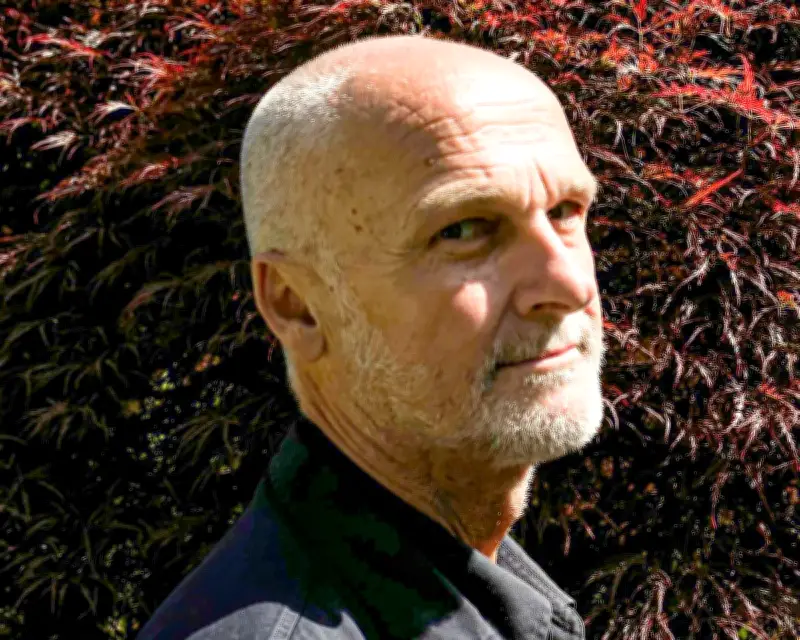
Clive Parkinson, reader in arts, health and social justice at Manchester Metropolitan University, has died aged 63. Working across the NHS, higher education and the voluntary sector, he became one of the UK’s leading voices in arts and health.
Early life and formative experience
Born in Morecambe, Lancashire, Clive was the son of George, a lorry driver, and Betty (nee Thurlby), a shop worker; both helped nurture the compassion and sense of community that would shape his life. After leaving school at 16 in 1979 with few qualifications, Clive attended Lancaster & Morecambe College before establishing an art studio for the residents of the Royal Albert, a large Victorian hospital for adults with learning disabilities – an experience he would later describe as the most formative of his life.
While there, he completed a part-time degree in independent studies and visual art at Lancaster University, where his research focused on the relationship between creativity, culture, the arts and health. Following the closure of the hospital in 1996, Clive led on mental health promotion for Lancashire Care NHS Foundation Trust and managed day services for people affected by addiction and schizophrenia in Morecambe and Lancaster.

Career and influence
Clive and his partner met in 1988, when she was a freelance drama worker at the Royal Albert; in 2002, they moved to live in St Ives, Cornwall, with their children, and he became director of the newly established Arts for Health Cornwall & Isles of Scilly. After a couple of years, the family returned to the north-west, where Clive began his 20-year tenure at Manchester Metropolitan. He convened the Manchester Institute for Arts, Health & Social Change and wrote several influential publications including the Manifesto for Arts & Health, the Recoverist Manifesto, The Manchester Declaration, and A Social Glue – his vision influencing the health agenda in Manchester and beyond.
He also worked with an all-party parliamentary group on arts, health and wellbeing, and became closely involved in arts and health developments across the UK, Europe, Australia and Japan. In 2018, he gained a doctorate by published work titled Social Justice, Inequalities, the Arts and Public Health: Weapons of Mass Happiness? In 2022, his vision and leadership was celebrated with an honorary chair in creative health and social change at the University of Manchester.
Later years and legacy
In early 2020 Clive was diagnosed with multiple myeloma, an incurable blood cancer, which he described as “an inconsiderate lodger”. Shortly after Clive left academic life in 2021, his keynote talk for the Culture, Health & Wellbeing International Conference explored his ruminations on power, inequality and sustainability through his experience of treatment – and his walks into the hills and woods behind his home town. Clive continued to pursue independent opportunities such as writing, painting, film-making and travelling with our family.
Clive is survived by his partner and their children, Jesse, Charlie and Jack.