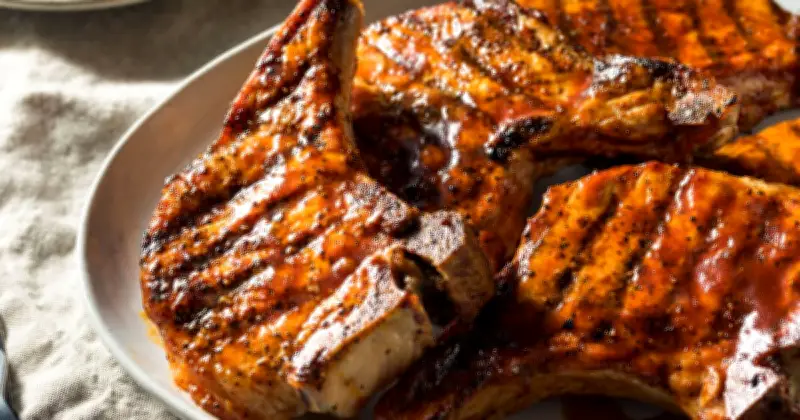
A chef has revealed a simple step that home cooks can add to their pork cooking process to achieve juicy meat with crispy skin, avoiding the common problem of overcooking.
The key step: dry brining
Chef Charles Kim, known as Chef Fatty on TikTok, explained that most people overcook pork, resulting in white meat that is “rubbery and dry.” He said: “Just like steak, pork is safe at 145℉ (62℃). Go any higher and it turns chewy.”
To get the perfect cook, the first step is to dry brine the pork. Ensure the pork is dry and free of excess moisture, then season both sides with salt. Leave the chops to chill in the fridge for one hour or overnight.

Why it works
Chef Fatty explained: “When salt hits the meat, it draws out water, creating a salty brine on the surface. Then the meat soaks that back in, making the proteins hold on the water when it cooks. Then when you leave it in the fridge, the dry air sucks more moisture off the surface, making it easier for browning.”
For thin pork chops, grill or fry in a pan until it hits 145℉ in the middle. For thicker cuts, reverse sear by cooking in an oven or air fryer at 300℉ (approximately 148℃) until it reaches 130℉ (54℃), then finish in the pan.
Crispy skin secrets
Salting pork skin helps make it crispy by pulling out moisture through osmosis. Dry skin is the main secret to good crackling; when wet skin cooks, it steams and stays soft, but dry skin bubbles, puffs, and turns crunchy in hot heat.
The culinary experts at Good Food agree. They said: “Use the full amount specified in the recipe to cover the pork belly rind when dry brining as this is what causes the crackling to puff up and become crispy when the salt reacts with the fat. You can mix it with some oil to help it coat the pork if you need to. Rub it into the skin really well, including into the scored grooves.”
If the pork skin isn't dry enough, dab it with kitchen paper to remove excess moisture. Scoring the skin with a sharp knife can also help.