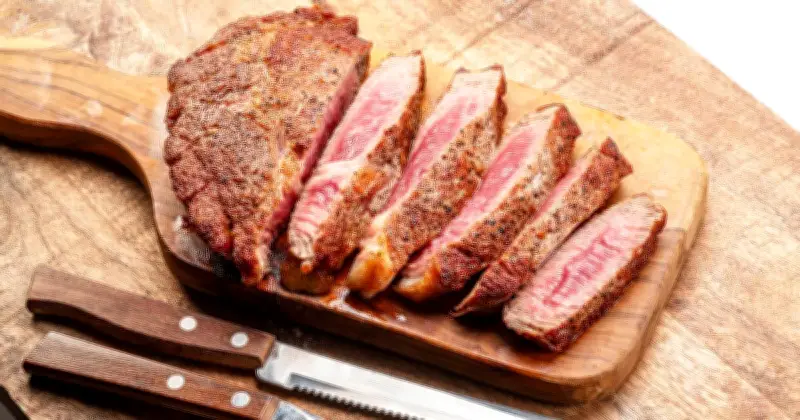
Chef Mike Reid says home cooks should ditch olive and vegetable oil in favour of beef tallow for a "beefier" steak. The rendered beef fat has a high smoke point, making it suitable for high-heat cooking, and can give food a rich flavour while helping create a crisp, deeply browned crust on steak. Unlike most cooking oils, tallow is typically solid or semi-solid at room temperature.
Why Beef Tallow Beats Processed Oils
Mike, who has launched the podcast The Two Hungry Chefs - The A–Z of Food alongside Jeremy Pang, exclusively told us: "Beef tallow [is best to cook steak with], every time. It has a high smoke point, so it handles the heat needed for a proper sear, and it adds a deeper, beefier flavour that no processed oil can."
"I'd steer clear of processed seed oils altogether," he added. "If you don't have tallow, dripping or lard will also do the job." To give the steak even more flavour, Mike suggests adding butter, garlic and thyme towards the end of cooking and basting the meat, rather than adding them at the start, as butter can burn in a hot pan.
Preparation Tips Before the Pan
Beef tallow can be used as an occasional cooking fat, although it is high in saturated fat, so health guidance recommends limiting foods high in saturated fat. Mike, who also shares recipes on his YouTube channel, insists there is another golden rule every cook should follow before the meat even touches the pan.
Alongside getting the timing right for your preferred level of doneness, the chef stresses that preparation is key. He recommends avoiding cooking steak straight from the fridge, allowing it to sit out briefly first so it isn't at its coldest when it hits the pan. "Never cook steak straight from the fridge," he shared. "You'll burn the outside before the centre has a chance to warm through."
While bringing steak fully to room temperature can take considerably longer than many recipes suggest, allowing it to sit out for a short period can take the chill off before cooking. The exact time will depend on the thickness and size of the steak.
Cooking Tips for Different Cuts
For sirloin, Mike says mastering this particular cut demands "high heat and confidence". He continued: "Sirloin is the perfect middle ground. It has a good balance of tenderness and flavour, with a fat cap that bastes the meat as it cooks."
"The key is high heat and confidence - get your pan properly hot, season generously with sea salt, and don't keep turning it. Let it develop a crust. If you like your steak medium, take it off at medium-rare and let it rest - it will carry over perfectly."
Celebrated for its melt-in-the-mouth texture, Mike points out that fillet is also "very lean", containing roughly four per cent fat. "So it doesn't have the same depth of flavour as a ribeye, but what it gives you is that butter-soft texture," he explained. "Because it's lean, you need to respect it. Don't overcook it and don't cook it straight from the fridge. Let it come to room temperature first so you can heat the centre without drying it out."
"Ribeye is for flavour lovers. The marbling running through the meat renders down as it cooks, basting the steak from within," he shared. "That's where you get that deep, beefy character. Don't be afraid of the fat - that's where the magic is. Cook it hard and fast to build colour, and rest it properly."
When it comes to wagyu, Mike says this luxury cut needs to be handled with care to get the most out of its rich flavour and texture. "The more you cook it, the less you're going to have," he stressed. "If you're buying a 200g steak of wagyu and you cook it well done, you're going to be left with around 90g of meat on your plate, it's going to render down."