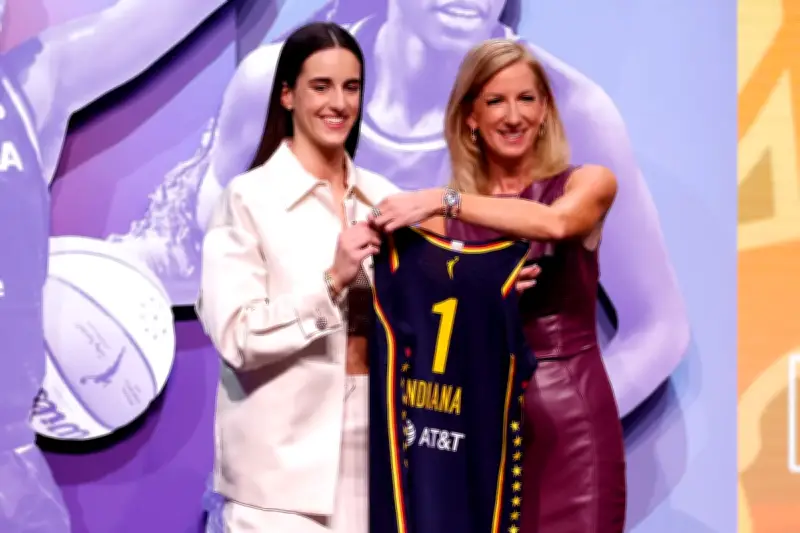
WNBA commissioner Cathy Engelbert will retire from the role on 30 December, ending a tenure that began with her appointment as the league's first commissioner in 2019. Her seven years in charge featured landmark successes alongside bruising controversies, from record growth and a landmark media deal to expansion, labor battles and a fractured relationship with players.
A Tenure of Historic Growth
Engelbert was thrust into the fire almost immediately when the Covid-19 pandemic threatened her first season in charge. She helped oversee the creation of the "Wubble" at IMG Academy in Florida, allowing the league to stage a shortened 22-game season in 2020. The regular-season schedule has since expanded to 44 games and will grow to 50 in 2027.
It's also been well documented that Engelbert presided over the WNBA during a period of historic growth, with sharp increases in television audiences, attendance, sponsorship revenue and merchandise sales. She also led the league through a huge expansion from 12 teams to 18 by 2030. The Golden State Valkyries joined for the 2025 season, while this year saw the addition of both the Portland Fire and the Toronto Tempo. Teams from Cleveland, Detroit and Philadelphia will join by the decade's end.

Landmark Deals and Expansion
Two key achievements will likely come to define Engelbert's time as commissioner: the league's landmark $3.1bn media rights deal and the unprecedented collective bargaining agreement (CBA) struck between the league and the players, both negotiated this year. That 11-year media rights deal resulted in an astronomical increase to the league's annual revenue – to the tune of $281m – and includes partners Amazon, Disney and NBC. The deal also resulted in more than 200 games being streamed or aired live this season (out of 330 total regular-season games).
The CBA negotiations between the WNBA and the WNBPA dominated most of the league's coverage ahead of the 2026 season. The two parties reached a verbal agreement in March and ratified the deal a week later after months of negotiations that were often contentious. This year's CBA raised the salary cap from $1.5m to $7m, gave players approximately 20% of shared revenue, increased supermax salaries to $1.4m and established a $300,000 minimum salary. Just as significantly in the short term, after months of increasingly contentious negotiations, the agreement ensured the 2026 season began on time.
Player Tensions and Communication Gaps
But Engelbert's tenure has also been marked by tensions with players, with her communication – or lack of it – at the heart of much of the criticism directed her way. For example, the Phoenix Mercury's Alyssa Thomas said she didn't hear from Engelbert after receiving death threats following a foul interaction with Indiana Fever guard Caitlin Clark. "A lot of us, myself included, didn't even know the play took place until after the game, and now we're being painted as thugs and there's death threats out on us, so it's really unacceptable, it's something that needs to change in this league, and I'm just really sick and tired of it," Thomas told reporters. She continued: "We still have yet to hear anything from Cathy, it's no surprise. As usual, she remains silent, and that's unfortunate when our lives are being threatened."

Thomas isn't the only player who's spoken about Engelbert's lack of communication this season. "My only relationship with Cathy is when she hands me awards, which is great. I love to see her," A'ja Wilson joked at All-Star. And it would be impossible to forget Napheesa Collier's blockbuster broadside toward Engelbert at the end of the 2025 season. "This past February, I sat across from [Engelbert] and asked how she planned to address the officiating issues in our league," Collier told reporters in October. "Her response was, 'Well, only the losers complain about the refs.' I also asked how she planned to fix the fact that players like [Caitlin Clark, Angel Reese and Paige Bueckers], who are clearly driving massive revenue for the league and are making so little for their first four years. Her response was, '[Clark] should be grateful she makes $16 million off the court because without the platform that the WNBA gives her, she wouldn't make anything.' And in that same conversation, she told me, 'Players should be on their knees, thanking their lucky stars for the media rights deal that I got them.'"
Engelbert, in her availability at All-Star, acknowledged she could have done more. Communication is and was "absolutely something I've been talking with the players about, how much they want to hear from us, how much they don't", she said. "We do send them a lot of email updates and things like that. They're a generation that doesn't check email as much, so we have to get better at a text chain." She added: "There's no doubt I need to be better, everybody needs to be better at communication, I think, all the time. So we'll continue to work on that and communicate." Engelbert also seemed to chalk much of the complaints up to missed signals. "I figure the players don't want to hear from us all the time, so we're going to institute more frequent communications with them when it's appropriate," she said.
It was a striking disconnect for a commissioner who oversaw such extraordinary growth. Engelbert helped build a WNBA that was richer, larger and more influential than the one she inherited. Yet as the players themselves became more powerful, the distance between them and the league's commissioner often appeared to grow along with it.