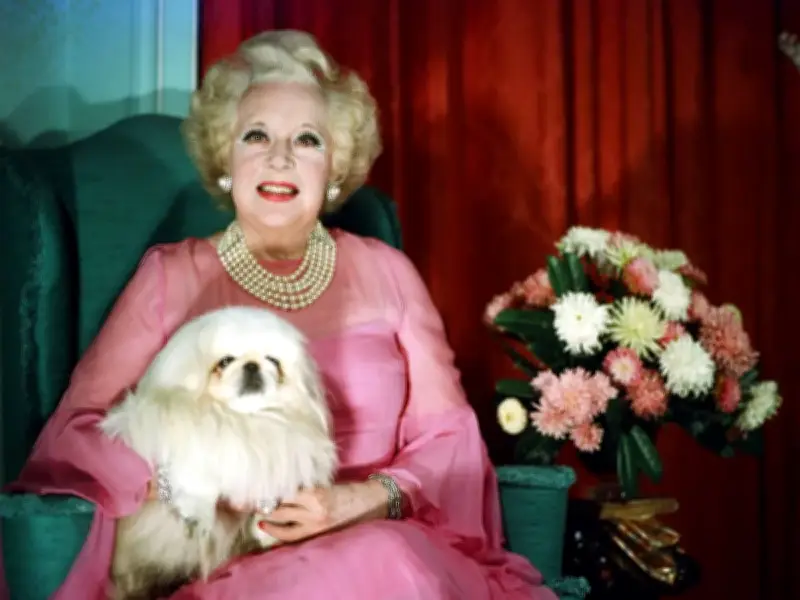
Dame Barbara Cartland wrote 723 books, sold over 750 million copies, received 49 marriage proposals, and ranks as the third most-read author of all time. This year marks 125 years since the romance author's birth, and a new biography – The Great Dictator by Matthew Sweet – examines the woman behind the pink chiffon dress.
Record-Breaking Writing Career
Matthew Sweet, a historian and writer, said: "She is probably the best-known romance author of all time. She did write the brilliantly odd Health Food Cookery Book in 1971, suggesting buttercream and liver for longevity."
Sweet added: "She holds the Guinness World Record for writing the most novels in a year – an astonishing 23 in 1976. She could write one in a fortnight. She'd start work at 1.30pm, dictate 8,000 words to her secretary before 4.30, then clock off."

Her Most Popular Novels
Barbara's most popular novels include A Hazard of Hearts (1949), The Wicked Marquis (1973), and The Duke and the Preacher's Daughter (1978). She would wear a bright pink gown and lie on a chaise lounge with her pampered pekingese while dictating her romance novels to a secretary who typed them up.
Her larger-than-life persona has been parodied many times, most memorably by Matt Lucas on the comedy sketch show Little Britain. Sweet said it was all true, adding that she was very canny in how she presented herself. "She was very smart about the way that she marketed herself. She created this very strong image which is extreme and a bit ridiculous really, isn't it? But we all remember it."
Control and Mysticism Behind the Scenes
Sweet said Barbara disliked showing emotion in interviews and always crossed it out. "She's also crossed out any swearing, although she had quite the potty mouth at times." He described how she lay on the sofa while words flowed out of her, with a secretary who wasn't allowed to look her in the eye or cough, sneeze, breathe audibly, or wear anything eye-catching.
Sweet noted her occult beliefs: "She had a lot of occult beliefs, so for her it was a slightly mystical or magical process. She was probably the last person alive to believe in maternal impression, a disproven theory that a pregnant woman's thoughts, emotions, or intense physical experiences could physically mark or alter her developing child. Before she gave birth to [first child] Raine, she stared for hours at a picture of a beautiful baby. She was convinced it worked."
Archive Opened After Her Death
The biography draws on records kept by Barbara at her home, Camfield Place in Hatfield, Hertfordshire. Sweet said previous memoir attempts were blocked: "There have been memoirs before, but she nobbled them. She either seduced them by being really nice to them or she went to war with them. She demanded copy approval and would try to rewrite, adding extra pages."
After Barbara's son Ian died in February 2023, Sweet contacted his daughter Tara. "She said: 'Oh, just come over,' and threw the whole archive open to me. It hasn't been touched in a quarter of a century. Everything is there. She didn't throw anything away. Her Tippex is still there, as is the secretary's typewriter and reams of blank notepaper."
Later Life and Legacy
In her 70s, Barbara began losing her sight and hearing. Sweet said she disliked any reference to her saying 'what' or 'pardon', and that surviving tapes show she found higher-pitched voices harder to hear. "She's often saying to the secretaries quite briskly to 'speak lower'. Losing her sight partly explains something of the oddness of her appearance, too, because she's putting all this makeup on without quite being able to see what she's doing."
Born in July 1901 in Birmingham, Barbara published her first book in 1925 and entertained readers through the Second World War. She famously said her heroines "never go to bed without a ring on their fingers – not until page 118 at least."
Sweet said: "She inspired so many. Bridgerton is like Barbara but with sex a bit earlier on in the book. A common theme was a woman marrying the wrong man. Fate has to find a way of killing him usually in order for her to marry the one she really really wants. There's a lot of very convenient plane crashes."

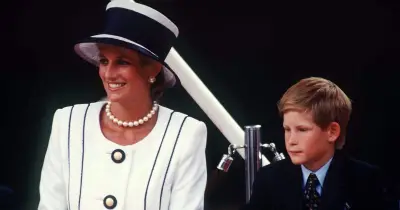
Life mirrored art in some ways. Barbara married Alexander McCorquodale from 1927 to 1933, and they had Raine, who later became Princess Diana's stepmother. She then married Alexander's cousin Hugh McCorquodale in 1936. After welcoming sons Ian and Glen, Hugh died in 1963 following years of ill health related to war wounds suffered at the Battle of the Somme. Barbara publicly claimed Raine was actually the biological daughter of Prince George, who died in a plane crash in 1942 while serving in the Second World War.
Sweet laughed: "A shockingly large proportion of men who Barbara went out with died in plane crashes, car crashes or threatened to shoot themselves if she didn't marry them. They were a traumatised generation. Barbara generally demanded a proposal if you wanted to make out with her. And she carefully kept a record of all of these men. There's an album which has photographs of most of them with remarks like, 'wanted to marry me' or 'boring' or 'killed in an air crash that many believed to have been caused by a flying saucer'."
Modern romance writers see Barbara as a millstone. Sweet said: "She was a genre unto herself and there's this paradox about her that she's still the third best-selling author in history, but she's not much read today. In a way, her readers died with her. Her legacy is everything that she did for those readers – two generations of women. She was a really important writer for millions and millions – readers who might only have read Barbara Cartland."
The Great Dictator: A Life of Barbara Cartland by Matthew Sweet is published by Hodder & Stoughton.