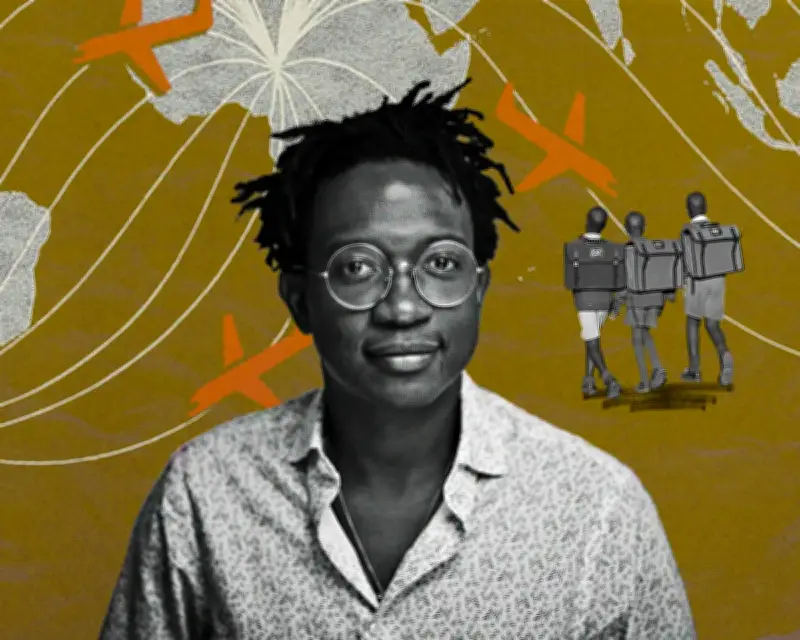
Simukai Chigudu's memoir 'Chasing Freedom: Coming of Age at the End of Empire' offers a poignant reflection on growing up in Zimbabwe during political turmoil, capturing the confines and conflicts of a post-colonial generation. The book details his life between the ex-colonised and the ex-colonial power, and resonates with a broader shared experience for those born to parents whose traumas were never understood.
An Invisible Generation
Chigudu's personal story is layered with the history of Zimbabwe: its struggles for freedom, bitter disappointments, and lives broken in the process. It is the first rendering of a generation of Africans born to parents of a certain class, who inherited the contradictory burdens of anti-imperialism and the expectation that their children must achieve outside the continent. This small class is illegible to outsiders in the west—neither wealthy nor poor, educated enough for civil service or academic jobs, but never affluent. They provided their children with private English language education and 'exposure', as Chigudu's mother calls it, but were not comparable in lifestyle to British elites.
Their politics are also complex: many steered their children away from local cultures towards the west, while maintaining a wholesale denouncement of that world, which they fought in liberation struggles. They are also unreliable witnesses to their own lives, marked by disorienting political events. Chigudu describes intimate conversations among these adults as 'moistureless, even frightened, the result of generation upon generation of repression'. He writes: 'Emotionally weighty things happened in my life that were never talked about. Whatever was difficult or painful lay dormant in the dark shadows of my soul.'

School as a Way Out
That painful material became metabolised through academic excellence, or 'punishing the books'. Chigudu paints a chilling portrait of how school became high-stakes ground for those without the privilege of family businesses or parents with money. English-language schooling was an oasis in the middle of political turmoil—a place where pride in achievement jostled with shame that it was on the terms of white colonisers, who in Zimbabwe still owned the lion's share of assets and land.
For Chigudu, school was not just a rite of passage but the passage. The crushing weight of academic pressure was the understanding that failure in grades meant failure to launch into another good school or university in the west, and therefore a good life. Escape was an actualisation of yourself, and a validation of your parents' trajectory and hopes, never explicit but overbearing.
Turmoil, Regret, and Eventual Stillness
Chigudu plots his way to 'freedom' as Zimbabwe unravels around him, against a backdrop of Robert Mugabe's land repossessions, a failing government, power cuts, corruption, bribery, nepotism, and embezzlement. He leaves Zimbabwe for the UK, landing into a bruising experience in public school and university, but never escapes what was always a mental location. He becomes a doctor, then an associate professor of African politics at Oxford University, and heads up the Rhodes Must Fall movement, realising that 'the heated rhetoric of the culture wars could never do justice to what decolonisation has meant in my life'.
The book is full of arresting reflections, potent and often funny. One lingering question Chigudu asks himself: 'I wondered what life I might live if the choice were entirely mine, free of pressure and expectation.'