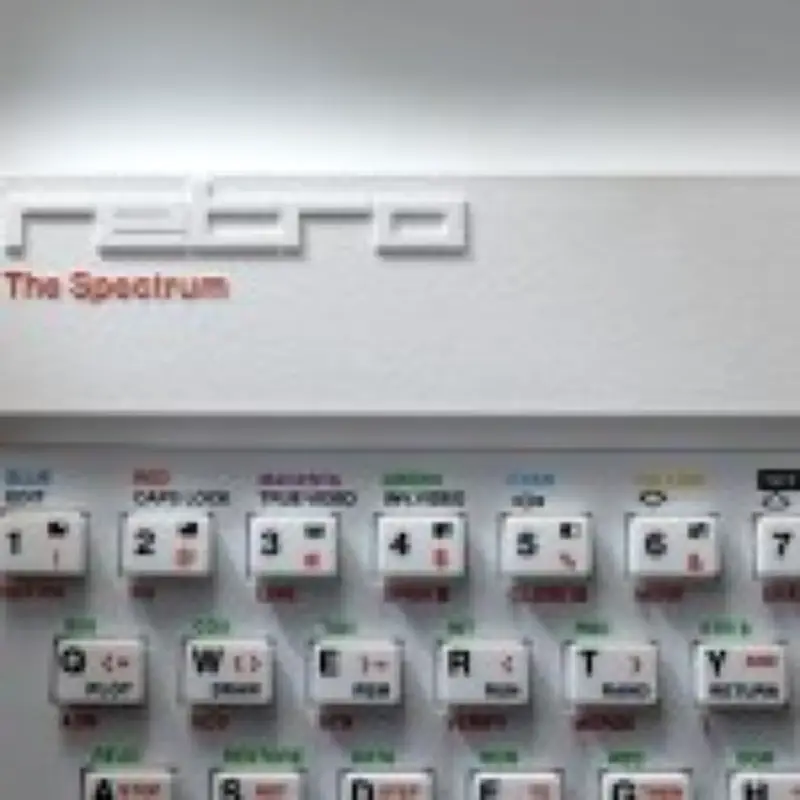
Retro Games has released The Spectrum White Edition, a full-size recreation of the original Sinclair ZX Spectrum in white, inspired by a rumoured special edition from the 1980s. The device is functionally identical to the black version released earlier but includes extras such as 48 classic games (including Manic Miner, Skool Daze, The Great Escape, and The Hobbit), a white joystick resembling the Competition Pro 5000, a USB stick for additional games, and an all-new copy of Crash magazine.
The standard edition costs £129.00, while a Collector's Edition at £199.99 adds a QuickShot II-style joystick, a joypad, a spiral-bound manual, and a black-and-white printer. Both versions allow four save slots per game, rewinding, HDMI output at 720p (50/60Hz), and support for BASIC programming.
Hardware replication and licensing challenges
Retro Games CTO Chris Smith explained the difficulty of recreating the Spectrum's rubber keyboard. The original 1980s method used a different process; modern techniques initially produced inconsistent keypresses. The team eventually partnered with a manufacturer of rubber iPad keyboards to achieve the correct feel.
The name 'ZX Spectrum' is now owned by Comcast (through acquisitions of Amstrad and Sky), making licensing expensive and impractical. Instead, Retro Games uses 'The Spectrum', leveraging the fact that the name 'ZX Spectrum' is trademarked but the computer's design is not, and they wrote their own compatible ROM for the BASIC environment.
Preserving a living format
Smith emphasised that The Spectrum is not a mini-console but a fully functional computer. It can run any Spectrum game and allows programming in BASIC, turning it into an educational tool. The device has revitalised the indie game development scene for the Spectrum, with new games being created by enthusiasts, particularly from Russia and Poland.
Retro Games' upcoming products include portable handheld versions of the Spectrum and Commodore 64, developed in collaboration with Blaze. Smith noted that the company's success stems from listening to customers and recreating the nostalgic experience of opening a computer on Christmas morning in the 1980s.
Interview highlights
During the interview, Smith shared his personal history: he wrote a Spectrum game as a teenager, later reverse-engineered the Spectrum's ULA chip by having it photographed under a microscope (leading to his book The ZX Spectrum ULA: How to Design a Microcomputer), and eventually partnered with Darren Melbourne and Paul Andrews to form Retro Games. The team's first product was TheC64 Mini, followed by full-size versions and other retro computers.
Smith noted that the Spectrum community remains active, with many gamers now using modern recreations for reliability. He stressed the importance of preserving the original experience, stating, 'Our aim is to recreate the same experience you would have had back in 1983.'