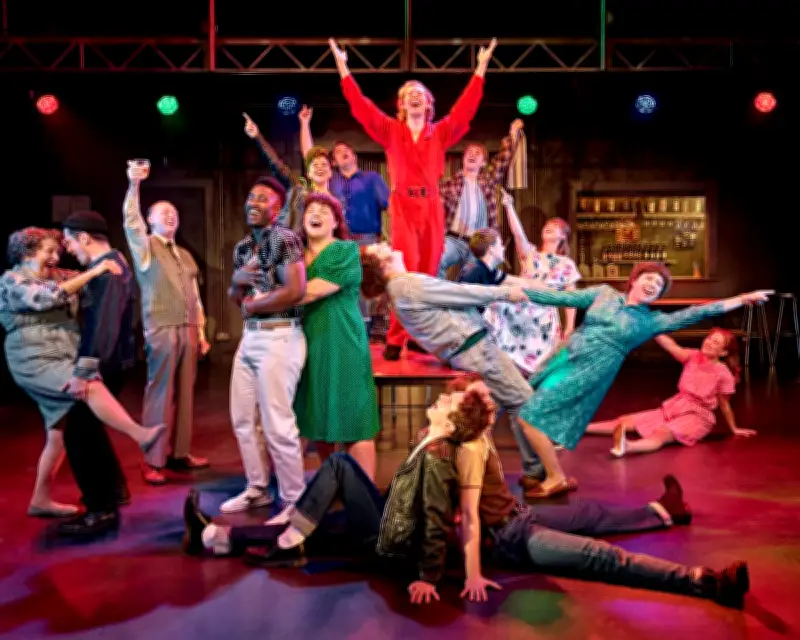
Hands down the hottest ticket in London this summer is the musical Pride at the National Theatre, which is booked solid until the end of its run in September and will presumably transfer to the West End after that. There are lots of gay shows doing well at the moment: I saw Oh, Mary! for the second time this week when the show’s creator, Cole Escola, came over from New York to resume the title role, and Operation Mincemeat keeps going and going. But both those shows are tonally rather than politically gay. Pride, which is adapted from the 2014 film and had modest commercial success when it came out, is a different kettle of fish and I’m curious as to why it’s flown now.
A timely story of solidarity
I should say up front I haven’t seen the show (can’t get a ticket!). But this week, as I watched my timeline continue to fill up with effusive praise and lots of crying about the musical, I went back to the film. It’s a strange time to watch it, in a news cycle in which issues around sexuality in public life and old views about gay rights have surfaced to yank us back to earlier times. The death of the US senator Lindsey Graham triggered widespread speculation about what, exactly, Donald Trump held over him and gave rise to a lot of gay jokes pulled out of the deep freeze.
Pride is set during the 1984 miners’ strike, when an unlikely alliance sprang up between a group of lesbians and gay men in London and striking miners in a Welsh town. Stephen Beresford, who wrote the film and the stage production, tells the story of LGSM – Lesbians and Gays Support the Miners – a group set up by a young activist from County Antrim, Mark Ashton. I imagine there were hopes that the film would do a Billy Elliot, but neither British nor American audiences overly responded. Although the film was critically applauded, it didn’t break through.

Why it resonates now
Anyway, I don’t want to be too much of a buzzkill, because the whole point about Pride is that it doesn’t feel like homework and I would urge everyone who can’t get a ticket to the show to go back to the movie, which stars Andrew Scott (who must by law be in everything), a really good Dominic West, and Jessica Gunning, who was by far the best thing in Baby Reindeer. Ashton is played by a brilliant Ben Schnetzer and, compared with the entire output of, say, Russell T Davies, Beresford seems actually interested in the women in the story. I’m sorry, but I have to quote some key lines: “Give it to the lesbians, they love a banner”; “Police harassment, dear, I could set it to music”; “Don’t be daft, love. We’ve come all the way from Powys.”
That last line is uttered by Imelda Staunton, who will make you laugh and break your heart, and the main takeaway is solidarity, which viewed through a 2026 lens is perhaps the most outlandish thing about it. In this world of feverishly defended political differences between people on the same side, Pride tells a different story, in which vastly different groups organise around a common cause. Paddy Considine as the Welsh miner Dai Donovan was the first person to accept help from the “perverts”, as they were referred to in the popular press in those days, and says it best: “It’s more than money, it’s friendship.”
Perhaps that’s what’s done it, this time around. The Dorfman theatre at the National only holds 450 seats, which has given the show a way to build an audience without the pressure of filling a bigger theatre. It’s true, too, that gays will go to see a show we love several times, which definitely helps. But in this era in which all we hear is that we’re living in political end times, my sense is that this show offers something unusual for everyone. It is both shocking and moving to be reminded of how bad things once were, and what could still be achieved.