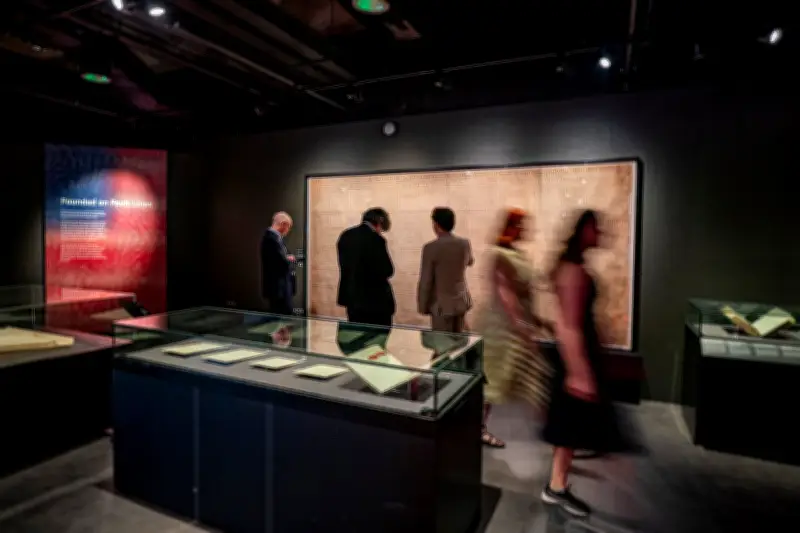
A letter signed by George Washington accepting British surrender, which marked the beginning of the end of the American Revolutionary War, is on display for the first time in London. Written in October 1781 after the British defeat at Yorktown, Virginia, the document is being exhibited as part of Revolution 250: America’s Independence Story, 1763–1783 at The National Archives in Kew.
Historic Document on Display
The letter initiated negotiations that led to the 1783 Treaty of Paris, when Britain formally recognised the independence of the United States. Given to British Lieutenant General Charles Cornwallis, the letter was taken to his home at Audley End in Essex after the war and remained in the family archive until it was presented to the Public Record Office in 1880.
Curator's Perspective
Dr Sean Cunningham, curator of Revolution 250, said: “For such a short, succinct, and to the point message, this note had tremendous consequences for generations to come. This is the moment the British realised they would have to give up the 13 colonies that would become the United States of America; the moment that Britain finally accepts the reality of the declaration of independence drafted five years earlier. Seeing Washington’s acceptance of British surrender up close is a powerful encounter with a turning point in history.”

Exhibition Highlights
The exhibition traces the birth of the United States through documents from both sides of the Atlantic. Highlights include the Stamp Act and the Tea Act, which fuelled unrest in the American colonies, as well as accounts of the Boston Tea Party protest and a copy of the Declaration of Independence. Provisional articles of the Treaty of Paris, dated 30 November 1782, featuring signatures from John Adams and Benjamin Franklin, are also on display alongside Washington's letter.
Dr Cunningham added: “But alongside it, we’re bringing forward voices and perspectives that challenge familiar narratives and show how deeply contested – and consequential – this conflict really was.”