Commemorating the Soweto Uprising at Wigmore Hall
On 16 June 1976, more than 10,000 students from Soweto took to the streets in a peaceful protest against the apartheid regime. Police answered with shots, sparking months of conflict and a turning point in South African history. Freedom Songs, a day of concerts at Wigmore Hall, marked the uprising's 50th anniversary, culminating in a performance by Leon Bosch and the Ubuntu Ensemble.
Double-bassist Bosch is the son of an activist father, and he himself was arrested in 1976 – an event that derailed his ambitions to study law, steering him instead towards music. In a room full of South Africans, onstage and off, it was one of many such stories, the atmosphere quietly charged.
A Century of South African Musical Snapshots
A series of musical snapshots of South Africa spanned nearly a century, from the first recognised generation of art-music composers of the 1940s – the sounds of Europe still foremost in their ears – to the new voices of the 1960s and the present day. Nkosi Sikelel' iAfrika served as a melodic heart-line running through many works.

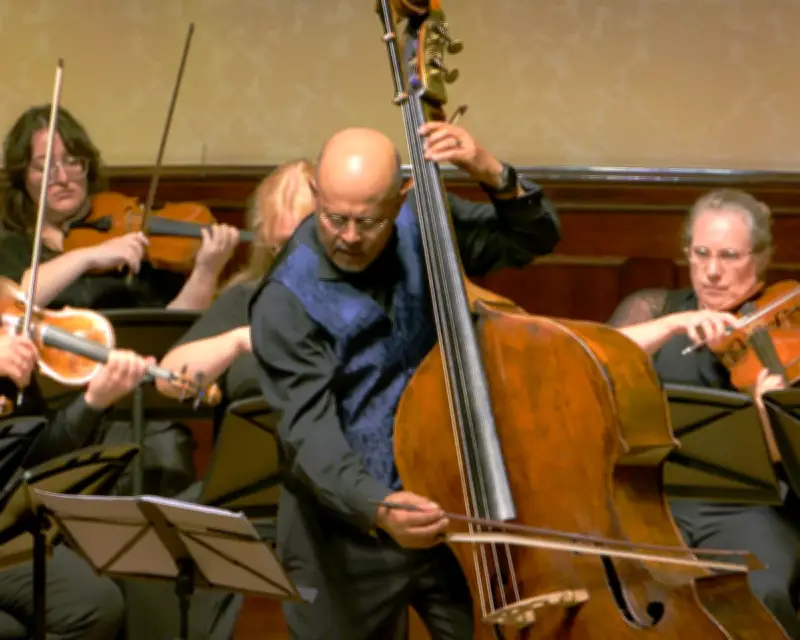
At the centre was Red Ink (2019), Shane Woodborne's elegiac Soweto-inspired concerto for childhood friend Bosch. The double bass is a curious solo instrument, a lowering texture shaking the foundations of Ubuntu's string orchestra. Struggle is embedded into every oversized gesture, here lending a pathos to lyricism that came at a visible cost – Bosch a lone and increasingly fragile voice of hope.
From Bitterness to Celebration
A sequence of works by film composer Grant MacLachlan climaxed in the hypnotic waves of 2025's Obsidian Skies – a sort of South African Fantasia on a Theme of Thomas Tallis framing a string quartet within the larger string orchestra, each striving to find and hold on to a radiant chorale-like theme. After the bitterness and doubt of Monthati Masebe's LEFA (2024) – a meditation on the inheritance of the post-apartheid generation, and promises unfulfilled – it launched the upward trend towards Jan-Hendrik Harley's South African Suite (2025): a celebration, Bosch explained, of "what it means to be South African". Musicians added stamps and claps to syncopated dances, sending us out with the joyful arpeggios of Mango Groove's Special Star still rippling through the hall.