Ten archive photographs recall scenes captured around Tyneside in 1971, a time when the region was beginning a slow shift from its industrial past toward a modernising future.
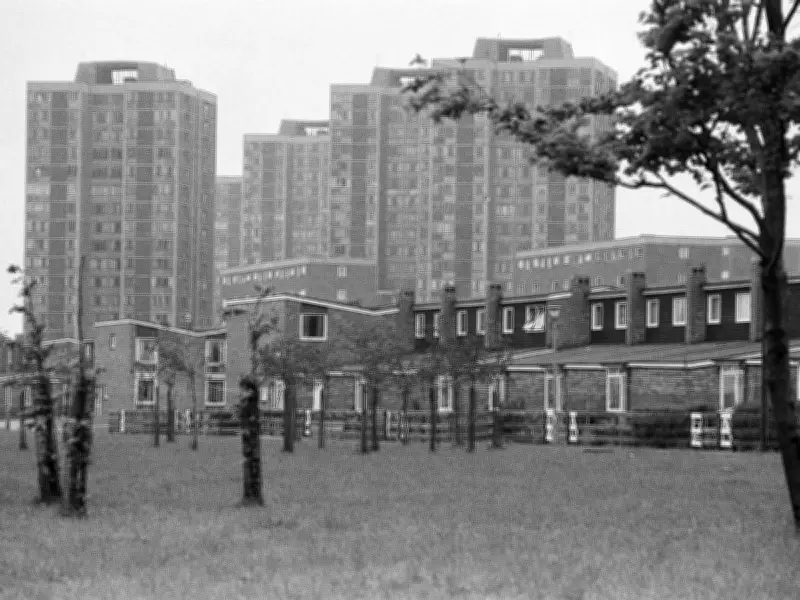
At Elswick, in Newcastle’s west end, high-rise tower blocks, mid-rise blocks and low-rise housing were replacing the old, worn-out Victorian-era terraced streets. Cranes at Wallsend’s Swan Hunter yard still dominated the River Tyne skyline as the shipbuilding industry entered a new decade, although they would be gone in less than 40 years.
Football, music and youth disorder
At St James’ Park, Manchester United’s George Best scored the only goal of the game at the Gallowgate End as the Red Devils edged victory over Newcastle United. As the Rolling Stones kicked off their first UK tour in four years at Newcastle City Hall, Mick Jagger and his wife-to-be, Bianca, were pictured leaving Gateshead’s Five Bridges Hotel on their way to the show.

Also in Gateshead, police made several arrests after 100 skinheads and ‘greasers’ fought running battles at Saltwell Park, an example of the growing problem of youth disorder around the region.
A year of change and new money
Among the news headlines 55 years ago, 66 football fans were killed and 200 injured in a stairway crush during a match between Rangers and Celtic at Ibrox Stadium, Glasgow. The world watched from afar as Apollo 14 astronauts Alan Shepard and Edgar D Mitchell completed the United States’ third successful lunar landing.
Closer to home, the UK ditched the centuries-old system of pounds, shillings and pence, replacing it with a decimal currency based on units of ten. With everyone getting their heads around the ‘new money’, a pint of milk would now cost 5p, a loaf of bread was 10p, a can of Coke cost 5p, 20 cigarettes were 27p, and a pint of beer at the local cost around 16p.
Costs, culture and television debuts
With £2,090 the average salary for a UK worker in 1971, the average house price was £5,000, a 25-inch colour television at Currys would set you back £289, a Hoover washing machine was £105, while a new Mini car was £640, with petrol costing 34p a gallon to fill it.
At the top of the UK singles chart this week 55 years ago, there were hits for Diana Ross with I'm Still Waiting; The New Seekers with Never Ending Song of Love; and T Rex, one of the main protagonists of the new ‘glam rock’, with Get It On. At the cinema in 1971, releases included A Clockwork Orange, Stanley Kubrick's interpretation of the dystopian novel by Anthony Burgess; Dirty Harry, starring Clint Eastwood as the maverick San Francisco detective Harry Callahan; and Get Carter, the gangster film starring Michael Caine, that was largely filmed on location across Tyneside, Northumberland and County Durham.
Making their debuts on television this year were the children’s series, Here Come The Double Deckers; The Generation Game hosted by Bruce Forsyth; and The Persuaders, the action-comedy series starring Roger Moore and Tony Curtis.
The 10 photographs give a glimpse of Tyneside as it was in 1971, with scenes including sunbathers on Tynemouth's packed Longsands Beach, the Burnside Highlanders juvenile jazz band rehearsing at Boldon Colliery, the view down Northumberland Street in Newcastle, steeplejack Brian Hogg preparing the chimney at Minton Lane gas works in North Shields for demolition, and the Miss Tyne Tees TV beauty contest at Tynemouth open-air swimming pool.