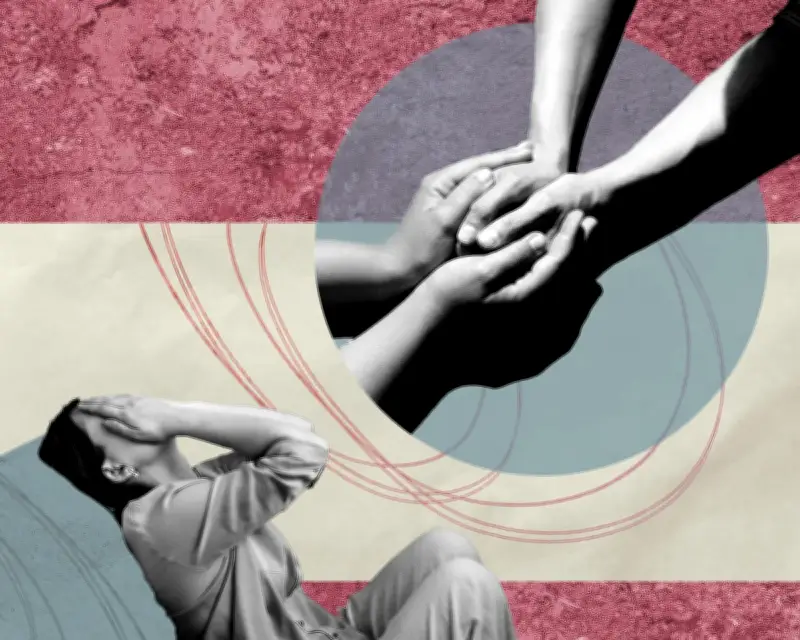
Anger is an emotion we are taught to manage, control and suppress. But what if anger is, as poet David Whyte says, one of the deepest possible forms of compassion available to humankind?
Philosophical Views on Anger
Philosophers and theologians have long distinguished between virtuous and non-virtuous anger. Aristotle defined anger as “a desire, accompanied by pain, for apparent retribution, aroused by an apparent, undeserved slighting against oneself or those connected to oneself”. Anger appears to combine a physical sensation of torment with a desire to act. The English word “anger” has its etymological roots in the Old Norse angr, meaning grief and sorrow, and the Latin angere, to strangle, referring to the sensation of chest tightening, fists clenching, blood boiling.
How do we make sure our angry actions are just? Aristotle taught his students that anyone can get angry, but it takes skill and wisdom to turn anger into a virtue. For anger to have a moral quality, you have to get angry at the right person, at the right time, to the right degree, for the right purpose and with the right motive.
Finding the Middle Ground
A complete lack of anger could itself be a vice, according to Christian theologian Thomas Aquinas, in situations where it is reasonable to act to restore justice. Similarly, Persian Muslim theologian Al-Ghazali advocated for a middle ground, identifying forbearance, Ḥilm, as the ideal state, in which anger is subject to reason and divine law.
How do we know when our anger is justified? Philosopher Martha C Nussbaum observes that anger might be well grounded, as there are many cases of wrongdoing in the world. In these instances, anger is valuable if it quickly transitions into productive action for people’s wellbeing and a better future. However, Nussbaum notes that even justifiable anger, if left to fester, can become narrowly focused on a desire for payback, which in no way supports a better world.
Anger as Care for Others
The Stoics thought of anger as a type of momentary madness, a response to the unfounded belief that the world is fair. Once we accept that most things are beyond our control, apart from our reactions to them, we can develop equanimity. Buddhists espouse a similar view, identifying anger as one of the “Three Poisons”. Anger signals a distorted understanding of reality involving the belief in a singular ego, leading to a wholesale engagement in the push-pull cycle of desire and aversion at the root of human suffering.
Whyte offers a more hopeful view of this much-debated emotion. According to him, we feel anger when we are unable to enact our deep-seated care for others. “What we name as anger is only the incoherent physical incapacity to sustain this deep form of care in our outer daily life.” Perhaps, Whyte observes, anger is our “unwillingness to be large enough and generous enough to hold what we love helplessly in our bodies or our mind with the clarity and breadth of our whole being”.
Writer and artist Mimi Zhu imagines every emotion, including anger, as a protective spirit, an ancestor “embodied as a feeling, telling me … what I have been taught to overlook”. Zhu notes that the Chinese characters for anger can translate literally to the phrase “to give life to a vital breath”.
A Path to Hope
Imagine anger as a sign not of moral failure or justified outrage but the desire to care for another. I might get angry with my daughter for failing to tidy her room. Part of my anger might be about my ego, a fight for dominance; but perhaps it is also about my desire for her to be healthy, and well, and able to find her socks for school in the morning. If I focus on the other’s wellbeing, as Nussbaum writes, then anger inspires a future-oriented project rather than an ego-driven quest for payback. The thought is no longer, “My daughter is disrespecting my rules, and I am worried that she will never be able to look after herself,” but “My daughter is her own person, how can I support her to be well, within her own parameters of flourishing selfhood?”
I might have already shouted about the socks. Next time, before I start slamming doors, I can pause and ask myself, what is it that this anger is inviting me to understand about myself and the other? At its worst, anger is a motivation for unspeakable crimes and violence. At its best, it can be a reminder that humans have a default setting to challenge what seems unjust. Maybe that is anger’s greatest gift: the reminder that, even if we feel helpless, we are hardwired for hope, to try to change things for the better.