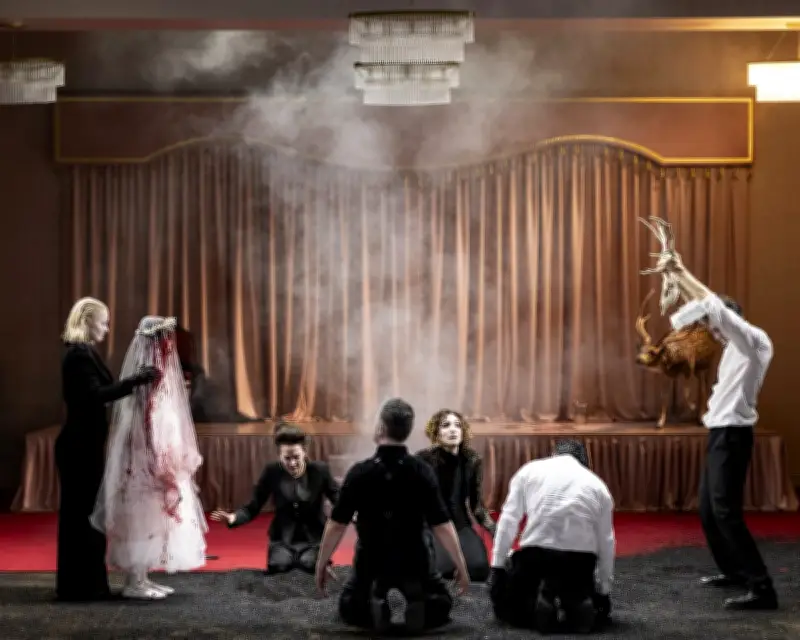
Liza Lim's 1993 opera The Oresteia, staged by Sydney Chamber Opera at Carriageworks, is a physically demanding and aurally challenging work that pushes six singers to their limits. Directed by Imara Savage and conducted by Jack Symonds, the production transforms Bay 20 into a funeral parlour reminiscent of David Lynch's Red Room, with fluorescent lights and low ceilings.
A Visceral Staging
The singers' bodies shake, flail, and lurch as they perform, with sounds spasming from their core. Dressed in black funerary garb, they sprawl on chairs and stagger around the set. A veiled Cassandra sits on a dais, while a young teen in a white wedding dress watches from the side.
Musical Intensity
The score features unusual instruments—electric guitar, steel pan, and a Turkish saz via synthesiser—played in unconventional ways. The flautist vocalises through her piccolo, and the electric guitar seems to speak in tongues. Voices are improbably stretched and frayed, unleashing lucent cries and moans. The 11 members of ELISION Ensemble provide instrumental virtuosity up close.
Design and Atmosphere
Set designer Charles Davis and lighting designer Alexander Berlage create lush, unsettling cinematic imagery. Chairs scatter, chandelier lights flicker, and scarlet carpet tiles are peeled away to reveal dirt. Bones are exhumed, a body is buried, and flowers grow on the grave. The Furies are appeased.
Lim and Barrie Kosky condensed Aeschylus's three plays into a one-hour drama, drawing from Tony Harrison's translation. The libretto is poetry and incantation; viewers may benefit from familiarising themselves with the characters and plot in advance. Those who emerge from the other end of this journey may find it hard to believe it has been so brief.
The production runs until 31 July at Carriageworks. It stands as a daring, visionary work in a cautious theatre landscape.