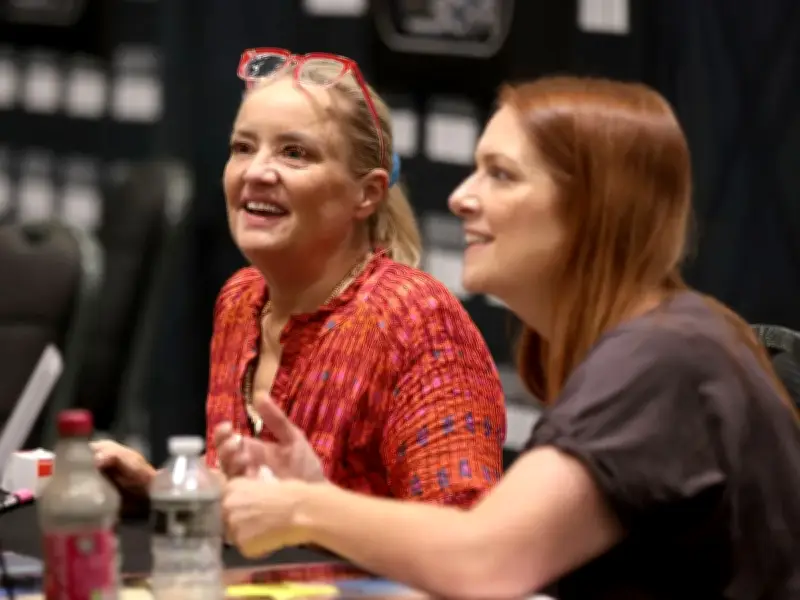
Lucy Davis has made her first public appearance since revealing she has stage four breast cancer, with the actress thanking fans during an emotional appearance in London.
The 53-year-old actress attended the For The Love of Fantasy & Sci Fi convention at London’s Excel on Saturday, less than two weeks after publicly sharing news of her diagnosis. Davis, best known for playing Dawn Tinsley in Ricky Gervais’ The Office, spent the day meeting fans, signing autographs and posing for photographs before joining Shaun of the Dead stars Simon Pegg and director Edgar Wright for a panel.
Grateful for fan support
During the event, Davis spoke warmly about the community she had encountered among fans of the 2004 zombie comedy. "It’s like this whole second family you never knew you had, everyone is like a community, friendly, supportive of not only us but you guys and each other," she said. "We need a bit more niceness in the world, so I’m grateful."

Several fans told Davis they loved her during the convention, although she was not directly questioned about her health.
Diagnosis details
Her appearance came shortly after she revealed that she had been diagnosed with stage four breast cancer around 18 months earlier. Davis said she had initially discovered what she described as a "really tiny" lump, which felt more like "a kind of hard spot".
"I almost didn’t bother getting it checked. So I guess I’m saying don’t ignore anything – get everything checked out," she said.
The cancer has since metastasised to her spine, right hip and ribs. Davis previously explained that it was "too late" for chemotherapy, while saying she was not frightened of what may come next.
Finding teachable moments
In her statement, she said she was trying to make the most of her life and find something positive in the experience. "I always like to find the teachable moments in anything negative that happens. And cancer has not disappointed in that regard; there’s a lot I have learned from it, and I’m grateful for that."
Davis, the daughter of comedian Jasper Carrott, has also spoken openly about the physical impact of her illness, revealing that standing and walking for long periods can be difficult and that she sometimes needs a wheelchair.
She said humour had also helped her cope, asking friends and family to continue treating her normally rather than focusing on her illness. "I asked my friends and family to make fun of me as much as possible (which they’re really good at), and most importantly of all to not treat me like a sick person. There’s nothing that will make you feel more unwell than being treated as if you’re unwell."