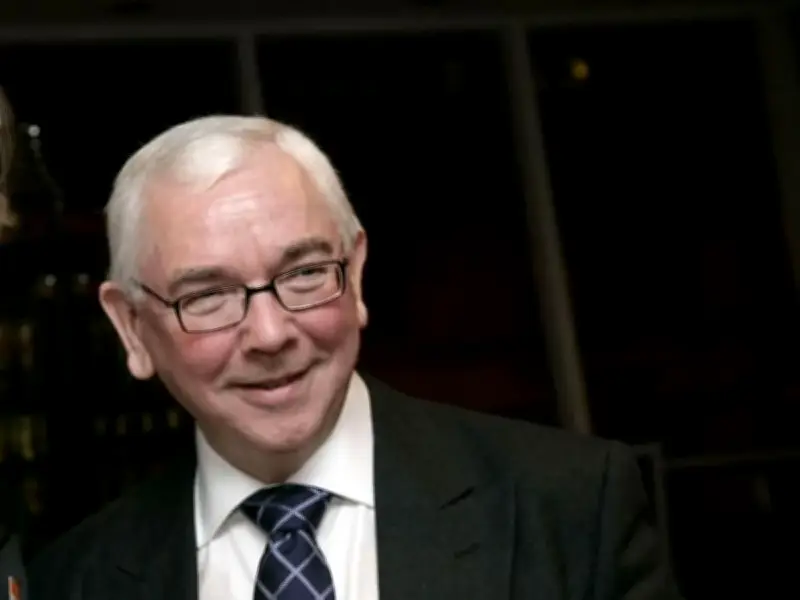
Three years have passed since the death of Liverpool filmmaker Terence Davies, a director whose work captured the city like no other. Despite being hailed by critics as a national treasure, he never received the widespread recognition his body of work deserved.
Davies died on this day three years ago, leaving behind a back catalogue that remains a unique and deeply personal record of Liverpool life. His final film, Benediction, starred Jack Lowden, who later recounted the director's humble final words on the BBC series Screenshot: "I did alright, didn't I? I think we made one or two good ones."
A Life Inspired by Kensington
Although Davies left Liverpool at 27 to attend drama school in Coventry, his home city remained a constant inspiration. He repeatedly revisited his Kensington childhood throughout his career. In a 2014 interview with the ECHO, he spoke of his love for the area where he grew up on 18 Kensington Street.
"I really did love where I lived in Kensington. It was a working class area and our houses were in pretty awful condition. But I just loved that house, I loved my street – I can still remember all the people and where they lived," he said. "And all that's gone completely. The whole street's gone, it's just derelict land now."
His ability to capture his upbringing and the passage of time struck a chord with audiences. His debut feature, Distant Voices, Still Lives, was so evocative that viewers often found themselves transported back to their own memories of Liverpool.
A Critical Darling Who Struggled for Funding
Davies' work was celebrated by critics, with the New Yorker branding him "the greatest British director" after his death. However, the great contradiction of his career was how hard he had to fight to get each film made. Over his decades-long career, he only managed to complete nine features, aside from his short films.
Critic Mark Kermode, speaking to the ECHO, explained why Davies' films never found mainstream success. "He had to fight so hard to get every single movie made meant there were gaps when other films could have been made which is such a source of heartbreak," he said. "The truth is that if you create the body of work that Terence Davies did, it's strange you aren't being hailed as a maestro everyday. Part of the problem is that his films don't fit neatly into any other categories. They are, in the end, Terence Davies' film. You can read them as one continuous story, one body of work. And I think that's one of the reasons why he found filmmaking difficult to fund."
A Lasting Legacy
In an exclusive interview with the ECHO two years ago, Kermode branded Davies the cinematic poet of Liverpool. He said: "Nobody has captured a time and a place as well as he had. We lost him fairly recently and he still had other films that he had in him. I think he's a genius. He was a national treasure. He was one of our best filmmakers and Terence Davies making films about Liverpool is a sublime experience. Do not miss them."
Three years on from his death at 77, Davies' films remain available to watch, allowing new audiences to connect with his unique vision. His work stands as a testament to a director who captured Liverpool like no other.