Tate Modern's iconic Turbine Hall is set for a dramatic transformation into an immersive opera house in 2027, as it hosts a major exhibition showcasing the opera set designs created by the celebrated British artist David Hockney. This immersive display will form the centrepiece of the gallery's celebrations marking Hockney's 90th birthday, highlighting a lesser-known aspect of his prolific career.
Hockney's Opera Design Legacy
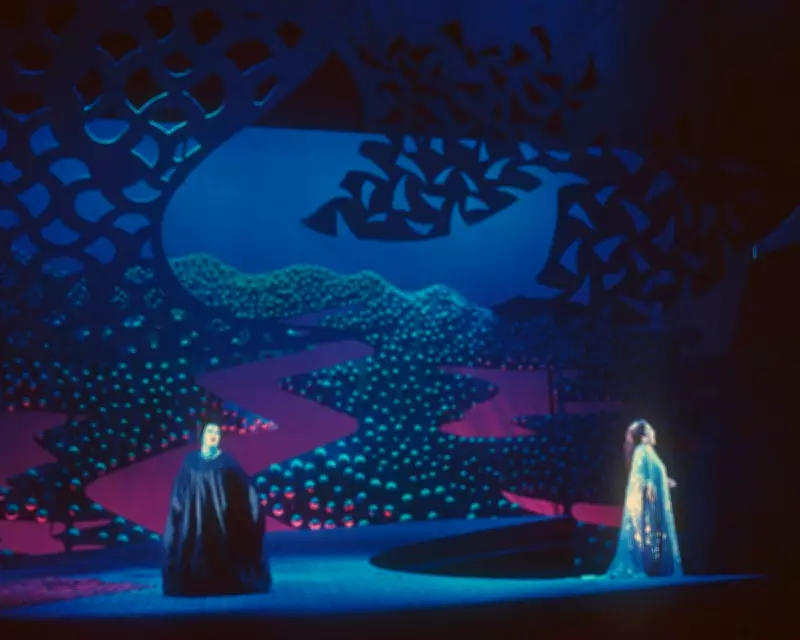
While David Hockney is internationally renowned for his vibrant landscapes and striking portraits, his significant contributions to opera set design span several decades, beginning in the 1970s. The exhibition will feature sets he designed for productions of works by classical composers including Mozart, Wagner, and Stravinsky, offering visitors a unique glimpse into this theatrical dimension of his artistry.
From Royal Court to International Stages
Hockney's foray into set design started with a production of Alfred Jarry's Ubu Roi at London's Royal Court Theatre in 1966, before he relocated to Los Angeles. He went on to design a total of 11 opera sets over 17 years, commencing in 1975. One notable creation was for Richard Strauss's fantasy opera, Die Frau ohne Schatten (The Woman without a Shadow), which embraced a distinctive pop-art aesthetic.

When questioned about his motivation to venture into opera design, Hockney provided a characteristically straightforward response: "I wanted to design operas because I want to have something to look at." This pragmatic approach underscores his enduring fascination with visual storytelling across mediums.
Tate's Expansive 2027 Programme
Beyond the Hockney exhibition, Tate's 2027 schedule promises a diverse and global array of artistic showcases. Highlights include a retrospective of Sonia Boyce, who secured the Golden Lion for Britain at the 2022 Venice Biennale, and an exhibition dedicated to Edvard Munch. Tate Liverpool will reopen with a career-spanning show by Chila Kumari Singh Burman, a contemporary of Boyce known for her neon installations outside Tate Britain in 2020.
Monet, Gainsborough, and Tudor Art
Tate Modern will also present its first-ever Monet exhibition, titled Painting Time, which delves into the artist's obsession with capturing fleeting moments. Curated by Catherine Wood, the show traces the evolution leading to Monet's famed Water Lilies cycle, created over three decades despite his struggles with cataracts. Wood notes, "Even as he's going blind, he's still trying to paint," emphasizing his deep immersion in his garden and art.
At Tate Britain, a 120-work exhibition will commemorate the 300th anniversary of Thomas Gainsborough's birth, alongside the first major presentation of Tudor art in 30 years. Tate Modern will further feature landmark shows for artists such as Baya, an Algerian female artist who influenced Picasso, India's Nalini Malani, and American sculptor Lynda Benglis, known for her use of latex and Day-Glo pigments.
Leadership Transition and Vision
The announcement of this forthcoming season coincides with the departure of Maria Balshaw after nine years as director of Tate, during a period of institutional transition. Karin Hindsbo is currently overseeing operations while a permanent successor is recruited, with an appointment expected by summer, pending prime ministerial approval.
Reflecting on the programme, Hindsbo stated: "This is an exhibition programme that only Tate could deliver. It spans the centuries, from the 1500s to the present day, and it spans the globe, from Europe to Asia, Africa and America. Even more importantly, the programme reflects a deep appreciation of artists themselves."
This ambitious lineup underscores Tate's commitment to showcasing diverse artistic narratives and inspiring audiences through immersive experiences, with the Hockney opera set exhibition poised to be a standout attraction in 2027.