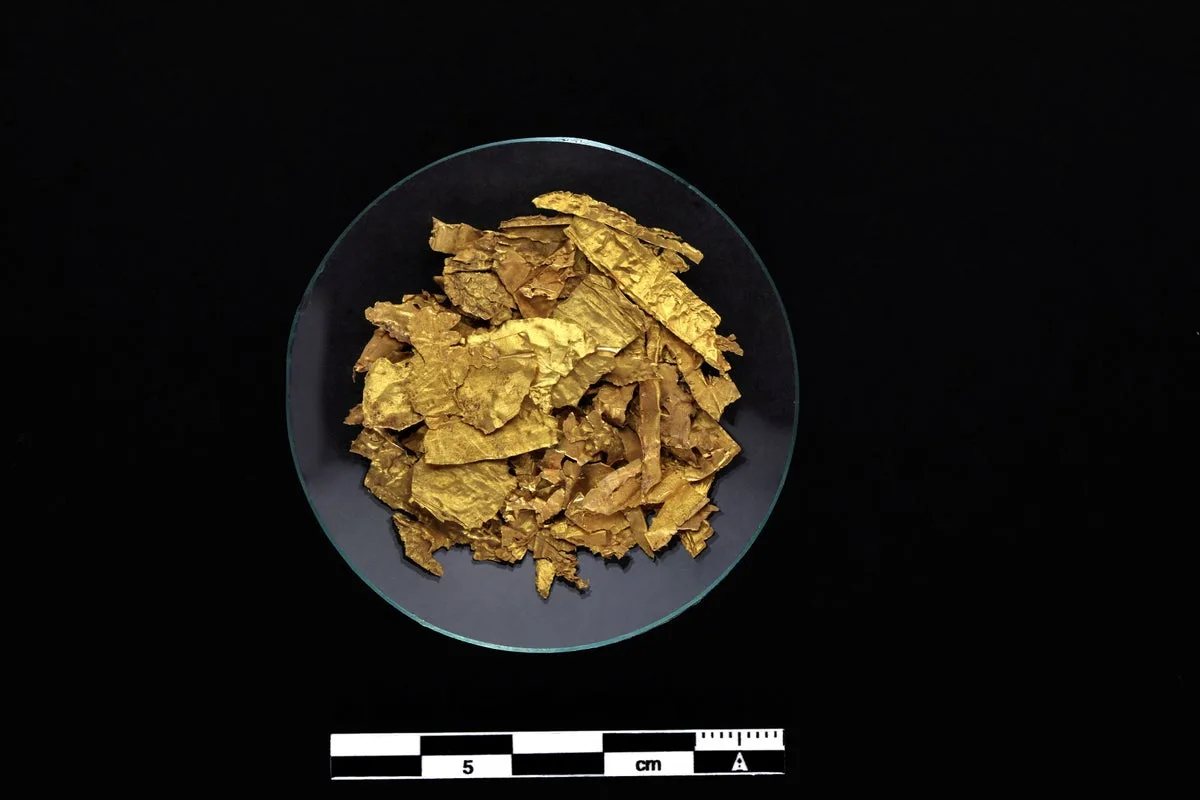
Physicists at the Large Hadron Collider in Switzerland have accidentally produced gold from lead while attempting to recreate conditions just after the Big Bang. The ALICE experiment, which smashes lead atoms together at near light speed, generated trace amounts of gold—just 29 trillionths of a gram in total.
The transformation occurs when lead nuclei narrowly miss each other during collisions. The intense electric field generated between them can strip protons from the nuclei. Removing exactly three protons from a lead atom (which has 82) turns it into gold (79 protons). The process also produces thallium (one proton removed) and mercury (two protons removed).
Scientists detect the gold indirectly using zero-degree calorimeters that count the stripped protons. About 89,000 gold nuclei are produced per second during collisions. However, the transformed nuclei deviate from their intended path and collide with the beam pipe, degrading the beam over time—making the alchemy more a nuisance than a benefit for researchers.

Understanding this accidental transmutation is crucial for interpreting experimental data and designing future colliders. The findings highlight how modern physics can achieve what alchemists once dreamed of, albeit on a microscopic scale and as a byproduct of fundamental research.