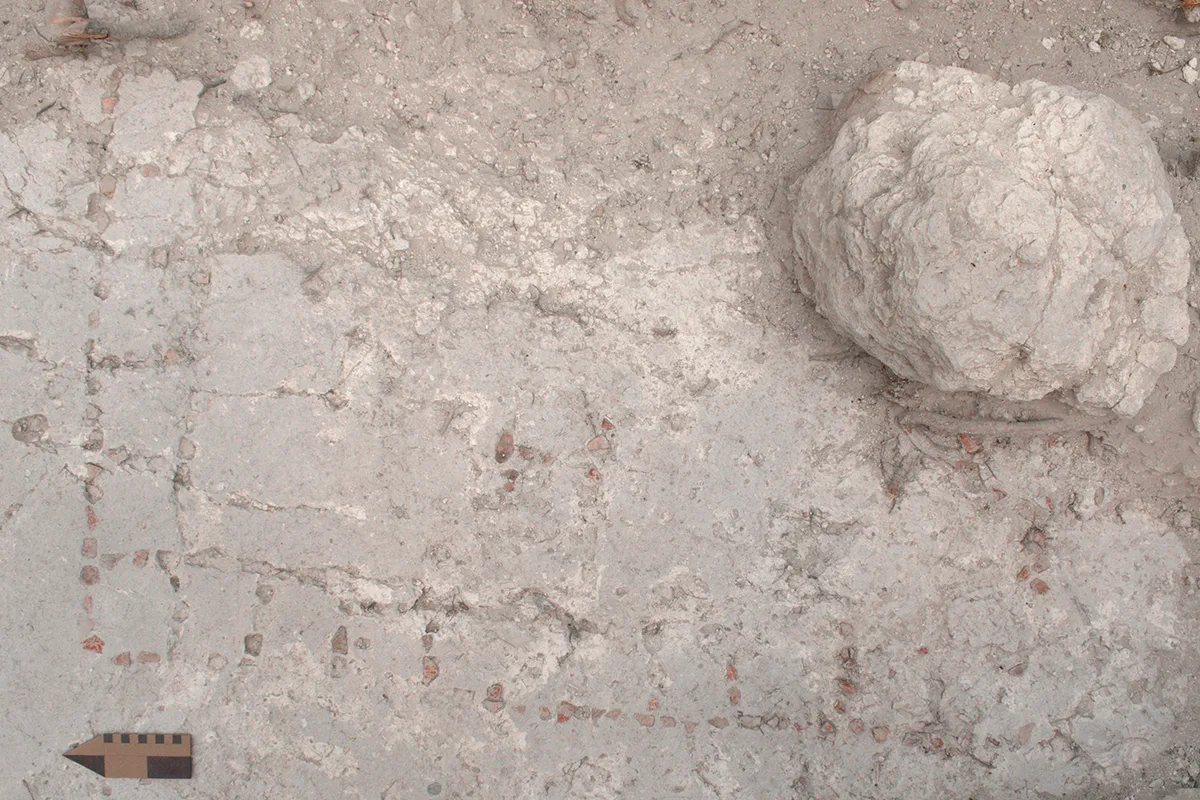
Archaeologists have unearthed the remains of a distinctive mosaic-style board game in the ancient Mayan city of Naachtun, Guatemala, providing fresh insight into how such games were played in the pre-Columbian era.
The game, known as Patolli, was a strategy game played across Mesoamerica by the Aztecs and earlier cultures. It typically featured a cross-shaped track of 52 spaces and involved throwing patol beans, marked on one side, to serve as dice.
Recent excavations at Naachtun, once a regional Maya capital in northern Petén, revealed a board carved into the ground and composed of small red mosaic tiles, likely taken from broken ceramic vessels. Parts of the board have been dated to the fourth century AD.
Although sections of the board were destroyed, researchers estimated that it originally measured nearly 78cm by 110cm, with 45 squares made from 478 individual tile fragments. The use of mosaic suggests the board was incorporated into the architectural design from the outset.
Writing in the journal Latin American Antiquity, the researchers noted that floor mosaics are exceptionally rare in Maya architecture, and that no clear example of such a floor mosaic exists in the region before the colonial period. They added that the mosaic technique likely gave the board a longer use life than etched or painted alternatives.