Wagner's culminating masterpiece Parsifal is an enigmatic, troubling work, and the Kazakhstan-born, Berlin-based Russian director Evgeny Titov's provocative new production certainly offers a bleak view of it. For Titov, the glories of the music are compromised by the oppressive patriarchal structures of the knightly community. His solution is to undercut the sublimity with a grey stage picture of damp-stained monumental slabs (designed by Etienne Pluss) suggestive of a subterranean chamber with a dark history.
A Bleak Stage Picture
In Act 1, the action supposedly moves from the Grail forest to the Grail Hall, but apart from the pillars shifting a few feet and a dim light or two, it's hard to tell the difference. The sorcerer Klingsor's domain in Act 2 has security screens that can also indoctrinate prepubescent next-generation Flowermaidens with images of the fallen Eve and of Christ.
When the shaven-headed Flowermaidens themselves emerge in Esther Bialas's desexualised costumes, they are vampiric daughters of Eve, possibly avenging their sisters through the ages. In a rare moment of light relief they strip Parsifal and playfully spank him. The psychological complexity of Kundry's faux-maternal seduction of Parsifal is superbly realised: truly pole-axing.
Gory Imagery and a Stunning Finale
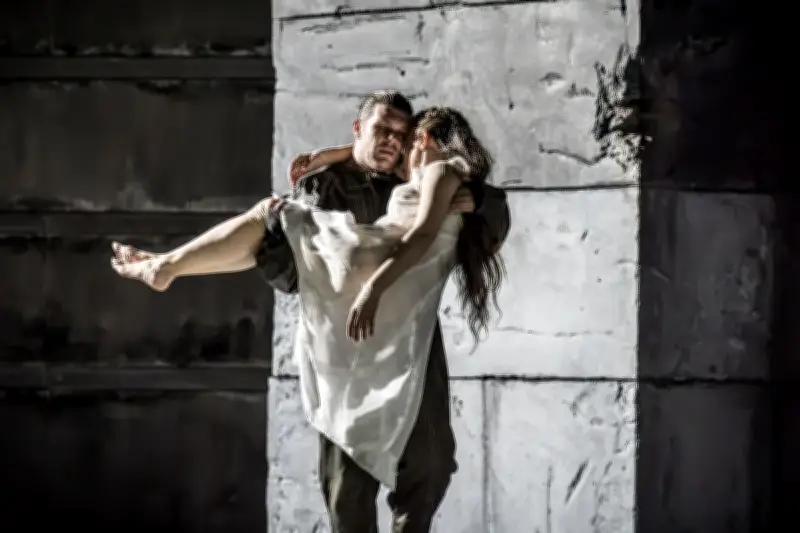
In the outer acts, the Christ-like aspects of Amfortas, the ailing Grail king, are explored in a riot of gory, blood-bespattered imagery with overtones of coercive mind-control. There's also a stunning stage picture, beautifully lit by D.M. Wood, of the dead Kundry, now in white, borne aloft.
In a shocking denouement, from which the knightly community has unaccountably disappeared, Parsifal brings not exactly healing to Amfortas but a somewhat drastic release from his suffering.
Superlative Performances
Stanislas de Barbeyrac is a wonderfully assured Parsifal, unfailingly burnished of tone. Brindley Sherratt brings wisdom, experience and impressive staying power to the demanding role of Gurnemanz. Christian Gerhaher, as Amfortas, deploying his familiar technique of approaching key notes off-centre and bringing them tellingly into focus, exhorts one to listen afresh to every line.
Mark Stone is no less compelling as a predatory, venom-spitting Klingsor. Ekaterina Gubanova has the flexibility to encompass Kundry's shape-shifting extremes. Lesser roles are all taken admirably and the chorus and orchestra under Jakub Hrusa's highly accomplished direction – alive to both the high drama and the expressive subtleties of the score – deserve the highest praise.
Titov's cheerless conception is delivered superlatively by these forces. But where is Wagner's vision of compassion offering the possibility of spiritual renewal? Titov appears to be out of tune not just with Wagner's work but with any message of hope in our times. To 17 Oct, roh.org.uk.