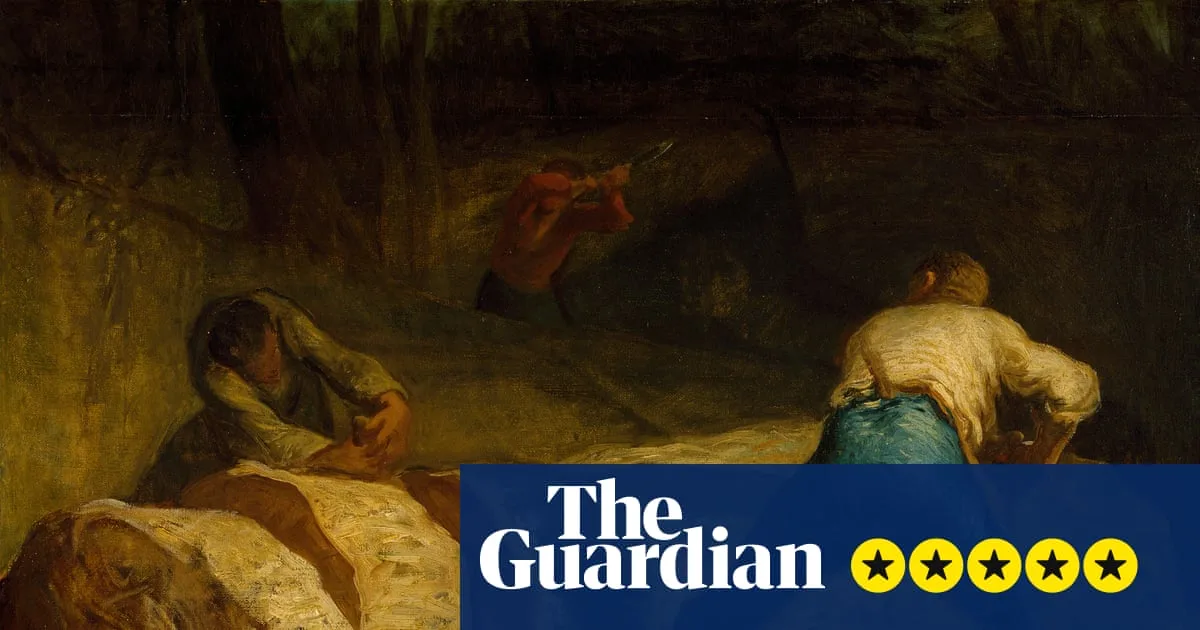
The National Gallery's new exhibition, 'Millet: Life on the Land', brings together works by Jean-François Millet that explore the lives of French peasants. The centrepiece is 'The Angelus' (1859), on loan from the Musée d'Orsay, which depicts a man and woman pausing for prayer in a field. The painting's erotic undertones, noted by admirers including Salvador Dalí, are heightened by phallic farm tools and the physicality of the figures.
Millet, who grew up in Normandy, dedicated his career to portraying rural workers with dignity. In 'The Winnower' (1848), a man separates grain against a golden haze, his red, white and blue clothing echoing the revolutionary tricolour. 'The Sower' shows a figure casting seeds into a barren gully, symbolising both political change and artistic creation.
The exhibition also includes 'The Well at Gruchy', depicting Millet's childhood home, and 'The Faggot Gatherers', a stark winter scene that contrasts with Impressionist depictions of modern life. Millet's influence on Vincent van Gogh is evident in drawings like 'A Man Ploughing and Another Sowing', where crows rise over labourers.

Millet's work is infused with a turbulent sexuality, from the wood sawyers cutting logs that resemble body parts to sensual portraits of shepherdesses. Van Gogh compared Millet's women to those in Émile Zola's novels, highlighting the artist's focus on the inner lives of his subjects.