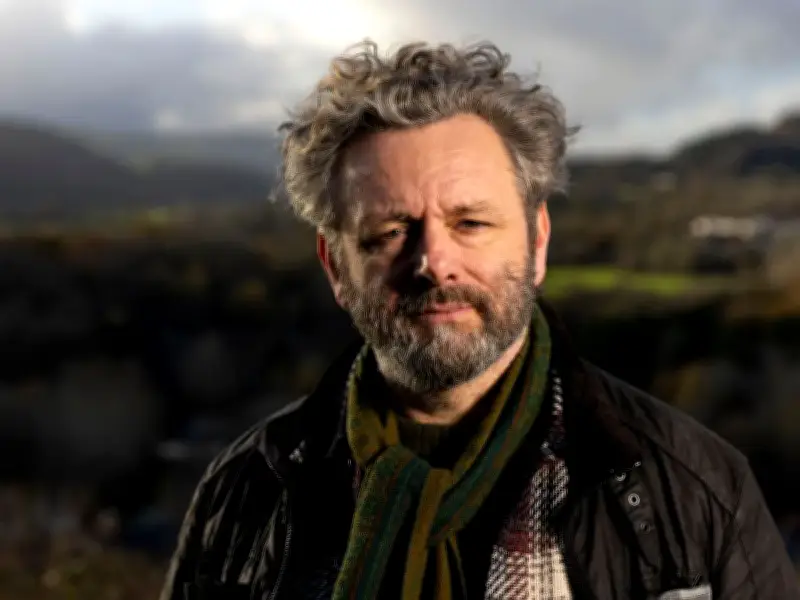
Michael Sheen's new documentary series, Buried, delves into claims of chemical contamination across Wales, exposing a scandal with potentially devastating consequences across the UK. The two-part unscripted series follows the actor as he investigates the legacy of toxic industrial chemicals known as Polychlorinated Biphenyls (PCBs), which were dumped at locations throughout Wales and north west England.
Whistleblower's Story
Michael first encountered farming consultant and whistleblower Douglas Gowan nearly a decade ago. Douglas claimed that the people of Wales had been poisoned, not through a single criminal act, but through prolonged exposure to toxic chemicals in the environment. He believed thousands of tonnes of PCBs had been disposed of at various sites. PCBs, often called the "godfather of forever chemicals," were considered a wonder chemical in the 1960s due to their resistance to degradation, but are now officially classified as a Group 1 carcinogen and banned globally.
Douglas dedicated over 50 years to alerting people to the dangers of chemical dumping, yet seemingly nobody would pay attention. Michael traced Douglas down and spent two days recording an interview with him. Douglas recounted a lifetime of challenging corporations, government, and local councils, alleging that Monsanto, the world's leading PCB producer, knowingly buried highly toxic waste in communities throughout Wales. Two months after that interview, Douglas passed away, leaving Michael with his story.
Investigation and Paranoia
Over two episodes, Michael worked alongside investigative journalists Dan Ashby and Lucy Taylor, following Douglas' trail with environmental specialists, forensic scientists, and residents living close to toxic dump sites. Speaking passionately on a Q&A panel ahead of the show's airing on August 17, Michael explained that he first came across Douglas Gowan's story randomly while living in Los Angeles.
He said: "I was scrolling down a Wikipedia page and there was one tiny sentence about environmental controversy that mentioned Brofiscin Quarry in south Wales. So I looked up Brofiscin Quarry and ended down a rabbit hole and eventually found this man called Douglas Gowan and the beginnings of his story, and I was completely intrigued."
Michael felt constant paranoia over the "scary" chemicals found in the ground during their investigation. He said: "There was a moment when we'd been to Brofiscin, and I'd been in the field and I hadn't been wearing the wellies at that point. I was wearing my own boots, and I remember going back in my car and stopping at the garage to get petrol and then taking my boots off and hosing them down in the garage because I got so paranoid that I might be taking this home. There's moments like that where it is really daunting. It is scary."
Push for Accountability
Michael outlined what he hopes will come from the documentary, wishing that it will go further as "the people who are responsible don't exist anymore." He said: "I think it's important to say that the biggest injustice here is that the people who are responsible for this have got away with not having to take responsibility. That's the first thing. The people who dump this stuff should be made responsible, but what happens is the company mutates into a different company and a different company and suddenly the people who are responsible don't exist anymore."
He also highlighted the pressure on local councils, saying: "The next thing, in my opinion, is that local councils - where this potentially contaminated land is - are terrified that if they're financially responsible for doing something about this, that it will bankrupt them. Because they don't have the budgets available."
Michael emphasized the need for a broader response: "We have to somehow make sure that the councils themselves, understandably, when they don't have the budgets to deal with this, that they are not held responsible for it, but they are held responsible for not doing anything about it. So then what that means is you have to go beyond the councils. You go to Welsh Government, you go to the UK Government, you go international. This is beyond our country. There has to be a pool of resources in the absence of the people responsible for it."
Investigative journalist Lucy Taylor explained how they inherited Douglas's documents: "We did a previous podcast which was about waste, and after that somebody sent us an email saying my friend has Douglas died, but you should look at what he was doing. We somehow ended up inheriting all of his documents; CDs, DVDs of his, his documents, test results, diaries, just loads and loads of stuff."
Eastman Chemical Company, responsible for Monsanto's legacy production in the UK, did not respond to BBC's request for comment. Caerphilly Council and Wrexham Council stated to the BBC that the results of their investigations mean the sites do not meet the legal definition of 'contaminated land'. Cheshire Council told BBC that they are investigating and assessing whether the site in question meets the legal definition of 'contaminated land'. Natural Resources Wales, the environmental regulator responsible for testing at officially 'contaminated' sites, said to the BBC that previous investigations following PCB leaks at the disused Brofiscin Quarry found that they did not pose enough of a risk to warrant further action.