Matisse's Final Years: A Dazzling Exhibition of Late-Life Genius in Paris
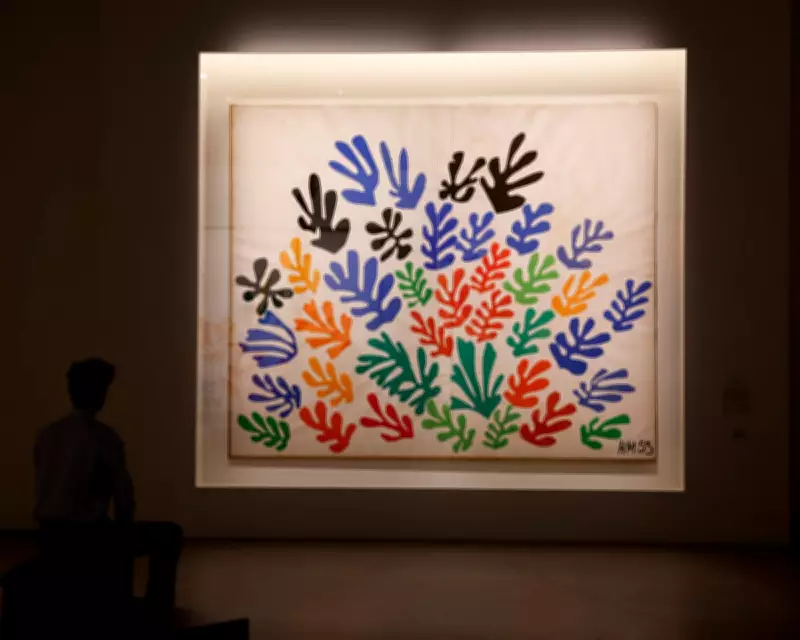
The Grand Palais in Paris is currently hosting an extraordinary and expansive exhibition that delves into the final thirteen years of Henri Matisse's illustrious career, spanning from 1941 to 1954. This monumental showcase features over 300 works, including the iconic La Gerbe, and serves as a vibrant celebration of colour, form, and innovation that redefined the trajectory of modern art.
Forget the notion that artistic vitality is reserved for youth; Matisse's most transformative period occurred in his later years, even as he faced significant health challenges. In his early seventies, following a life-threatening surgery during the tumultuous outbreak of war in France, Matisse found himself confined to a wheelchair with a weakened hand. Yet, from this position of physical limitation, he embarked on a profound reinvention, abandoning traditional painting techniques to pioneer the radical cutout method that would become his signature.
A Journey Through War and Artistic Evolution
The exhibition begins in a surprisingly intimate and almost claustrophobic manner, reflecting Matisse's studio in Nice during the war years. Here, he produced still lifes featuring red tulips, lilac-fleshed oysters, lemons, and mimosa, rendered in greens, reds, and yellows. Despite the looming threat of German occupation and the arrest of his wife and daughter by the Gestapo for their resistance activities, these paintings appear deceptively light and airy. In reality, they were meticulously reworked, with Matisse obsessively rearranging models, adjusting light through slats, and manipulating screens to create shadows, resulting in a cinematic series of repetitive scenes.

This repetition, coupled with a renewed passion for drawing, ignited a creative breakthrough. His Themes and Variations series involved drawing the same reclining woman, vase of flowers, and face repeatedly, each iteration refining the line and simplifying the image to its bare essentials. Matisse himself remarked, "I have attained a form filtered to its essentials," marking the first of two artistic revolutions showcased in this exhibition.
The Radical Shift to Cutouts and Colour
The second revolution saw Matisse completely discard paintbrushes and pens in favour of scissors, giving birth to the late-period style for which he is widely celebrated. This radical approach is epitomised in the maquettes for his book Jazz, created in 1944, which overflow with swirling leaves, diving bodies, ultramarine skies, purple funerals, white elephants, and the striking black Icarus falling past yellow stars. Matisse described this work as making chords out of colour, though the accompanying soundtrack of contemporary jazz improvisation may not appeal to all visitors.
Following an air raid on Nice, Matisse relocated to Vence, where he transformed his bedroom walls into a floor-to-ceiling collage of cutouts. This period saw his world expand as he explored the limitless possibilities of his new medium. He briefly returned to painting, producing lighter, airier, and simpler interior still lifes, eventually stripping away colour to create luminous black-and-white works that remain visually shocking.
Masterpieces of Decoration and Spirituality
The cutouts, however, represent the pinnacle of his late oeuvre. They are boldly graphic, direct, and intensely decorative, evoking sensory experiences such as the breeze of Polynesia in blue and white collages or the scent of seaweed in swaying frond compositions. In the 1950s, Matisse extended his vision to the design of a chapel in Vence, creating green and yellow priest vestments and stained glass adorned with plant motifs symbolising his late-life rebirth. While spiritual, the chapel works feel more like a communion with art itself than with any deity, leaving a profound emotional impact on viewers.

The exhibition also features the famous blue nudes, which distill the entire history of nude painting into four strikingly simple images, alongside a final self-portrait in gouache that stands as a testament to his mastery. However, the show reaches its emotional peak with a single painting of a face in black ink on yellow paper, composed of just seven lines. At eighty years old, frail and ill, Matisse demonstrated an unparalleled ability to convey a life with minimal strokes, proving he had truly figured it all out.
This overwhelming and joyous exhibition at the Grand Palais, running from 24 March to 26 July, is a must-see for art enthusiasts, offering a comprehensive insight into the genius of Matisse's final years.