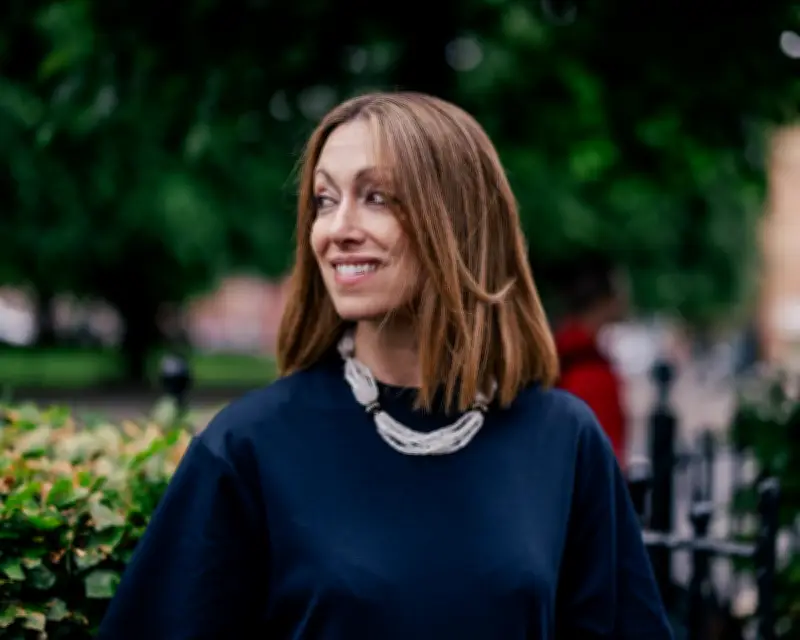
Lucy Caldwell, the author, discusses her earliest reading memories, favourite books, and the works that have shaped her life.
Early reading and formative books
Caldwell's earliest memory is of the summer her middle sister was born. She and her mother would walk to shops in east Belfast, where her mother bought her the latest issue of Storyteller, a collection of illustrated tales from around the world. It came with a cassette tape of actors reading the stories, with a ding to signal when to turn the page. Her favourite was a Japanese folktale called The Goblin Rat. She was only two, but listened entranced and terrified until she could recite it by heart.
Her favourite book growing up was Susan Cooper's The Dark Is Rising series. She first read them at age 10 and has read the title book every midwinter since. Last year she read them with her own then-10-year-old son. The series tells a haunting story of the battle between dark and light, weaving in Arthurian legend with an adult melancholy.
Inspiration to write and rediscoveries
The book that made Caldwell want to be a writer was Jennifer Johnston's How Many Miles to Babylon? She read it in English class at age 13, and the homework was to write an extra chapter. She spent every spare minute that week writing hers, describing the intoxicating feeling of tuning in to another world until it becomes more real than your own.
She has always loved Dubliners by James Joyce, but first read Ulysses in undergraduate anxiety about not getting the references. Years later, she bought an edition with no footnotes or endnotes, just the novel itself. It became one of the most glorious reading experiences of her life. She notes that even your text messages fizz after reading Joyce.
Rereading and later discoveries
The book Caldwell rereads is Clarissa Pinkola Estés' Women Who Run With the Wolves. Estés is a Jungian psychoanalyst and a cantadora, a keeper of old tales. The book is about the secret gifts and power of mythology, reclaiming your wildness. Caldwell has read it in her 20s, 30s, and 40s, and different stories have sung out to her each time. She believes every woman should read this book.
The book she could never read again is Rosamond Lehmann's The Echoing Grove. She has never been able to get past the part where two sisters try, ineptly and at agonising length, to bludgeon a rat to death.
As teenagers, Caldwell and her friends would dare each other to leave the school library copy of Lady Chatterley's Lover open on the dirty bits. But she did not actually read any DH Lawrence until her 40s, and is glad she came to that book later in life as a wife and mother. She says it is not the explicitness of the sex that is shocking, but the ardency of the longing and the abandon of his rhythms.
Current reading and comfort reads
Caldwell has just finished Helen Bain's debut The Daffodil Days, an account of Sylvia Plath's last year told backwards in stories by people momentarily close to her. She has high hopes for Courttia Newland's The Art of Opposition, a book of essays on hope, resilience, and creative expression beyond the mainstream.
Her comfort read is Lorrie Moore's Self-Help. She says the stories are not comforting, but there is pleasure in knowing each story is a perfect verbal device to take you through its experience.