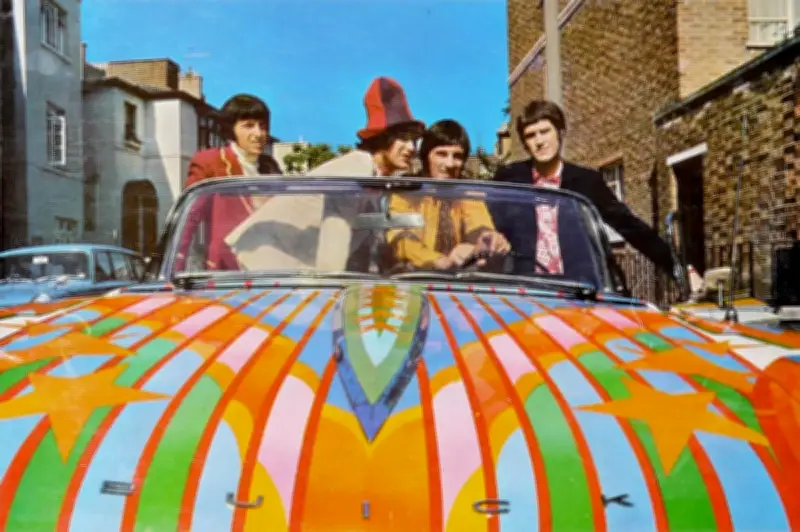
A new ranking of the Kinks' 40 greatest songs has been released to coincide with the exhibition 'The Kinks: Brothers' at the Gibson Garage in London. The list covers the band's career from 1964 to 1993, highlighting their unique blend of social commentary, hard rock, and gentle pastoralia.
Songs 40-31
40. Scattered (1993): From the final album Phobia, this sweet, sad reflection on the Davies family features jangling guitars.
39. Rosy Won’t You Please Come Home (1966): Ray Davies' sister Rose's emigration to Australia inspired this heartfelt track from Face to Face, employing pleading and mockery to urge her return.
38. You Can’t Stop the Music (1975): Originally for the TV special Soap Opera, this closing track from the album nearly broke the band, sounding like a eulogy for rock'n'roll spiked with personal bitterness.
37. Two Sisters (1967): A harpsichord-led track celebrating domesticity over bohemia, where the married sister delightedly runs 'round the house with her curlers on'.
36. I Go to Sleep (1965): Never released by the Kinks, this fraught ballad is best known in a lushly orchestrated 1967 version by German singer Marion Maerz.
35. Lavender Lane (1971): Excavated for the deluxe edition of Muswell Hillbillies, this broadside against gentrification pivots between nostalgic sadness and fury.
34. I’m Not Like Everybody Else (1966): The Kinks' original has a menacing power, shifting from defiant to faintly distraught, more complex than the garage band cover.
33. Living on a Thin Line (1984): From Word of Mouth, Dave Davies' atmospheric survey of Thatcher's Britain concludes 'there's no England now', later featured on The Sopranos.
32. (Wish I Could Fly Like) Superman (1979): This single from Low Budget bizarrely presaged Blur's Girls and Boys with its disco beat and Cockney vocals.
31. Too Much on My Mind (1966): A plaintive depiction of a man on the verge of a breakdown, understated but quietly devastating from Face to Face.
Songs 30-21
30. Till the End of the Day (1965): The last of the riff-heavy garage rock anthems, more sophisticated with harmony vocals and snottily optimistic in tone.
29. Where Have All the Good Times Gone? (1965): Ray Davies in contrarian mode, complaining that things ain't what they used to be during the swinging 60s.
28. This Time Tomorrow (1970): Detached from the album Lola Vs Powerman, this becomes a study of aimless life rather than a song about touring.
27. Death of a Clown (1967): Dave Davies' solo hit, rhythmically jaunty but hauntingly eerie, included on Something Else By the Kinks.
26. Sitting in My Hotel (1972): A heartbreaking piano ballad that perfectly expresses homesick dislocation, an exception among songs about road life.
25. Mr Pleasant (1967): A witty, unsettling song about class rage, with Davies' evident delight in the middle-class downfall.
24. Sweet Lady Genevieve (1973): A gorgeous song from the 70s concept albums, perhaps the Kinks' great lost classic.
23. 20th Century Man (1971): An expression of alienation and precarious mental health, set to utterly charming music.
22. Victoria (1969): Ambiguous celebration or satire of empire, with a wonderful middle eight and exultant brass.
21. See My Friends (1965): Innovative for its droning sound and oblique treatment of homosexuality, inspired by a stopover in Mumbai or raga-influenced folk guitar.
Songs 20-11
20. Come Dancing (1983): The Kinks' only UK hit in their final 22 years, recalling the death of Ray Davies' sister Rene and featuring a 60s sound.
19. Big Black Smoke (1966): A dark depiction of 60s London swallowing an unwary, speed-addled protagonist, ferociously performed and emotionally complex.
18. Better Things (1981): From the US arena-rock era, a richly melodic reflection on a collapsing marriage with unexpected optimism.
17. Celluloid Heroes (1972): A weary rumination on celebrity and posthumous reputation, provoked by Hollywood Boulevard's Walk of Fame.
16. Dead End Street (1966): A striking depiction of working-class poverty with mournful french horn and shouted chorus, more akin to TV dramas than pop.
15. Shangri-La (1969): A lengthy, episodic exploration of Britishness, livid about conformity and limited aspirations.
14. Picture Book (1968): An interrogation of memory from The Kinks Are the Village Green Preservation Society, sentimental but irreverent and affecting.
13. Oklahoma USA (1971): The highlight of Muswell Hillbillies, with a pretty tune and lyrics wistful and sharp about dreams fuelled by Hollywood musicals.
12. Lola (1970): A controversial depiction of a dalliance with a trans woman, pulling one of Davies' greatest tunes.
11. David Watts (1967): A story of schoolboy rivalry sprinkled with homoeroticism, with relentless but mannered music.
Songs 10-1
10. Dedicated Follower of Fashion (1966): A skewering of 60s hipsters, with the lyric slipping into contemporary journalese.
9. God’s Children (1971): A spellbinding melody and intriguing lyrics about technology, stuck on a soundtrack to a sex comedy.
8. A Well Respected Man (1965): Introduced social satire into British pop, with nuanced lyricism evident in the verse about the protagonist's mother.
7. You Really Got Me (1964): A distorted riff, unhinged guitar solo, and impassioned vocal that sounded unlike anything British pop had produced, still rocking.
6. All Day and All of the Night (1964): An improvement on the original hit, tougher, heavier, more exhilarating with a masterful key change.
5. The Village Green Preservation Society (1968): The opening track of the album, funny, sharp, provocative, and warm, correctly reassessed as their masterpiece.
4. Sunny Afternoon (1966): A pen portrait of a dissipated aristocrat that elicits empathy, with an irresistible melody and timelessness.
3. Autumn Almanac (1967): Hymning the mundane life of a suburban gardener without snark, just warmth and empathy.
2. Days (1968): A masterpiece of beautiful tune suffused with sadness and reflective warmth, inexplicably failing to reach the UK Top 10.
1. Waterloo Sunset (1967): Called the most beautiful song in the English language, a perfect balance of love for London, affection for lovers, and aching sadness, with Davies looking on from a distance complaining about the cold.
The Kinks: Brothers, by Ray Davies, Dave Davies and Christian Furr, is at the Gibson Garage, London, until 6 September.