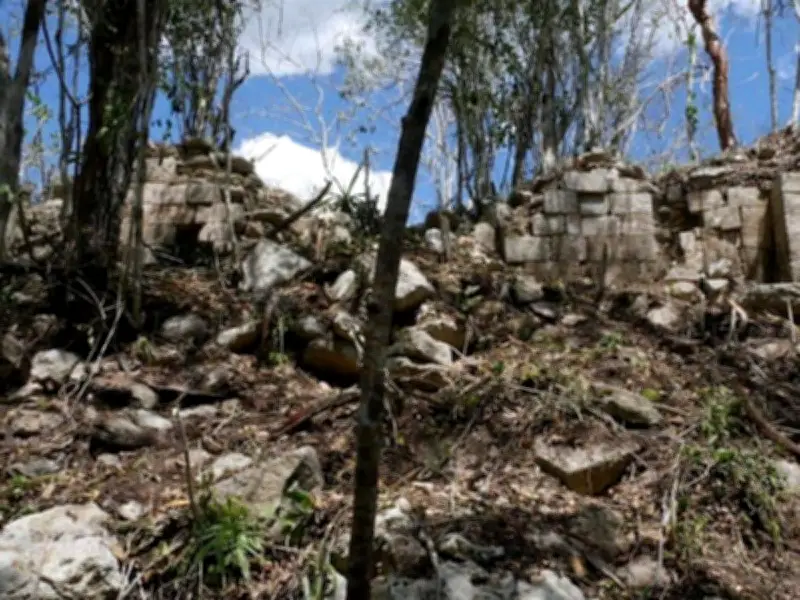
An international team of explorers has unearthed a Mayan city that remained untouched in the Mexican jungle for more than 1,000 years. The city, named Minanbe, was discovered in the Calakmul Nature Reserve in the state of Campeche, hidden beneath dense vegetation.
Discovery and Excavation
The group, comprising Slovenian and Mexican explorers led by archaeologist Ivan Sprajc of the Research Centre of the Slovenian Academy of Arts and Sciences, conducted research that led to the remarkable find. The expedition followed an assessment of LiDAR imagery by fellow archaeologists Atasta Flores Esquivel, Vitan Vujanović, Israel Chato López, and Quintín Hernández Gómez, which suggested structures beneath the thick jungle canopy.
The city spans 13 square hectares and contains numerous structures, including a pyramid in the Rio Bec style standing 13 metres tall, and a relief depicting water features and a beheading. Vitan Vujanović told the National Institute of Anthropology and History (INAH) that it was "the first time I have recorded a more or less well-preserved temple, and a stele that still bears glyphs."

Challenges of Exploration
The discovery marks the conclusion of a project devoted to exploring the Central Maya Lowlands, backed by the Archaeology Council of INAH. The team explored the northern section of the reserve as part of a surface survey west of Chactun. To reach hazardous areas, they relied on machetes to hack through vegetation and used quad bikes.
Sprajc noted the absence of clear paths indicated significant findings. He explained: "Compared to other places where we carried out surface surveys, access here proved much more difficult. However, in the last three years, this is the first site we've found that's intact; there are no signs of looting. It was a real discovery, a huge surprise for us."
Significance and Naming
The city is believed to have been built between 600 and 900 AD. The name Minanbe comes from Yucatec Maya (mina'an, 'there is none', and be, 'path'), following the tradition of naming sites after a characteristic or circumstances of discovery. Sprajc concluded that Minanbe is consistent with patterns observed in other regional discoveries, adapted to serve an agriculturally-based power structure, though questions persist about whether outside incursions altered its social dynamics.