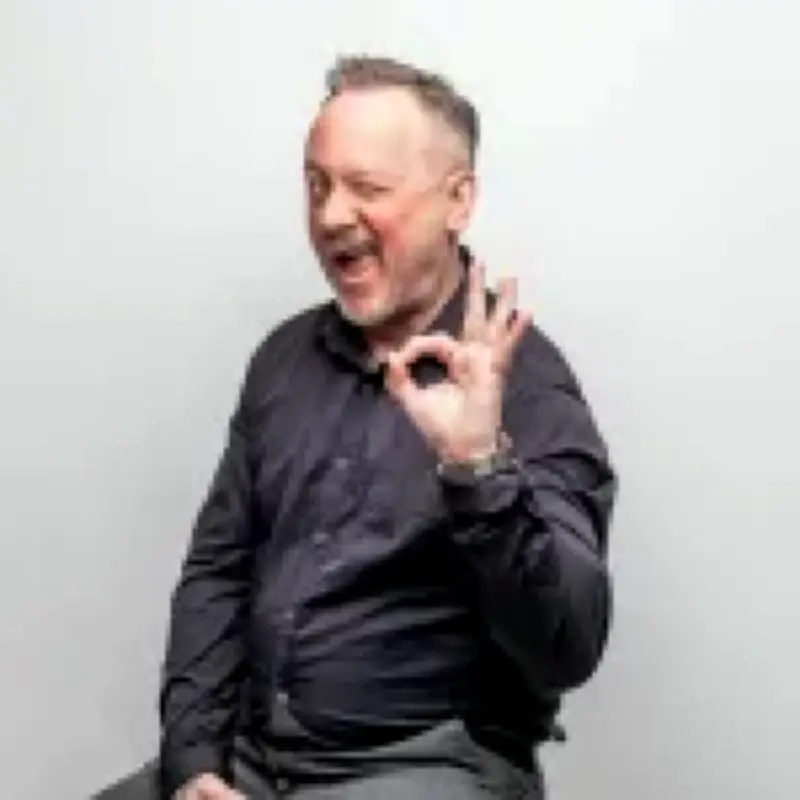
Steve Charnock, an audience writer, openly admits to being a winker – and he does it responsibly. He acknowledges that the wink has developed a dubious reputation, often associated with ageing lotharios, 1970s game show hosts, and regional sales managers after a few drinks. For clarity, he does not wink indiscriminately at random women; his wife might receive the odd one, but he avoids making a cheery gesture into something potentially deserving of a police caution.
The wink as warm communication
Deployed correctly, the wink remains one of the finest, warmest bits of non-verbal communication available. A good wink can convey many meanings: hello, cheers, thanks, no worries, nice one, I saw that too, we’re good – all by moving one eyelid about half an inch. It’s wonderfully economical ocular shorthand, particularly useful when leaving somewhere: give eye contact, a little wink, and you’re gone.
A good wink really comes into its own with people you already know and like. It can acknowledge a shared joke or establish a private little conspiracy without either person saying a word. There is some science behind this: psychologists have linked non-verbal signals such as eye contact, smiling, and laughter with social bonding. A wink is its own peculiar version – a tiny signal aimed at just one person, saying there’s some understanding between you.

A personal memory
Charnock recalls a memory of his paternal grandad from a big family gathering when he was a kid. As an only child, he wasn’t being overly sociable, but at some point his grandad caught his eye across the room and winked. He can still remember the feeling – for a second, surrounded by grown-ups and other grandkids, it felt as though his grandad had quietly informed him they were in the same club. He was too young to appreciate the idea of social inclusion, but he felt it.
Unfortunately, the gesture has acquired an air of something people feel the need to report via email. Modern culture shares some blame, but the winking emoji in texts, social media, and email has surely made matters worse. If you need that little yellow face to explain you’re trying to be fruity, you’ve got no business trying to chat anyone up. When it comes to flirting, a wink should be punctuation, not an opening paragraph.
Rules for responsible winking
Charnock offers immutable rules for responsible winking: use one eye only – blinking slowly with both eyes is for cats and your old man watching golf; never accompany a wink with a click of the tongue or finger guns; don’t hold it, as that’s no longer a wink but an indication something neurological may be happening; and use winks sparingly – one wink equals warmth and charm, three winks in a minute is a tic.
One last tip: if you’re a bad winker, don’t wink. If your entire face collapses like you’re trying to sneeze through one nostril, or your mouth gapes open like an old Looney Tunes character, just nod instead. Being old-fashioned is part of the wink’s appeal – grandads used to wink, and they were much cooler than any of us have turned out to be. It’s warm, slightly ridiculous, and capable of creating a tiny moment between two people without either having to say anything. A smile’s for everyone in the room; a wink has a target audience of just one. So he’s carrying on winking – carefully, responsibly, and never with finger guns.