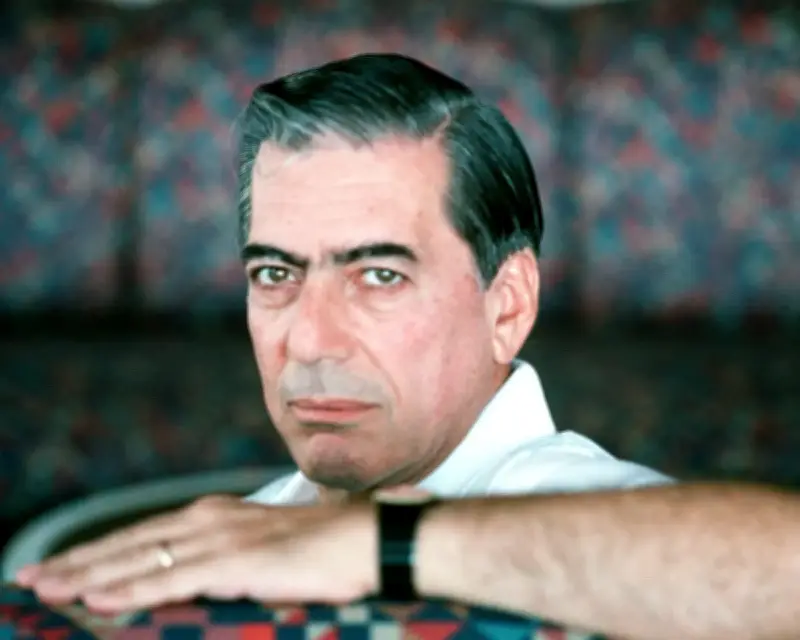
Mario Vargas Llosa's final novel, I Give You My Silence, is an eccentric love letter to his native Peru and, in particular, its music. Published in Spanish in 2023, the Nobel laureate predicted it would be his last novel; he died last year at the age of 89. Despite being completed with death approaching, the book is not morbid but rather a fascinating, quirky tribute.
A Quixotic Hero and His Obsession
The novel's hero is Toño Azpilcueta, a music journalist who hoped to be a professor of Peruvian music but earns a meagre living teaching at a girls' school and writing for specialist magazines, subsidised by his longsuffering wife, Matilde. Toño is an impecunious cultural obsessive, infatuated with the vals, a Peruvian musical style fusing the European waltz with African and indigenous Latin American traditions.
One evening, Toño sees an unknown guitarist, Lalo Molfino, who impresses him with his virtuosity, but Molfino dies suddenly. With a small gift of money from a friend, Toño embarks on a biography, hoping to pay homage to Molfino's talent and put to paper his ideas about the Peruvian vals.
Two Books in One
Toño's big idea is that the vals can save Peru and possibly humanity, pointing past the trauma of colonialism, racism, dictatorship and terrorism. His quest involves sleuthing, research, interviews, a journey along Peru's Pacific coast, and battles with his own demons, including a rat phobia.
The novel is really two books in one: odd-numbered chapters are a third-person account of Toño's research, while even-numbered chapters are excerpts from the final work, forming a primer on Peruvian music and culture. These include essays on the vals's history, the cajon instrument, Spanish as a regional lingua franca, and huachafería, a concept Toño sees as key to Peru's identity, defined by dictionaries as pretension but described by Toño as “intuitive, verbose, solemn, melodic, imaginative and above all maudlin”.
Heroic Single-Mindedness
Toño's mission is clearly bonkers, but his heroic single-mindedness wins the reader over. The form allows Vargas Llosa to explore Toño's ideas while pointing out how overheated they are. For instance, Toño tells the story of Toni Lagarde and Lala Solórzano, a white man and a poor black woman whose shared love of music leads to marriage, which Toño sees as proof of the vals's redemptive power. But Toni and Lala push back at his efforts to make them emblematic. “You've got a theory there, but there are lots of theories,” Toni says. A psychiatrist calls Toño's book “a pointless, incoherent mass of undeveloped ideas”.
Vargas Llosa's implied verdict is more nuanced and tender. He shared his character's idealism, having run unsuccessfully for president in the early 1990s. Just as Toño sees importance in huachafería, Vargas Llosa finds heroism in his unworldly protagonist, suggesting that gentle, impractical dreamers bring their own kind of changes into the world.
By the novel's end, the reviewer had followed Toño up the Pacific coast on Google Maps, tried to find a recipe for Lala's quince marmalade, made a vals playlist on Spotify, and searched prices for flights to Lima. I Give You My Silence is published by Faber (£20).