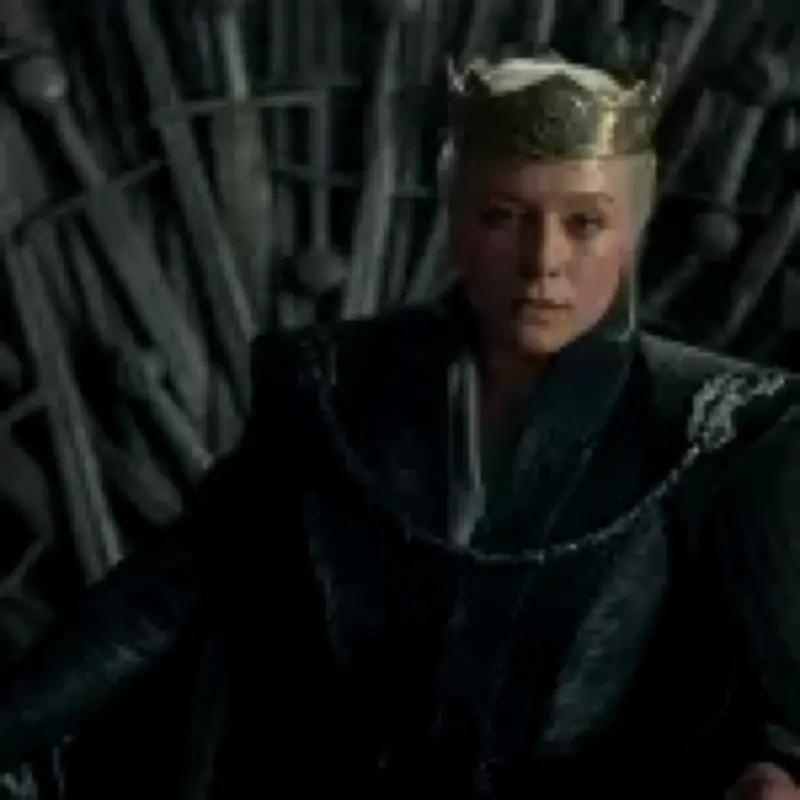
Warning: spoilers ahead for House of the Dragon. A woman descending into madness when given power is a recurring theme, from Daenerys Targaryen in Game of Thrones to Rhaenyra Targaryen in House of the Dragon, who is now beginning her steep downward trajectory into hysteria.
HBO cannot alter George RR Martin's story, as House of the Dragon adapts his book detailing the history of Westeros and the Targaryen dynasty's downfall. Similarly, Martin provided the general arc for Game of Thrones' ending, though he hasn't written it yet. Yet, within the fantasy world of A Song of Ice and Fire, there is a problem with women, from the books to the TV adaptations.
A Lack of Likeable Powerful Women
Despite creative licence in this medieval-esque world with dragons, the writers could not imagine one truly likeable woman who has power, wit, and brains while wearing a skirt. Creating a world that is not inherently patriarchal, where women are not violated, shamed, and raped, would be unrealistic, whether in a fantasy world or today's world.
They could have created a Tyrion-esque character who is good, kind, funny, and clever, or a Jon Snow-type humble but brave and brilliant woman destined to rule. Instead, Rhaenyra (Emma D'Arcy) is pig-headed and laughably bad at ruling. Baela (Bethany Antonia) is forgettable, Laena (Nanna Blondell) was dry on screen, Mysaria (Sonoya Mizuno) never cracks a joke, and Helaena (Phia Saban) can't cope. Alicent Hightower (Olivia Cooke) is arguably the most interesting, being multifaceted, brave, and morally rigid, but she keeps trying to kill her children and isn't likeable.
Female Tropes and Arya's Exception
The Game of Thrones world offers different 'types' of women: evil like Cersei (Lena Headey), perpetual victim like Sansa (Sophie Turner), or femme fatale like Margaery Tyrell (Natalie Dormer). These are extensions of female tropes seen for centuries. Arya Stark (Maisie Williams) is a fan favourite because she's headstrong, entertaining, and brave, but she soared by inheriting masculine traits and rejecting femininity. This suggests that within this made-up world, writers couldn't envisage a woman being all this with conventionally feminine traits.
This is a problem because women shouldn't have to reject femininity to be liked. Such unimaginative representations on TV perpetuate the idea that women must tone down their femininity to be likeable or go far. While depicting a traditionally feminine woman with a halo could be reductive, TV now knows how to do flawed yet captivating women, like in Fleabag and Killing Eve, where women can be murderers, depraved, loved, and powerful.
A Call for a Good Woman to Triumph
In this specific universe, where goodness is rare and often sullied, it would be quietly radical to have a good woman triumph, written so we all want her to, like Tyrion Lannister, Jon Snow, or even Samwell Tarly. There is no comparable woman in the show who isn't a well-worn trope.
In season four, it would be nice to see Baela come into her own, but there may not be hope for the rest. New female characters might change the tide, but it's uncertain. Women should be celebrated in all their varying gradients of feminine to masculine, but wouldn't it be nice in a show where anything is possible, if a woman could be powerful and adored without fitting in with the men?