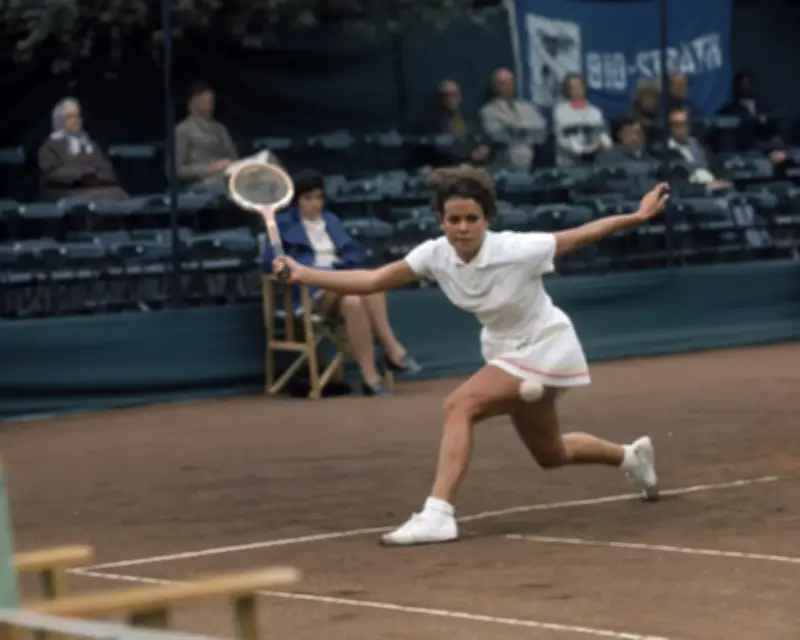
In 1969, Australian tennis player Evonne Goolagong was 17 and living in Sydney with her coach, Vic Edwards, and his family. She had left her home town of Barellan in the Riverina region of New South Wales to pursue her tennis career. The previous year she had finished high school at Willoughby girls high, where she was the only Aboriginal student, and was doing a secretarial course at the Metropolitan Business College in the city.
An incident at White City
Goolagong was training for her upcoming European tour. As part of the program, she played doubles twice a week with Edwards' daughter, Trisha, at the White City badge competition. The pair had played together for years and wore matching dresses at tournaments.
During a usual doubles game against two older women, Goolagong and Trisha won convincingly. As they went to the net to shake hands, one of the women turned to her partner and used the N-word, saying it was the first time she had been beaten by one.
Goolagong had never been called the word before and went into shock. She thought she had misheard, but Trisha responded with a cutting comment, making it real. The older women left, and Goolagong and Trisha stood in the centre of the court, hugging and sobbing.
Seeking support at the foundation
Still crying, Goolagong called Isabel, a friend at the Foundation for Aboriginal Affairs, a cultural hub for city-based Aboriginal people. Isabel told her to take a taxi there immediately. When she arrived, Isabel and Bob held her and patted her back as she cried. Bob told her kindly that these things happen to Aboriginal people all the time, and that she was strong and could deal with it.
Goolagong said something had irrevocably changed within her. Her naivety had been broken, and the protective bubble her family and the Edwardses had built around her was smashed. She would move on but would never be the same innocent young girl.
Aftermath and a Wimbledon win
When Goolagong returned home hours later, Trisha had already told Mr Edwards what had happened. He was remarkably matter-of-fact, having informed the NSW Lawn Tennis Association over the phone and writing an official complaint. Goolagong never saw the woman at White City again.
After the incident, she spent more and more time at the foundation, where friends made her feel proud to be Aboriginal. Two years later, in 1971, she won her first Wimbledon singles title, becoming the first Aboriginal woman to claim it. She said the win was for all Aboriginal people.
This is an edited extract from Only Ever Evonne by Evonne Goolagong Cawley with Alley Pascoe (Allen and Unwin), out 29 September.