Samina Baig, a young climber from Pakistan's remote Shimshal Valley, defied a journalist who doubted her ability to climb Everest. Forty-nine days later, she stood at the summit, fueled by courage and determination. Her story is one of many in Rosemary J Brown's new book, Moving Mountains: Intrepid Women Climbers and the Peaks Named in Their Honour, published by The History Press.
The Legacy of Female Mountaineering
Brown, a climber herself, explores the resilience that runs through the history of female mountaineering. She traces the forgotten impact of women pioneers through mountains named after them. The journey begins with Sacagawea, the teenage Native American girl who aided the Lewis and Clark expedition from 1804-06, rescuing instruments, foraging for food, and reassuring rival tribes.
“What I really want to show is her amazing resilience and her connection to nature - traits shared by all the women in the book,” Brown said. “But she really is the guiding light.”

Meta Brevoort: Activist and Mountaineer
Marguerite Claudia "Meta" Brevoort, born into New York wealth, discovered climbing at 39. She settled in France and took up the sport with her sickly nephew, William Coolidge, whose health revived in the mountain air. In 1865, Meta became the first American woman to summit Mont Blanc, where she led her party in singing the banned lyrics of La Marseillaise. Over a 12-year career, she completed 20 first ascents and first female ascents, pioneered winter climbing, and scaled peaks with her dog, Tschingel.
Mary Isabella Charlet-Straton: First Winter Ascent of Mont Blanc
British heiress Mary Isabella Charlet-Straton used her financial independence to achieve the first winter ascent of Mont Blanc in January 1876. The climb nearly cost her two fingers to frostbite. Newspapers initially credited men who had failed, but she wrote to The Times forcing a correction. She had taken a forbidden route to the summit, a secret she kept for 30 years to protect her guides' livelihoods. During the climb, her guide Jean Charlet warmed her frostbitten hands; they later married.
Annie Smith Peck: Trousers and Triumph
American Latin professor Annie Smith Peck staged a revolution on the Matterhorn in 1895, but her achievement was overshadowed by public outrage over her hand-sewn, baggy canvas trousers. At a time when women were jailed for wearing men's clothing, Annie turned climbing into a freelance profession, funding expeditions through lecture tours. “She would never give up. Never,” Brown said. “She was doing it for other women so people could see the strength of women.” At 58, Annie conquered Peru's Mount Huascarán on her sixth attempt, though her guide stole credit. At 61, she scaled a Peruvian volcano to beat a dismissive male rival, planting a "Votes for Women" banner at the summit.
Elizabeth Le Blond: Trousers and Filmmaking
Elizabeth "Lizzie" Le Blond, an elite Irish heiress, abandoned London high society after being sent to the Swiss Alps for a respiratory complaint. She operated under the “slipping on and off” school of dress, wearing a skirt over climbing gear and hiding it to climb in trousers. In 1900, Lizzie made the first all-female, guideless traverse of Piz Palü, which authorities left out of official records to avoid scandal. She helped found the Ladies' Alpine Club in 1907, served as a wartime humanitarian, and became the world's first mountain filmmaker.
Gertrude Benham: Global Wanderer
Gertrude Emily "Truda" Benham spent her youth caring for aging parents in London. After they passed, she circled the globe seven times and walked across Africa four times on a shoestring budget of under £250 a year. Traveling unarmed with only an umbrella, a pocket Shakespeare, and Kipling's Kim, she forged ahead alone on Kilimanjaro in 1909 to reach the Mawenzi crater edge after her guides abandoned her. “I hadn't even heard of her,” Brown said, “Because she just was too busy traveling and climbing mountains.” Truda died at sea at age 70, leaving behind 800 rare artefacts.

Gertrude Bell: From Mountains to Diplomacy
Gertrude Bell, known as 'Queen of the Desert,' mapped uncharted Arabian deserts and helped draw the borders of modern Iraq after World War I. She discovered her grit in mountaineering, tackling France's La Meije as her first serious ascent, stripping to underclothes when her skirt proved hazardous. On the Finsteraarhorn in 1902, a blizzard trapped her and her guides on a ridge for 53 hours, surviving two nights on a glacier. Her guides said they would have died without her. Though a staunch anti-suffragette, her survival skills translated to diplomacy.
Junko Tabei: First Woman on Everest
Junko Tabei, a frail child from Fukushima, shattered Japanese social expectations by founding the Joshi-Tohan all-female climbing club in 1969. In 1975, she organized an all-women expedition to Mount Everest. Six weeks in, an avalanche buried their camp, knocking her unconscious. Refusing evacuation, she crawled along a knife-edge ridge nine days later to become the first woman on Everest's summit. “Junko, less than five-foot-tall Japanese woman who is the first woman to climb Everest in 1975. That's really going against all odds,” Brown said. "Five minutes more, maybe even three minutes more, she would have been dead." Later, she became the first woman to complete the Seven Summits.
Samina Baig: Modern Trailblazer
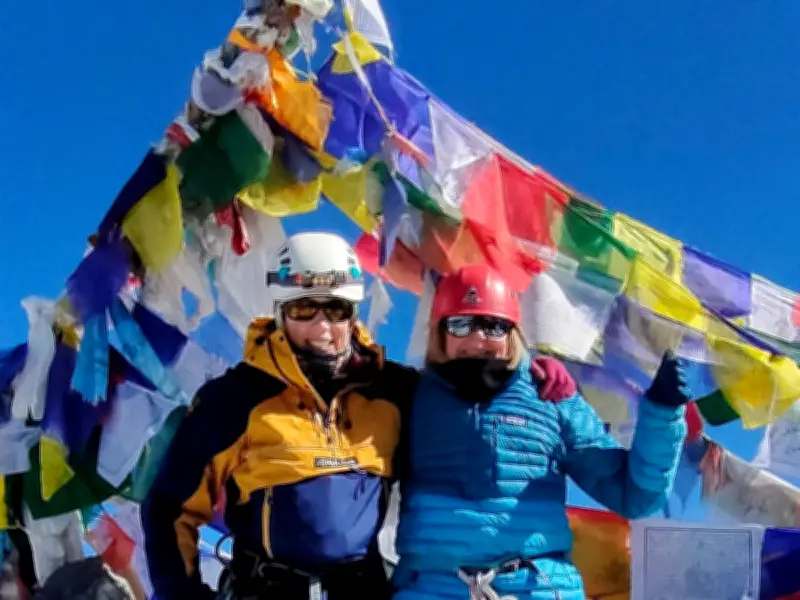
Samina Baig started mountaineering with second-hand bazaar boots and made history on Everest in 2013 at age 22 during a Gender Equality Expedition. Her brother Mirza Ali stopped 248 metres from the summit, letting her step onto the top alone to show what Pakistani women could achieve. In July 2024, she developed severe high-altitude pulmonary edema at base camp during a K2 attempt. With her lungs filling with fluid and a rescue helicopter failing, her brothers mounted a 48-hour rescue, bringing her down on horseback. Told she would not climb big in 2025, she said, "Life feels like a challenge in its own way, but turning those challenges into something positive is always a choice." Months later, she became the first Pakistani woman to ski to the South Pole. "I hope my journey reminds others, especially young women, that dreams are worth pursuing," she said.