London's big and famous museums — the British Museum, the V&A, always packed with tourists — are world-class, and everyone knows it. But there's an altogether different world of museums and galleries in the city, one that often goes under the radar.
The little, quirky museums tucked away into houses and attics, or stellar collections that go unnoticed, are run by passionate individuals. These are places where curiosity and historic interest trump acreage and celebrity. Here the real thrill is finding things you never knew you were interested in. Among the treasures here are ancient textiles from Egypt; a museum devoted to the Swedenborgian ideas of thought and vibration, exactly as strange as it sounds; an urn with skeletal human remains. Strange, lovely, or just plain weird, they make for a more idiosyncratic and interesting experience than the well-trodden paths to the big collections.
Petrie Museum of Egyptian and Sudanese Archaeology
University College London, Malet Place, WC1. The Petrie Museum of Egyptian and Sudanese Archaeology has one of the largest collections of its kind outside Egypt and Sudan — over 80,000 objects, many of which are on display in two very cramped, but absolutely charming and delightfully old-fashioned rooms. This is a strange mixture of a Victorian museum with wooden cases crammed with pots, toys, jewellery and artefacts from everyday life and a modern institution wrestling with colonialism.

One of its rarities is a 5,000-year-old linen shirt, said to be the oldest woven garment known. There is also a sarcophagus and a pottery burial urn from el-Badari dating back to 3000 BC containing the remains of a person in the foetal position in which he was buried. The galleries are quiet, filled with people peering at the objects. The museum holds an almost mystical appeal to young and old alike.
Swedenborg House
20-21 Bloomsbury Way, WC1. One of the most fascinating thinkers of the 18th century was Emanuel Swedenborg, whose ideas influenced philosophers and artists as various as Kant and William Blake. The Swedenborg Society in Bloomsbury offers a curious and subtle introduction to Swedenborg's world. The theories of Swedenborg are complex — maybe too much to take in all at once — but they command respect.
He was a polymath of incredible scope and the rooms here testify to his restless and versatile mind. Its programme ranges from scholarship to the fine arts and the occult — John Deakin has exhibited in the past at the Society, while at the moment Hannah Hughes's sculptures and collages add to the collection's interest. Among the strangest items are the incus and malleus, bones found in the human ear, marking a striking transition from telepathy to anatomy. There will be a William Blake exhibition in October.
Hunterian Museum
43 Lincoln's Inn Fields, WC2. The Hunterian Museum on Lincoln's Inn Fields is the ideal treat for a typically morbid-minded child. There are feet, noses, ears, foetuses and human body parts floating in jars. During my visit, the children seemed to find the entire collection fascinating. I was more hesitant about the gruesome stuff, but gradually the displays began to reveal something beyond their shock value.
Everything was lit up brightly and effectively to draw the visitors down the long hallway where they invariably gaze at the exhibits in awed silence. There are almost 15,000 specimens ranging from rabbits' ears, stuffed dodo and even dentures, chinchillas and human remains collected by John Hunter, a famous surgeon and anatomist of the 18th century, using most of his money to gather the specimens. What we can't see, alas, is the skeleton of Charles Byrne, a 7 ft 7 in giant, now in storage. If you can handle it, go.
Pitzhanger Manor & Gallery
Ealing Green, W5. Within walking distance of Ealing Broadway, Pitzhanger Gallery is an overlooked delight. Designed by Sir John Soane, architect of the Bank of England, Pitzhanger showcases his genius: Gothic touches, medieval sculpture and elements of the Pantheon in Rome are somehow combined in rooms that are startlingly elegant and modern. The library is beautiful, but Soane's mastery over light is the most striking aspect of the building.

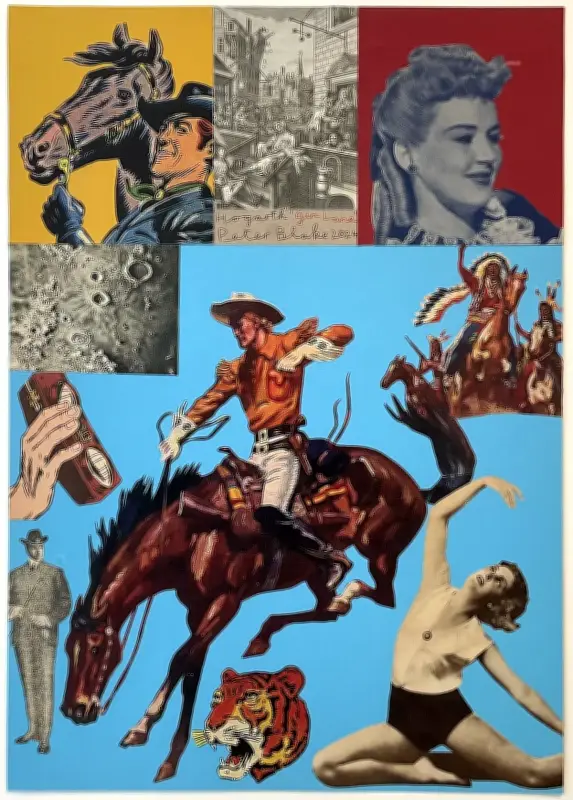
Soane looked to design his “mysterious light”, and it moves through the space with theatrical grace even today. Having started a programme of contemporary exhibitions in 1996, Pitzhanger has hosted artists including Anish Kapoor and Howard Hodgkin, in an admirable record of contemporary British art. Its current exhibition on Clare Woods situates contemporary painting within a building that seems always thinking, watching, changing around it, while the next show will be by Peter Blake.
Apsley House
149 Piccadilly, Hyde Park Corner, W1. Apsley House can hardly be said to be an overlooked space — it sits on Hyde Park Corner and its original address was Number One, London — but too few people realise that the first Duke of Wellington's house has one of the most marvellous art collections in London. Most of his paintings came from the Spanish Royal Collection, which he took from Joseph Bonaparte after the Battle of Vitoria.
The paintings were then officially given to Wellington by a grateful King Ferdinand of Spain. Of the original 200, 83 still hang at Apsley House and they include real treasures, including Velázquez's The Waterseller of Seville, Titian's Portrait of a Lady and Nicolaes Maes' The Eavesdropper, all in an uncrowded and quiet gallery. A must-see.