Glasgow has seen countless restaurants come and go, but some beloved eateries from the 1970s are still fondly remembered. These five establishments closed their doors for the final time, much to the dismay of locals.
Dino's
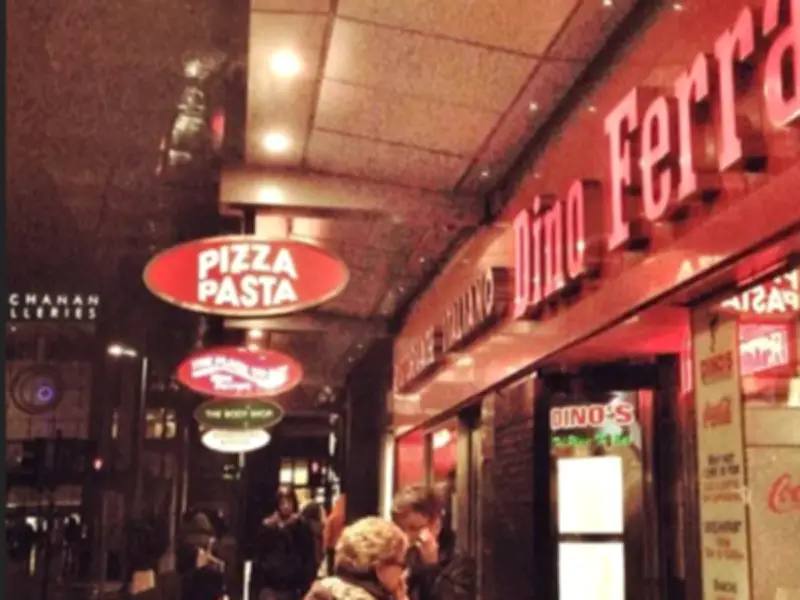
Dino Ferrari's on Sauchiehall Street was once a Glasgow institution. Founded in 1966 on Buchanan Street, the Italian eatery relocated to Sauchiehall Street in the 1970s. It offered many Scots their first taste of pizza and pasta.
Dino's announced its closure in 2014 after almost 50 years in business when owner Alfredo Crolla retired. One Scot on a Reddit thread wrote: "Nothing has ever replaced the Dino's £3.80 10' pizza. What a class place that was."
Danish Food Centre
The Danish Food Centre stood on St Vincent Street after opening in 1969. It was a chain, with its Glasgow location being the third in the UK after London and Manchester. Famed for its smoked mackerel and Smorgasbord buffet, it introduced Glaswegians to Danish cuisine.
One Reddit user recalled: "Going way back to the early 70's, the Danish Food Centre."
Rogano
Rogano first opened in the 1930s and was popular in the 70s and 80s. Located off Royal Exchange Square, the seafood restaurant attracted celebrities like Elizabeth Taylor, Mick Jagger, and Kylie Minogue. It closed during the pandemic due to a legal dispute over flooding damage.
In a Reddit thread, one Scot described it as "One of a kind."
Buck Rogers
Queen Street's Buck Rogers Burger Station was themed after the NBC TV series from 1979 to 1981. Opened by the Lord Provost in November 1982, it was designed to take patrons into the 25th century. Food was served by the show's robot Twiki, and the decor was futuristic. It later became the nightclub Archaos.
Wimpy
Wimpy had several locations in Glasgow in the 1960s, including at The Sauchiehall Centre, Ingram Street, and Union Street. The UK burger chain served American-style fast food at your table with proper plates and cutlery. One Scot remembered: "Wimpy's Sauchiehall Street. They made damn good fish n' chips."
The outlets gradually disappeared in the 1990s, though some still exist in limited places around the UK.