Are you feeling empty, bored, unfulfilled? One feature in this weekend's Five Great Reads says there may be a very good reason — and it's a theme that links several stories selected by Jacqueline Housden.
The five essential articles cover Barnaby Joyce's electorate, the history of the witch label, the final season of a beloved comedy, a reissued 1984 album, and the paradox of modern decadence.
Barnaby Joyce's electorate vs One Nation's vision
For seven years, Armidale has been an active regional refugee settlement city, now home to Yazidi and Congolese communities. That local reality contrasts with the "monocultural" Australia vision pushed by Joyce's new party, One Nation, which also runs an anti-immigration agenda.
Reporter Adeshola Ore found that nine years ago Joyce supported a resident-backed campaign to make Armidale a refugee resettlement site. Refugees say they were embraced by locals and are now buying first homes and putting down roots. The current federal MP has suggested refugees could be exempt from his party's push to limit migration to English speakers, saying he had "no problem" with the current number continuing to settle in his electorate.
Reading time: three and a half minutes.
Further reading: Pauline Hanson says Australia has a "language problem" due to immigration; Marziyah, who arrived with little English, is now a lawyer with a mission.
What makes a woman a witch?
Misogyny still shapes that label, as recent "ditch the witch" billboards in Melbourne showed. Political leaders criticised them as they put pressure on Jacinta Allan, who resigned this week.
Lucianne Tonti's new book, Good Witch: In Search of Our Lost Feminine Power, looks back at what historically marked a woman as a witch. She writes: "While there were many causative factors in the witch-hunts – patriarchy, economic hardship, and religious and political tensions, to name a few – a woman's financial independence and power made her vulnerable. Sometimes this independence was realised through inheritance, sometimes her proficiency at work." Another striking line: "These women were aberrations in a society with an inheritance system designed to keep property in the hands of men."
Reading time: a spellbinding two and three-quarter minutes.
Further reading: The rise of witchcraft retreats where US women go to defy man and church.
The real love story behind Colin from Accounts
Harriet Dyer and Patrick Brammall, the creators, actors and real-life couple behind Colin from Accounts, talk about their third and final season. "We don't want to flog a dead horse. It definitely feels right," Brammall says. Dyer adds: "It is not that the horse is dead yet – we don't even want to find it is having trouble breathing."
The pair say they love playing both romance and conflict. "Obviously, we love playing the stuff where we're falling in love, but we love having big arguments just as much. We're actors by trade, so we love pretendies. I had a ball. I think Harri did too," Brammall says.
Reading time: three minutes, longer than a car crash-inducing nipple flash.
Further reading: Luke Buckmaster reviews season three.
A forgotten album finally gets its moment
An album that began life in 1984, fusing disco, folk, synth-pop and Chinese opera, has been called one of 2026's most thrilling releases. Its creator is Steven Hall, a Scottish musician who now calls himself Nirosta Steel. For the past three years Hall has lived with his lawyer husband a few hours south of Chicago, driving an Uber for extra income.
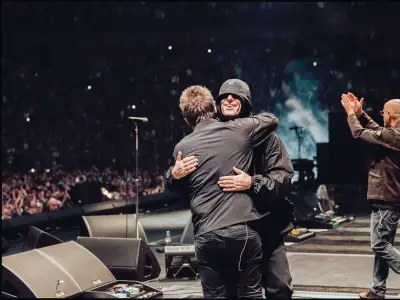
The double LP My Skyscraper has suddenly drawn critical praise. "I feel like Rip Van Winkle!" Hall says. "Like I suddenly walked out of a cave and I'm blinking my eyes and there's all this bright light shining on me." His life story includes globe-trotting adventures and encounters with experimental icons such as Arthur Russell and Allen Ginsberg. "I thought it was normal," he says, "because it was the only thing I knew."
Reading time: just over three minutes.
The age of decadence without pleasure
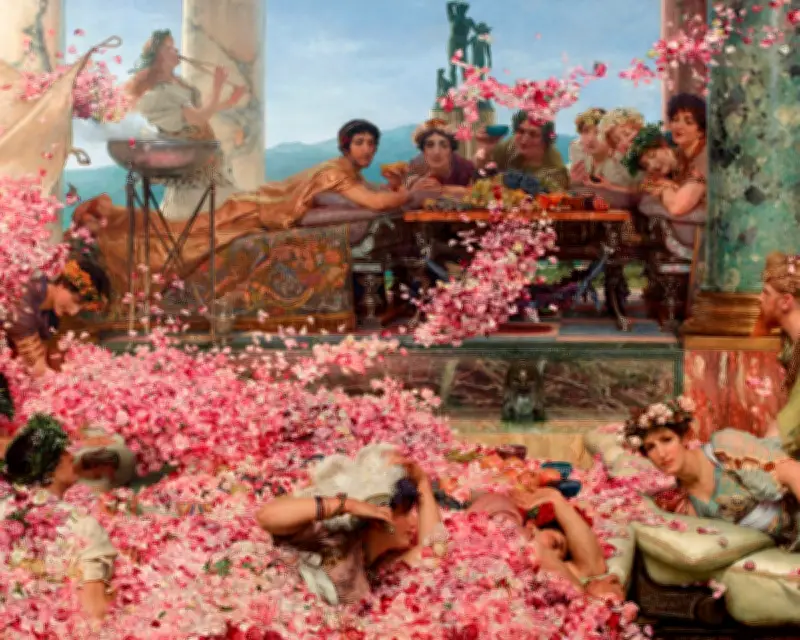
Our overstimulated, algorithmically driven culture is saturated with a deluge of empty stimulation, and AI researchers warn of "human enfeeblement". We are, it seems, in an era of decadence without pleasure. The Romans gave decadence a bad name: Emperor Elagabalus, who took the throne at 14, served flamingo brains, seasoned his food with pearls, and apparently smothered guests to death with an avalanche of rose petals.
But there is cultural potential in decadence, the piece argues: think of Rococo painting before the French Revolution, the shimmering silks of the late Ottomans, or the experimental cinema and nightlife of Weimar Berlin. It's a luxurious eight-minute read.
Further reading: Your worst fears about cultural collapse might be true – here's what you can do about it.
If you would like these Five Great Reads delivered to your email inbox every weekend, you can sign up for the newsletter.