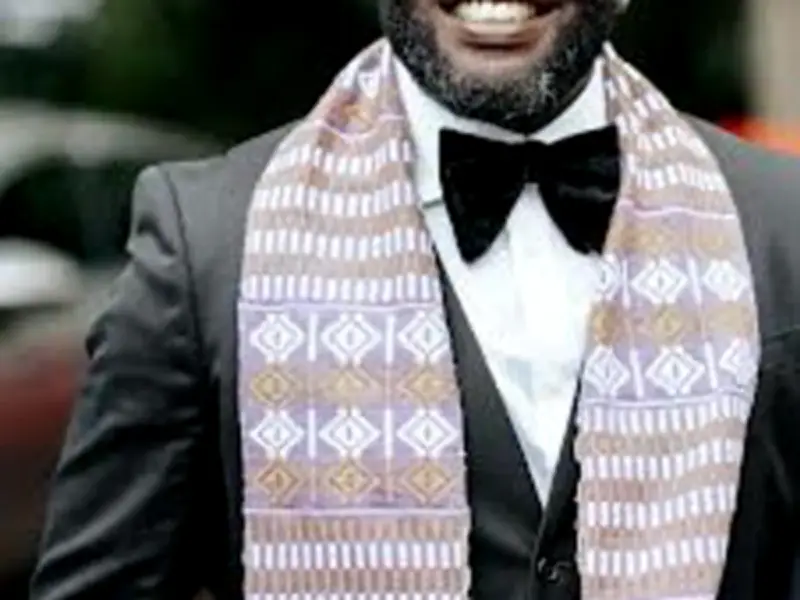
Filmmaker Richard Ampeh, who spent his first five years fostered by a white family in Boston, Lincolnshire, is among the faces featured in the Portrait of Black Britain exhibition at Aviva Studios. The display runs until November 1, 2026.
Early years in foster care
From 1984 to 1989, Richard was unofficially adopted under a scheme known as 'farming', prevalent from the mid-1950s to early 90s. White British families, usually working class, took in the children of West African migrants, often from Nigeria and Ghana, allowing biological parents to study or work while paying the families to care for their children. It is believed around 70,000 Black children were privately fostered in the UK.
The agreement was unofficial and unregulated, leading to horror stories about poor conditions and abuse that came to the fore years later. Richard says much of his experience was positive.
Memories of the White family
"I was ironically fostered by a family called Mr and Mrs White," he said. "I moved back with my mum when I was five, lived with her for two years and she passed away when I was seven."
"The memories that I have of them, if I'm being very honest, formed some of my happiest childhood memories. I remember them making an apple and rhubarb crumble, with rhubarb that they grew and us all eating it. I remember watching wrestling, WWF with them. And then I remember being on the train platform with my mum, leaving. I remember crying, because my mum had come to take me from my family."
His aunt once joked about how he used to run away from his family, like his uncles. "When I was five or six I would hide behind sofas and I thought to myself, 'of course I did, I was raised by white people'. I thought those white people where my family."
From Hackney to Manchester
Originally from Hackney, Richard now lives in south Manchester, working as a filmmaker in education. In 2025, he worked with two other men to visit local mosques to speak to young people about misogyny, online hate, and radicalisation. He turned the programme into a documentary featured at the Independent Black Film Festival.
He is also one of the hundred faces on display at Aviva Studios as part of this year's Black History Month installation. Portrait of Black Britain photographs and profiles a range of Black people living in the UK, highlighting the different roles people play in the community.
Its focus is not only on high-profile people and success stories, but as many people from as wide a range of society as possible, aiming to make more Black people visible and offer the next generation and wider society an authentic and holistic picture of Black existence in the UK in the 21st century.
Challenging perceptions
"It humanises the black person," he said of the exhibition. "Quite often, people are exposed to black people through certain lenses and guises and those guises and lenses aren't dictated by us. The fact this is a black male capturing it, means there is something pure and honest that will come out of it. This is really for me, challenges the idea of black excellence and black reputation, but also the black experience as well. Opening it up to people and humanising it."
The concept was created by Cephas Williams at a time when candid conversations about the Black community were taking centre stage following the murder of George Floyd. In response, Portrait of Black Britain centralised Black-led representation on what it meant to be Black in the UK at that moment.
Cephas Williams said: "Since MIF commissioned the exhibition in 2021, it's been great to see how many people have resonated with the work. Revisiting the photographs and exhibition has been both nostalgic and enriching and sharing it once again at Factory International’s new home offers audiences an opportunity to experience the scale and significance of the project in a new way.
"I think of the child who experienced Portrait of Black Britain for the first time in 2021 and how much can change in 5 years. Someone who was 5 is now 10; someone who was 15 is now 20. I often wonder how the exhibition may have inspired kids and adults alike, encouraging someone to pick up a camera or bring an idea they’ve had to life. As well as how the portrait series introduces its viewer to what it means to be Black through a positive and powerful lens."