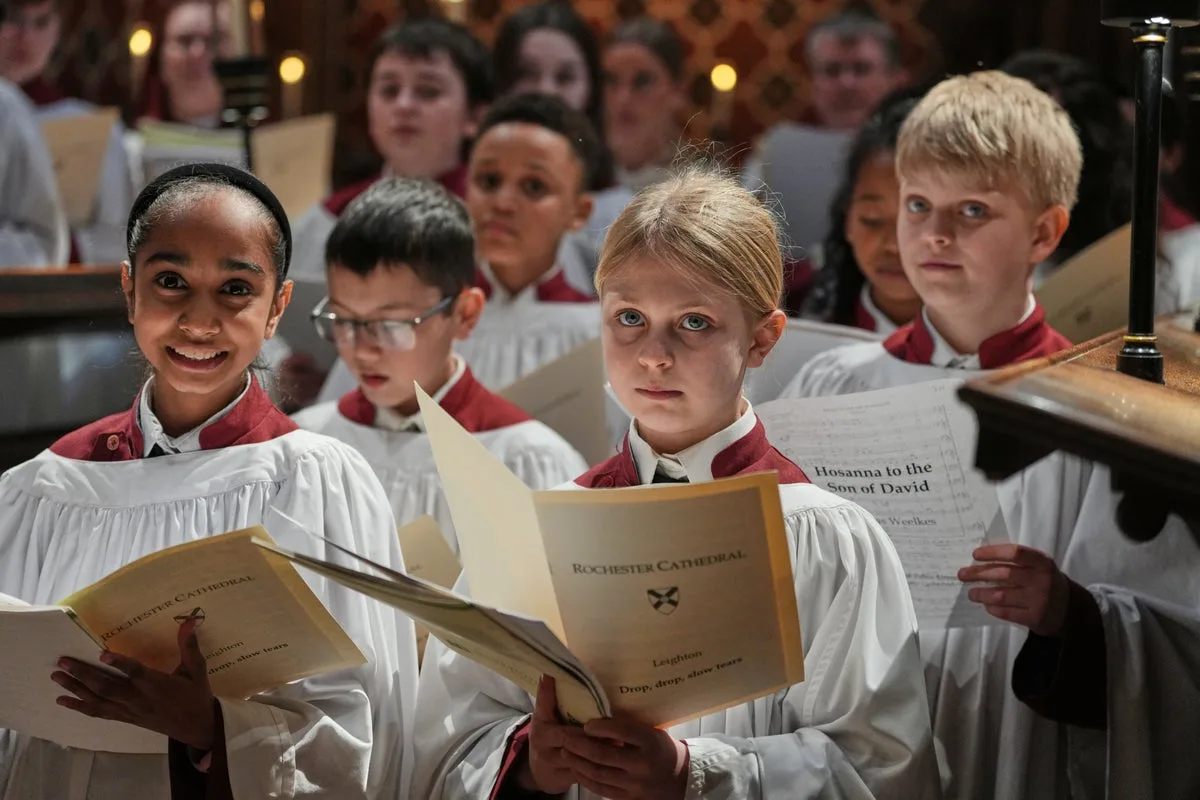
On a grey afternoon before Easter, schoolchildren at Rochester Cathedral donned burgundy cassocks and white surplices to sing as a choir, continuing a choral music tradition in the Church of England that has remained largely unchanged for nearly 500 years.
Adrian Bawtree, the choir's music director, described the sound as 'one of the sounds of our country,' noting that cathedrals offer a transformative experience. The tradition's epitome is Choral Evensong, an evening service established by Archbishop Thomas Cranmer in 1549.
However, modern life, declining church attendance, and funding shortages threaten this heritage. Enthusiasts have launched a campaign for government recognition under a UN programme protecting 'intangible cultural heritage,' as part of a UK inventory of traditions from Morris dancing to dry stone walls.

The Cathedral Music Trust, which gave £500,000 to 28 cathedrals last year, says choirs are fragile and require significant funding. Rochester spends about £250,000 annually on music. Trust CEO Jonathan Mayes said recognition could bring attention and funding.
Historian Diarmaid MacCulloch emphasised Evensong's role in spreading modern English through the Book of Common Prayer, calling it 'a drama performed by the people of England from 1549 to the present day.' He noted the service would be recognisable to both Queen Elizabeth I and Queen Elizabeth II.
Bawtree, who oversees choristers aged 9-13, was captivated by church music from his first encounter. The tradition now includes girls in some choirs, but otherwise remains largely unchanged.