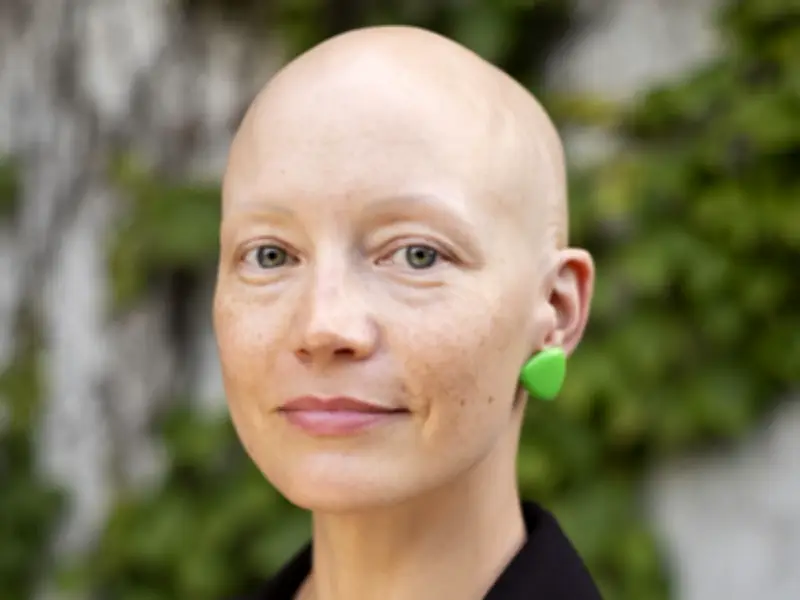
American author Helen Phillips was crowned the winner of the inaugural Climate Fiction Prize for her novel Hum, which envisions a world where fresh air is a luxury and artificial intelligence has evolved into omnipresent humanoid robots. The ceremony took place on May 27, 2024, in London, where temperatures had soared to 35 degrees Celsius the previous night, underscoring the urgency of the climate crisis.
Novel Explores a Dystopian Future
Set in a hot, gritty city populated by super-intelligent robots called 'Hums', the story follows protagonist May, who seeks refuge from her family's addiction to devices by spending a weekend at a Botanical Garden. There, fresh air and greenery flourish, but her decision to escape technology comes with consequences for her family. Phillips told The Mirror's book critic Dr. Aimée Walsh that the book was inspired by her anxiety about climate change and a need to understand it.
She said: "When I was setting out to write Hum, I was inspired by my anxiety. One of the things I was anxious about was climate change." Exploring whether her fears were based in reality, she sought to answer: "What are some real predictions about what's going to happen with the climate? What are the people who study this thinking: what will happen with artificial intelligence?"

Research and Ethical Dilemmas
In researching the book, Phillips consulted Dr. Kenneth Gould, a sociologist at Brooklyn College who studies climate change. She recalled a remark that stayed with her: "We are all villains. The system only gives us villainous options." This echoes the sentiment that there is no ethical consumption under capitalism, highlighting the difficulty of living a completely ethical life untangled from AI and technology that exacerbate climate change.
Phillips noted that artificial intelligence and the climate emergency are intertwined, stating: "In the US, they're building vast data systems to support the AI infrastructure but they use a lot of natural resources." She does not advocate for a world without AI but stresses understanding the consequences: "AI that's suddenly popping up on your computer or phone, it's not for free. There is a cost that comes with that and the more that people can be aware of that, the better."
Personal Connection to Air Quality
After writing the book, air quality became a personal concern for Phillips when wildfires in Canada affected New York City. She said: "We are all in this vast connected system that can affect our daily lives." While she acknowledges that a single novel cannot resolve the climate crisis, she hopes Hum will open questions about whether technology is costing society the world.
Phillips concluded: "We can nurture connection in our lives, connection to our families, to our friends, to the people we work with. From that connection grows the power to try to change things." Hum by Helen Phillips is published by Atlantic Books.