Archaeologist's Scathing Letter Unearths Bitter Feud Over Tutankhamun Curse
A newly discovered letter penned by renowned archaeologist Howard Carter has surfaced, revealing his profound contempt for the man he believed invented the infamous 'Tutankhamun Curse'. The three-page handwritten document, dated January 1934, was addressed to Helen Lonides and expresses Carter's unequivocal dismissal of the curse as having "no basis" and being "a menace to archaeology".
Carter's Venomous Words on Weigall's Passing
In the letter, Carter contrasts the sad death of the Duchess of Alba with his feelings about Egyptologist and journalist Arthur Weigall: "I fear I must admit that I have not the same sentiments with regard to Weigall. In fact his death is a real blessing. For although he was a clever writer, he was cunning." Carter further accuses Weigall of creating inventions "for temporary excitement and amusement at the expense of others", explicitly stating: "The 'Tutankhamun Curse' was his invention."
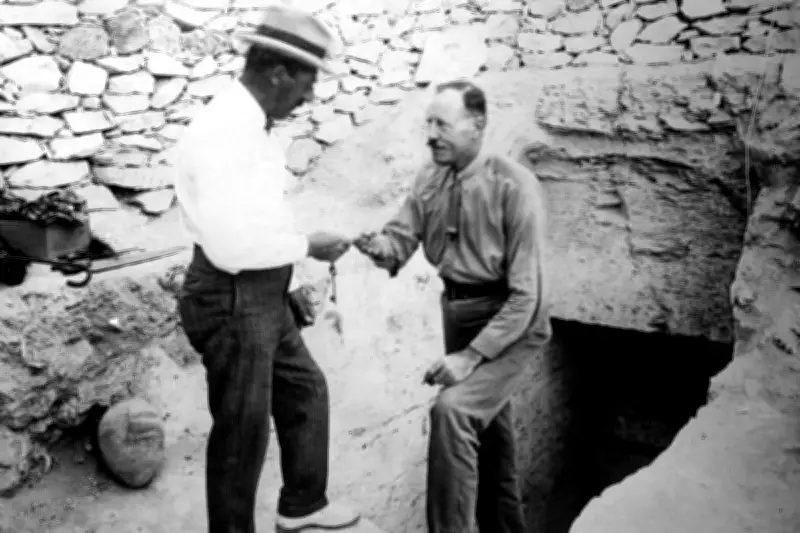
The archaeologist, who discovered Pharaoh Tutankhamun's tomb in the Valley of the Kings in 1922, emphasizes that Weigall "was never at the opening of the discovery" and was "the last of the correspondents to arrive, several minutes afterwards". This detail underscores Carter's belief that Weigall lacked firsthand authority for his sensational claims.

Origins of the Pharaoh's Curse Myth
The curse theory gained traction following the unexpected death of Lord Carnarvon, Carter's financial backer, who succumbed to a mosquito bite weeks after entering the tomb. Weigall, covering the story for the Daily Mail, reportedly witnessed Lord Carnarvon joking as he prepared to enter the tomb and remarked to a fellow reporter: "If he goes down in that spirit, I give him six weeks to live." When Carnarvon died within that timeframe, Weigall seized upon the event to propagate his theory that anyone disturbing a Pharaoh's mummy would face bad luck, illness, or death.
An RR Auction spokesperson provided context on the intense media rivalry surrounding the discovery, explaining that Lord Carnarvon had granted The Times exclusive access in exchange for £5000 plus 75 per cent of profits from the King Tut story. "Although this helped to finance the work, it created resentment both from other newspaper reporters—most notably Weigall—and from the Egyptian authorities, whose own press was also excluded," the spokesperson noted.
Auction Discovery and Historical Significance
The letter, bearing a Curna, Luxor, Egypt letterhead, recently surfaced when it was put up for auction at RR Auction in Boston. It surpassed its estimated value, selling for £12,530 ($16,643). The document offers a rare glimpse into Carter's personal sentiments and the professional animosities that fueled one of archaeology's most enduring myths.
Carter himself passed away in 1939, but his legacy as the discoverer of Tutankhamun's tomb remains iconic. This letter, however, reveals a more human side—a man deeply frustrated by what he saw as sensationalist journalism undermining scientific archaeology. His closing words in the letter, "But enough of this venom I must direct to a more pleasant subject," suggest a conscious effort to move past the bitterness, yet the strength of his feelings is unmistakably preserved in the historical record.