Orchestra of the Age of Enlightenment Recreates Brahms's Final Concert
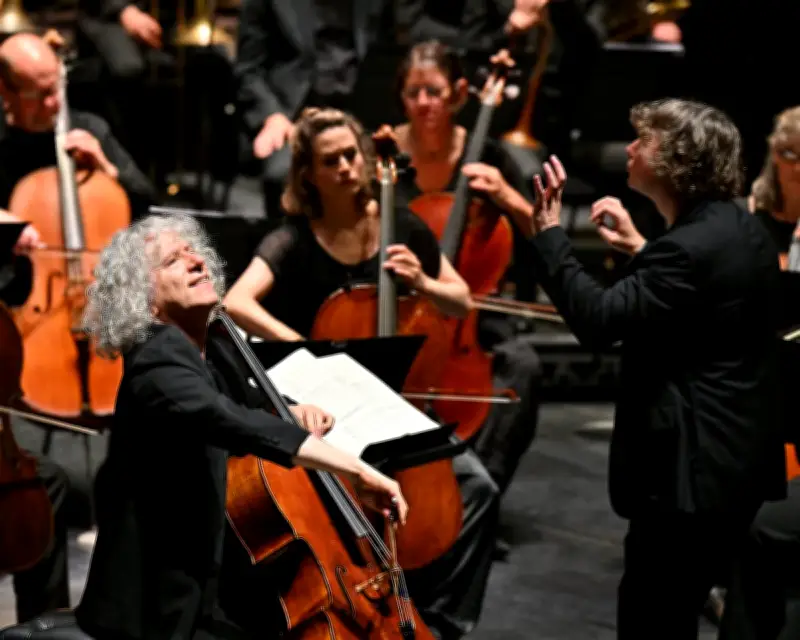
The Orchestra of the Age of Enlightenment (OAE) under the dynamic direction of Maxim Emelyanychev presented a remarkable recreation of the programme from Johannes Brahms's last concert, held in Vienna on 3 April 1897. The performance, at the Queen Elizabeth Hall in London, was a profound journey into the late Romantic master's final musical statements, blending historical authenticity with vibrant emotional depth.
Brahms, who died just days after that concert, had conducted his own Symphony No. 4 in E minor and the Piano Concerto No. 2 in B-flat major, with the composer himself at the piano. The OAE's concert featured the same works, with soloist Alexander Melnikov taking the keyboard part on a period grand piano, offering a sound world that Brahms himself would have recognized.
Period Instruments Illuminate Brahms's Sound World
The OAE's use of gut strings, valveless brass, and wooden flutes brought a transparency and warmth to the orchestral texture, allowing inner voices to emerge with unusual clarity. Emelyanychev, known for his energetic and expressive conducting, drew a performance of the Symphony No. 4 that was both structurally cogent and emotionally charged. The passacaglia finale unfolded with inexorable logic, each variation building on the last with gripping intensity.

Melnikov's playing in the Piano Concerto No. 2 was a revelation. On a period instrument, the piano's lighter action and thinner tone allowed for greater articulation and nuance, particularly in the lyrical Andante movement. His dialogue with the orchestra felt intimate and conversational, a far cry from the often-battleground approach of modern performances. According to the Guardian's critic, "Melnikov's touch was both delicate and powerful, capturing the work's autumnal melancholy."
A Concert of Profound Historical and Musical Significance
The programme also included the Tragic Overture, Op. 81, which Brahms had paired with the symphony in his final concert. The OAE's reading highlighted the work's dramatic contrasts, from its stormy opening to its more lyrical middle section. Emelyanychev shaped the music with a keen sense of narrative, making the overture feel like a fitting prelude to the symphony's existential journey.
The concert was part of the OAE's ongoing exploration of repertoire from the Classical and Romantic eras on period instruments. Their Brahms cycle has been praised for its scholarly rigor and artistic vitality. In this performance, the orchestra's deep familiarity with the style allowed them to take risks, from daring tempo fluctuations to boldly shaped phrases, all while maintaining ensemble precision.
Audience response was enthusiastic, with a standing ovation that underscored the evening's emotional impact. For many, hearing Brahms's music through the lens of historical performance practice offered a fresh perspective on works that can sometimes feel weighed down by tradition. As one attendee noted, "It was like hearing these masterpieces for the first time."
Emelyanychev and OAE: A Partnership of Vision
Maxim Emelyanychev, the OAE's principal conductor, has been lauded for his ability to balance historical awareness with spontaneous musicality. His interpretations are never dry or academic; instead, they pulse with life and urgency. In this concert, he demonstrated a particular affinity for Brahms's late style, with its blend of nostalgia and defiance.
The OAE itself is one of the world's leading period-instrument orchestras, known for its commitment to authentic performance practice. Their Brahms project has involved research into the orchestras and venues of Brahms's time, as well as the instruments and playing techniques that would have been familiar to the composer. This concert was the culmination of that work, offering a rare glimpse into the sound world of late 19th-century Vienna.
A Landmark Performance in London's Classical Season
The concert was a highlight of the summer classical music season in London, drawing a large and knowledgeable audience. Critics praised the OAE's ability to make old instruments sound fresh and relevant, while also honoring the historical context. The performance was recorded for future broadcast on BBC Radio 3, ensuring that this unique interpretation will reach a wider audience.

For those who missed it, the OAE is scheduled to repeat the programme at the Edinburgh International Festival later this year. Given the success of this London concert, demand for tickets is expected to be high. Brahms's final concert, reimagined by the OAE, proved that historical performance can be anything but museum-like; it can be a vital, moving experience that speaks directly to modern listeners.