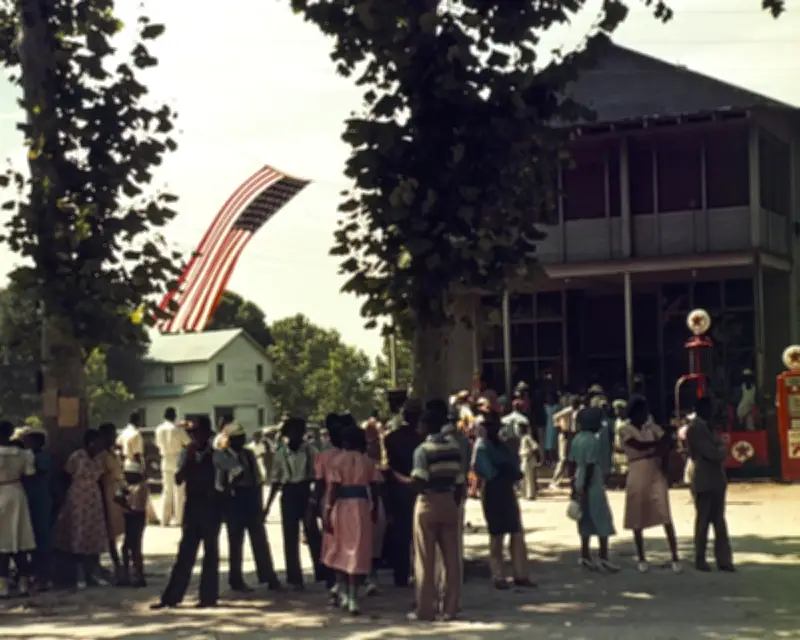
A new book from leading scholars and historians pushes back against the narrative that Gullah communities were insulated from the mainland US. Gullah Geechee culture is sometimes viewed as static – a common narrative suggests that, isolated from the rest of the country, enslaved Africans and their descendants in the Sea Islands created a language, tradition and society that insulated them. But this limited imagining deprives Gullah Geechee people of receiving full credit for their contributions to the US south and the country at large.
Gullah Influence Spread Across the Country
Even before the US civil war, Gullah influences were seen in places such as Mississippi, Texas and the Caribbean, showing that the Gullah Geechee didn’t remain remote, but rather migrated throughout the country, leaving evidence of their presence in their new homes.
The book, Gullah-Geechee Diasporas: Knowledge, Culture, and Black Lowcountry Legacies, aims to highlight this impact through eight essays by pre-eminent scholars and historians. Edited by Muhammad Fraser-Rahim and Elizabeth J West, the text crafts a wider understanding of Gullah Geechee life and influence, through language, music and religion.

Origins of the Book
Fraser-Rahim said the project started when he and West met about 10 years ago on a project leading up to the Spoleto arts festival. They were doing talks and lectures about Omar ibn Said, the Gullah Geechee community, and enslaved African Muslims. West noted that in her archival work, tracking descendants of enslaved people, the compass points to the Lowcountry. Document after document, she kept seeing this line pointing to the Lowcountry.
Beyond the Sea Islands
The Gullah Geechee Heritage Corridor stretches from North Carolina to Florida. Individuals assume it’s just the Gullah Islands, but it stretches all along the corridor and goes at least 30, maybe up to 60, miles inward. Those inward communities also spread identity and culture. As people leave, they interact with others, marrying other Black communities and cross-referencing identities.
West said that conversations often treat African Americans as dissociated beings managed like pieces on a chessboard, but that is not true. In the first essay, Ras Michael Brown goes back to pre-Middle Passage Africa, discussing how Africans themselves moved and migrated across the continent, establishing a sense of home and belonging.
Religious and Spiritual Identity
The book also looks at the expansion of religious and spiritual identity beyond Christianity. Fraser-Rahim noted that Charleston, South Carolina, is called the Holy City because of French Huguenots, the oldest reformed Jewish synagogue, and the enslaved African Muslim population. Omar ibn Said arrived in 1807, but many other enslaved Africans occupied time and space there, raising questions about who represents Black American religious history.
West found the chapter by Karen Chandler on the impact of Gullah Geechee culture on jazz to be an unexpected insight. Coming from Mississippi, she always thought all points directed to New Orleans, but the chapter was fascinating and educational.
Preservation of Culture
West hopes the book gives readers a deeper insight into the through lines and continuities of African American culture. The essays emphasize how this culture is still in transition as Blacks in the 20th and 21st centuries move and reshift their lives, going out from the south and returning. The book captures that dynamic and requires appreciation for the way certain central practices and concepts have been maintained.
Fraser-Rahim and West anticipate that everyday readers will find the book relevant, helping to give a much rounder picture of how to think about Black families and communities throughout the history of Blacks in the south.