Banksy's Identity Reportedly Revealed Again, Sparking Debate Over Art Value
The media may have unmasked Banksy—again. This latest revelation has angered some art enthusiasts but has not ruffled dealers, highlighting a divide in how the artist's mystique impacts his work's cultural and financial worth.
The Mystery That Fuels Influence
Years before Instagram's rise, Banksy understood that real influence often lies not in fame but in anonymity. His identity's enigma has long been integral to his art's value, with pieces defying authority on public walls and even self-shredding at auctions. Now, a Reuters report allegedly exposing his real name has ignited discussions on whether his works can maintain their allure without the secrecy.
Many fans have mourned the loss of this mystery, comparing it to being told Santa Claus does not exist. Thomas Evans, a Denver-based artist, expressed frustration, saying, "I feel like they are telling me how a magic trick is done. Sometimes I just want to enjoy the magic trick."

Art Experts Weigh In on Anonymity's Role
However, some art experts argue that Banksy's appeal extends beyond his hidden identity. His murals, often mischievous and dark, serve as witnesses to global injustices, from his native England to war-torn Ukraine. They believe that even without anonymity, his work continues to inspire reflection and dialogue.
Acoris Andipa, director of London's Andipa gallery, noted, "People buy his works because they absolutely love it. The main feedback that I get is that they really, frankly, don't care if they know who he is."
The Naming and Its Backlash as Engagement
Banksy, long believed to be Robin Gunningham born around 1972, emerged from a street art tradition where anonymity was a subversive tool. His identity has been an open secret among fellow artists and easily found online for years. Reuters recently reported that after a 2008 Daily Mail story, Banksy changed his legal name to David Jones—a common name in Britain, shared by the late David Bowie.
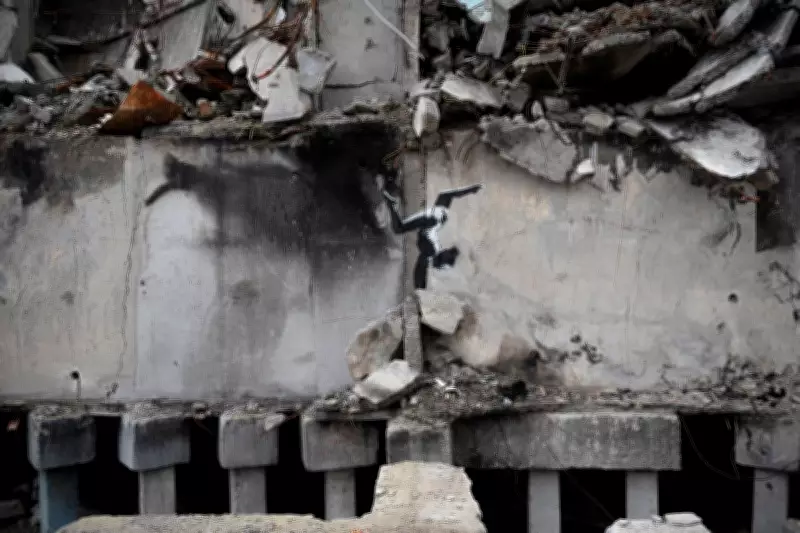
The report linked a David Jones traveling to Ukraine in late 2022 with a Banksy associate, coinciding with the artist's murals appearing on bombed buildings. Banksy confirmed creating seven war-zone pieces, including one depicting a child flipping a judo-practicing adult, a nod to Russian President Vladimir Putin.
Historical Context and Legal Incidents
On September 17, 2000, a Robin Gunningham was arrested in New York for defacing a Marc Jacobs billboard. In a handwritten confession, he described humorously altering the ad, a case uncovered by Reuters and confirmed by The Associated Press. Despite such incidents, Banksy's public image has centered on morality and guerrilla tactics, often likened to Robin Hood or Batman.
Speculation abounds that Banksy himself may have orchestrated this naming round, as he did not deny the Reuters story. Madeleine White of London's Hang-Up Gallery observed, "That would be very much in line with his practice of stunts and satire. As they say, 'all publicity is good publicity.'"
Star Power Beyond Anonymity
Art experts assert that Banksy's stardom endures regardless of naming. His ability to create under authorities' noses in an era of surveillance and social media continues to captivate. His works, set in poignant locations like bombed buildings or border walls, invite deep reflection.
Joe Syer, founder of MyArtBroker, emphasized, "If anything, Banksy’s anonymity has functioned less as a celebrity device and more as a way to keep the work universally accessible, detached from personality, ego, or biography." Christopher Banks of Objects of Affection Collection added, "The name matters less than the presence. The presence was always what the work was about."