A baker has shared the one simple ingredient she never skips to achieve perfectly smooth buttercream: a splash of milk. Ellen Jenne, a senior U35 Spare Time Writer, revealed the tip in an article for What's On, explaining that while buttercream is one of the easiest frostings to make, it can be tricky to get it perfectly smooth.
Jenne, who describes baking as both a therapeutic outlet and a creative pursuit, made a black red velvet cake for her 30th birthday 'RIP 20s' themed celebration. She opted for a standard American buttercream instead of the traditional cream cheese frosting, noting that in the August heat, cream cheese icing would have slid straight off.
The two-ingredient base and the milk trick
Every buttercream recipe Jenne has encountered calls for just two ingredients: butter and icing sugar, in a 1:2 ratio. The butter must be softened to room temperature and the icing sugar sifted. Firm butter hinders achieving a smooth, cohesive buttercream, while unsifted icing sugar leaves the result lumpy.

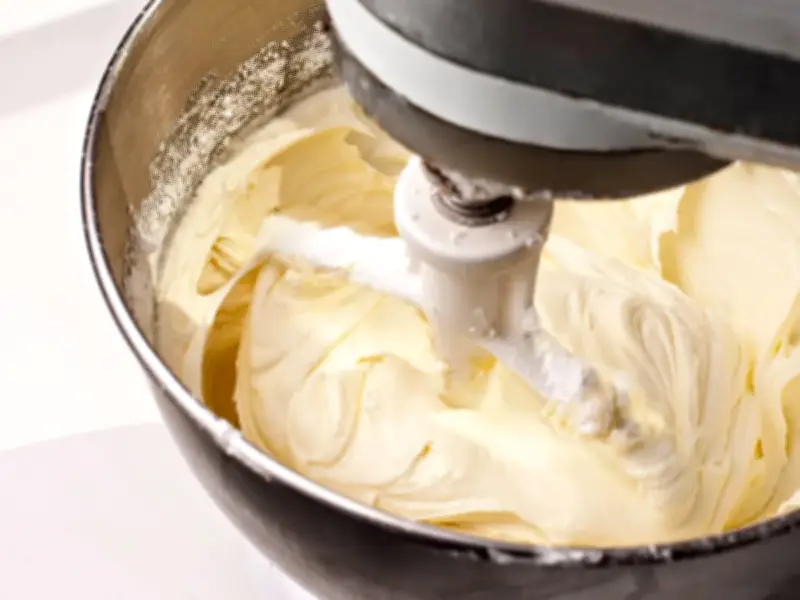
Having produced countless buttercreams over the years, Jenne discovered that relying solely on these two ingredients doesn't always guarantee the silkiest frosting. An irritating little lump inevitably appears, regardless of how long her stand mixer works at it. To help achieve a smoother buttercream, she always adds a dash of milk.
How to fix grainy or stiff buttercream
Once the buttercream is nearly there, Jenne suggests giving it a quick scrape with a spatula. If tiny specks of butter or icing sugar lurk at the bottom of the mixing bowl, or if the buttercream isn't entirely smooth and feels slightly stiff, add a small quantity of milk — roughly half to one tablespoon, either whole or semi-skimmed. For her cake, she opted for semi-skimmed milk.
The milk helps dissolve any lumps of icing sugar and renders the buttercream smoother and more workable. It loosens the stiff, dry texture created by icing sugar, making the buttercream less grainy. Jenne advises beginning with a modest amount of milk to thin out the thick, heavy mixture, adding slightly more to reach the preferred consistency. Excessive milk will produce a runny buttercream that won't maintain its shape.
Tips for a professional finish
Milk assists the butter and sugar in binding together fully during mixing, which reduces air pockets and textural irregularities. This yields a smooth end result and makes spreading over cakes and piping easier, delivering a professional finish. When incorporating the milk, Jenne recommends keeping the mixer on a low speed to ensure it blends properly. The milk shouldn't be excessively cold, as the low temperature may cause the butter to seize.
To decorate her 30th birthday cake, Jenne incorporated a generous amount of black gel-based food colouring, opting for Sugarflair Extra Black. She applied a modest yet generous layer of buttercream between each of the three layers, using a cranked palette knife to form walls that would contain the cream cheese filling. For a sleek finish, she suggests applying a thin crumb coat and refrigerating for roughly an hour, which makes it easier to apply an even layer of buttercream to the exterior of the cake.
The recipe calls for 600g sifted icing sugar, 300g unsalted or salted butter softened, milk to your choosing, and food colouring (optional). The method involves beating the icing sugar and butter together with the colouring if using, then adding milk to loosen once nearly smooth and beating until smooth. The buttercream can be spread across the middle and over the top of a 17cm cake using a palette knife, or transferred to a piping bag for decorative piping. It is also suitable for cupcakes.