Asad Raza's latest project, thigmotaxis (the rat show), presents 'public art' designed specifically for New York City's rats. The exhibition, now on view at the alternative art space times in downtown New York, features sculptural components made of concrete, wood and burlap, along with video documentation of rats interacting with the pieces across the city.
Art for a non-human audience
Raza and his team of three installers – fellow artists Devyn Gallindo, Kunning Huang and Jared Packard – identified more than 20 locations across New York City for the installations, including a small enclosure behind a seafood restaurant under the Manhattan Bridge, which Raza calls the 'Hell Door'. The team arranged the sculptures beside garbage cans, next to sewers and under bushes, and zip-tied trail cams to pipes, gates and benches to capture footage of the rats' interactions.
Raza consulted animal behaviorist Michael Parsons, as well as architects Mara Jovanović and Zaynab Eltaib of the Massachusetts Institute of Technology (MIT), advised by Jaffer Kolb, regarding what kinds of structures, forms, materials and textures would be most sensorially captivating for rats. Parsons wrote in an email to Raza, 'Think, shattered bits of rubble.'
Designing for rat senses
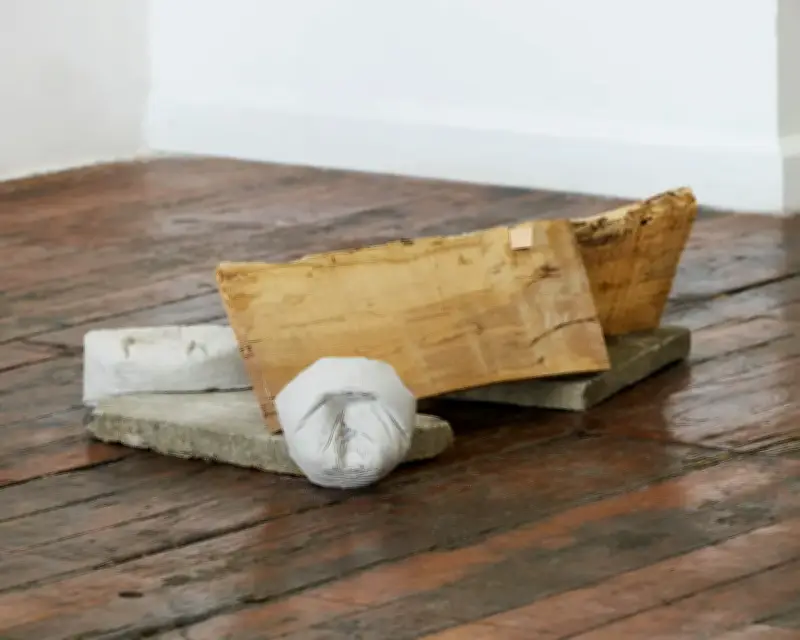
The sculptures feature textured concrete surfaces punctured by balloon forms that create navigable passageways, augmented with wooden and burlap components that hold scents well. These choices were informed by thigmotaxis, a keen sense rats have of being in contact with solid surfaces by rubbing alongside walls or structures, which they use to navigate as night-time, semi-subterranean creatures with poor vision but a good sense of smell.
Raza said he had come to 'think about them much more as animals living their own independent lives, rather than something that makes me sick or that I don't want to see'. He added that once 'you get over the culturally indoctrinated, visceral fear of rats', he began to 'see them as much less threatening, and more [as] curious and circumspect creatures'.
From white cube to city-wide ecosystem
The project began when Raza was invited to create an exhibition for times. As an artist who normally produces site-specific, multi-sensory installations, Raza looked beyond the exhibition space to the broader, non-human ecosystem of New York, wondering: 'What would it mean to make art for rats?'
The resulting exhibition, thigmotaxis (the rat show), features a selection of the sculptures arranged across the floor, a human-sized textured wall-work that visitors can rub against to experience thigmotaxis themselves, and a video of the rats' nocturnal encounters with the sculptures throughout the city. 'It's a little bit of a love letter to New York,' Raza said. The show is on view at times, New York until 12 December.